






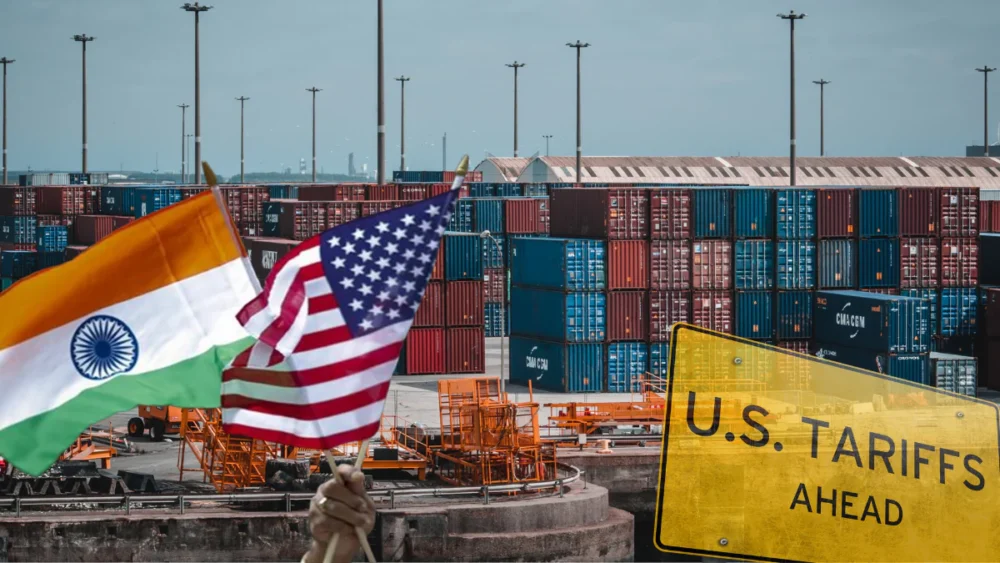
India is expected to retain its position as one of the world’s fastest-growing major economies over the coming years, even as global growth slows and trade tensions intensify, according to a new United Nations economic outlook. The assessment underscores India’s resilience amid rising U.S. tariffs, geopolitical uncertainty, and a fragile global trade environment.
In its latest World Economic Situation and Prospects 2026 report, the United Nations projects India’s gross domestic product (GDP) to expand by 6.6% in 2026 and 6.7% in 2027, placing the country among the strongest performers globally. The report attributes this momentum primarily to robust domestic consumption, sustained public investment, and supportive policy measures, which are expected to cushion the impact of higher trade barriers imposed by the United States.
“India’s growth outlook remains solid, underpinned by strong internal demand and continued government spending on infrastructure,” the report noted, adding that these factors are likely to “largely offset the adverse effects of higher tariffs and weaker external demand.”
Domestic Strength Offsets External Pressures
While higher U.S. tariffs could weigh on certain export-oriented sectors, the UN emphasized that India’s economic engine is increasingly driven by internal dynamics rather than global trade alone. Household consumption, bolstered by a growing middle class and steady employment in services, continues to anchor demand. At the same time, public capital expenditure on roads, railways, digital infrastructure, and energy projects remains a key growth driver.
Recent tax reforms and monetary easing have also provided near-term support. The report highlighted that easing inflationary pressures have given central banks room to adopt a more accommodative stance, helping stimulate investment and credit growth.
“Policy support has played an important role in sustaining momentum,” the UN said, pointing to targeted fiscal measures and structural reforms that have improved the business environment and investment sentiment.
India Leads South Asia’s Growth Story
The UN report paints a relatively optimistic picture for South Asia, even as growth in the region is projected to moderate slightly in the near term. Regional growth is expected to slow from an estimated 5.9% in 2025 to 5.6% in 2026, before rebounding to 5.9% in 2027. India remains the primary engine of growth in the region, accounting for the bulk of economic expansion.
Other large developing economies, including China and Indonesia, are also expected to post solid growth, supported by domestic demand and targeted policy interventions. However, the UN cautioned that structural challenges and external headwinds continue to pose risks.
Global Economy Faces Slower Growth
At the global level, the UN said the world economy has shown a degree of resilience but warned that the outlook is becoming increasingly clouded. Global growth is projected to slow to 2.7% in 2026, below both 2025 levels and the pre-pandemic average.
Trade tensions, rising fiscal pressures, and persistent policy uncertainty are weighing on investment and long-term growth prospects. While easing inflation and looser monetary conditions are providing some relief, weak investment activity and structural bottlenecks continue to restrain momentum.
“Despite some stabilization, the global economy remains vulnerable to shocks,” the report said, citing ongoing geopolitical tensions and the fragmentation of global trade as key risks.
Trade and Inflation Trends
Global trade performed better than initially expected in 2025, supported by early shipments ahead of tariff increases and strong growth in services exports. However, the UN warned that this boost is likely to be temporary. Trade growth is expected to slow in 2026 as these front-loaded effects fade and trade barriers persist.
Global headline inflation is forecast to ease to 3.1% in 2026, down from 3.4% in 2025. Still, the UN cautioned that high prices continue to erode real incomes, particularly for low-income households. Food, energy, and housing costs remain major sources of financial stress and inequality across regions.
“Managing inflation will require more than monetary policy alone,” the report said, stressing the importance of coordination between monetary, fiscal, and industrial policies.
Policy Coordination Key to Sustained Growth
The UN emphasized that governments must adopt a balanced policy approach to sustain growth while protecting vulnerable populations. Targeted and temporary support measures, the report said, can help shield households from high prices and preserve social stability. At the same time, credible medium-term fiscal strategies and prudent debt management are essential to rebuild financial buffers.
For India, the outlook remains favorable, provided domestic demand continues to hold up and reforms stay on track. As global growth slows and uncertainty rises, the UN’s assessment reinforces the view that India’s economic trajectory is increasingly shaped at home, offering a measure of insulation from global shocks.