





In a landmark diplomatic shift, India has co-sponsored United Nations Security Council Resolution 2817, joining a broad international coalition to denounce Iran’s recent military strikes across the Middle East. The resolution, which passed with a significant majority, underscores a growing global intolerance for Tehran’s regional provocations and highlights New Delhi’s prioritizing of energy security and the safety of its vast overseas diaspora.
The United Nations Security Council moved with rare and decisive speed on March 11, 2026, to adopt Resolution 2817, a sweeping condemnation of what the body termed “egregious attacks” by the Islamic Republic of Iran against its sovereign neighbors. The resolution, which secured 13 votes in favor with only two abstentions, represents one of the most significant multilateral rebukes of Tehran in recent years. Perhaps most notably, the measure saw India step forward as a co-sponsor, signaling a pragmatic calibration of its “Think West” policy in the face of escalating regional instability.
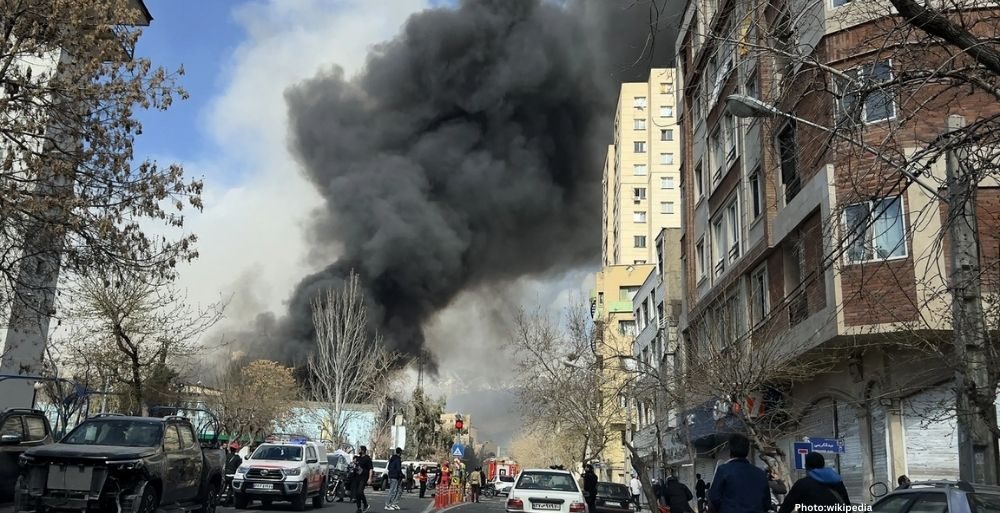
The resolution’s primary focus is the recent wave of strikes targeting residential and civilian infrastructure in Bahrain, Kuwait, Oman, Qatar, Saudi Arabia, the United Arab Emirates, and Jordan. Beyond the immediate kinetic threats, the text also issues a stern demand for Iran to cease its “actions, threats, and provocations” hindering global maritime trade—a nod to the persistent volatility in the Strait of Hormuz and the Red Sea.
India’s decision to co-sponsor the resolution, led by the Gulf Cooperation Council (GCC), marks a departure from its traditional posture of cautious neutrality in West Asian power struggles. On March 12, the Ministry of External Affairs (MEA) clarified that the move was rooted in the fundamental protection of Indian national interests. Randhir Jaiswal, the MEA spokesperson, articulated that the welfare of the Indian diaspora—numbering nearly nine million across the Gulf—was the driving force behind the diplomatic endorsement. “The resolution reflects several of our positions,” Jaiswal stated. “We have a large diaspora in the GCC countries, and their well-being and welfare is of utmost importance. The Gulf is also vital for our energy security needs.”
For New Delhi, the calculation is as much about economics as it is about human safety. The Gulf region accounts for a lion’s share of India’s crude oil imports and remittances. Any prolonged conflict involving Iran and the GCC states threatens to disrupt the maritime corridors that serve as the lifeblood of the Indian economy. By aligning with Bahrain’s drafted resolution, India has effectively prioritized its strategic partnership with the Arab world over its historically complex relationship with Tehran.
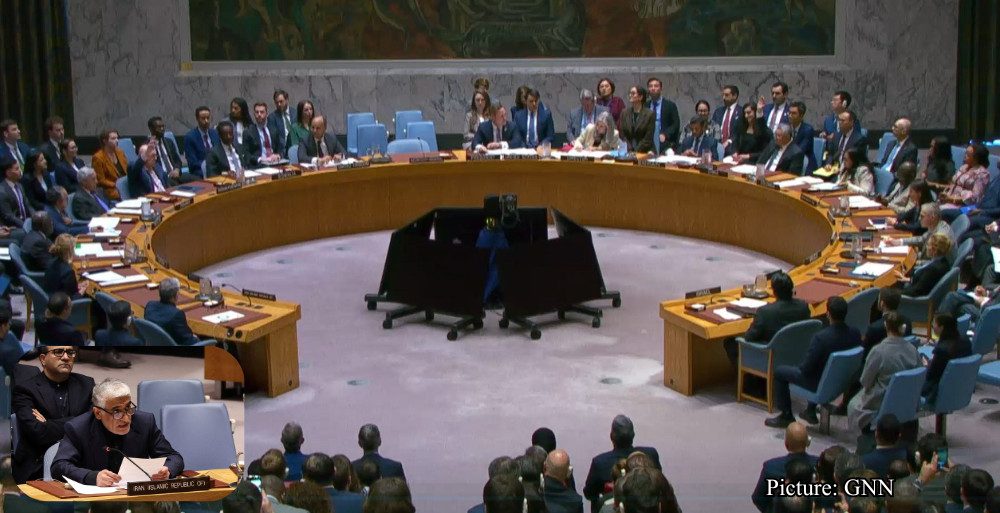
The diplomatic atmosphere in the Security Council chamber was charged as representatives from the United Kingdom, France, the United States, Greece, and Japan voiced their support. Michael Waltz, the U.S. Representative and Council President for March, framed the resolution as a necessary check on Iranian hegemony. This sentiment was echoed by France’s Jérôme Bonnafont, who utilized the forum to raise alarms regarding Iran’s advancing nuclear program and its continued patronage of regional proxy militias.
However, the consensus was not absolute. China and the Russian Federation opted to abstain, choosing not to exercise their veto power but refusing to endorse the Western-backed text. The Chinese delegation used the session to pivot the focus toward Western military interventions, suggesting that the United States and Israel have engaged in unauthorized strikes that have exacerbated regional tensions.
Russia’s Vassily Nebenzia went further, dismissing Resolution 2817 as “biased and one-sided.” In a tactical maneuver to dilute the condemnation of Tehran, Moscow introduced a secondary draft resolution. This alternative text attempted to bridge the culpability by including the actions of Israel and the U.S. in the region. “The passed resolution did not take into account the actions of Israel and the US, who have also killed men, women, and children,” Nebenzia argued.
The Council’s vote on the Russian draft highlighted the deep-seated divisions within the international community. While China, Pakistan, Russia, and Somalia voted in favor, the measure failed to pass. The United States and Latvia voted against the Russian text, while a majority of the council—including France, the U.K., and several African and Latin American nations—abstained. Dame Barbara Woodward, the U.K. Representative, was particularly blunt in her assessment, accusing Moscow of “hypocrisy” and suggesting Russia was attempting to present itself as a guardian of international peace while ignoring the realities of Iranian aggression.
The presence of both Israeli and Iranian representatives at the session ensured that the rhetoric remained high-octane. The Iranian envoy blamed Washington for “starting the war” and obstructing peace efforts, while the Israeli representative warned that Iran’s nuclear ambitions have moved far beyond the “peaceful” facade Tehran maintains.
As the dust settles on the vote, the sheer scale of the co-sponsorship—involving 140 of the 193 UN member states—suggests a shift in the “global collective conscience,” as described by Bahrain’s Jamal Fares Alrowqaiei. For the international community, the resolution is a desperate attempt to return to a rules-based order in a region where the margin for error is increasingly thin. For India, it is a clear-eyed acknowledgement that in a multipolar world, the safety of its citizens and the security of its energy pipelines must come before traditional non-aligned sentimentality.