









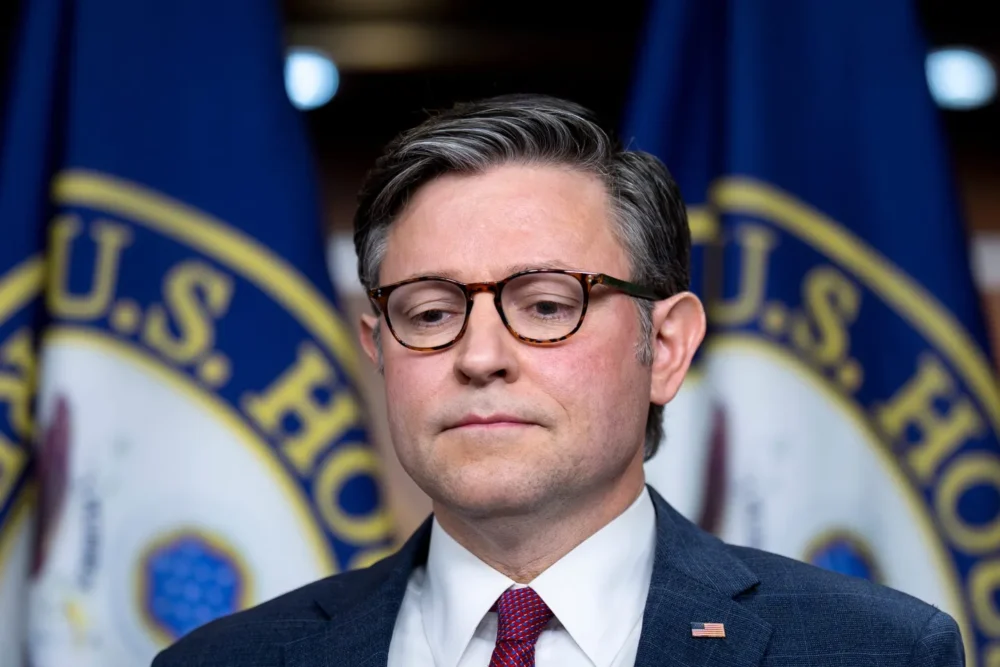
A growing bloc of House Republicans is breaking ranks with party leadership in an effort to force a vote on extending the Affordable Care Act’s enhanced subsidies, setting up a rare internal challenge to Speaker Mike Johnson as he prepares to advance a broader health care package next week.
Nearly a dozen GOP lawmakers—many representing politically competitive districts—have joined bipartisan discharge petitions designed to bypass House leadership and bring legislation extending and reforming the ACA subsidies directly to the floor. The push comes as the enhanced subsidies are scheduled to expire at the end of the month, a change that could significantly increase insurance premiums for more than 20 million Americans.
Speaker Johnson has yet to release details of the health care package he plans to bring forward, though he indicated it would likely be unveiled over the weekend. According to multiple sources, an extension of the ACA subsidies is not expected to be part of the proposal.
During a closed-door meeting earlier this week, Johnson and other GOP leaders reportedly outlined several policy options aimed at lowering health care costs. These included expanding Health Savings Accounts, adjusting cost-sharing mechanisms, and introducing reforms for pharmacy benefit managers. However, lawmakers familiar with the discussion said no clear agreement emerged.
“You’re going to see a package come together that will actually reduce premiums for all Americans with health insurance,” Johnson said at his weekly press briefing, arguing that his approach would deliver broader relief than targeted subsidies.
Moderate Republicans, however, are urging Congress to act before the subsidy deadline passes. To succeed, a discharge petition requires 218 signatures, and it remains uncertain whether enough Democrats will support the Republican-backed efforts to meet that threshold.
Most House Democrats have instead rallied behind a separate discharge petition introduced by Minority Leader Hakeem Jeffries, which calls for a clean three-year extension of the enhanced subsidies without additional policy changes. Jeffries said Democratic leadership is still evaluating the bipartisan proposals and plans to comment further in the coming days, emphasizing that the clock is running out.
One of the bipartisan petitions was filed by Republican Rep. Brian Fitzpatrick of Pennsylvania. His proposal would extend the subsidies for two years, impose income limits on eligibility, and tighten oversight of pharmacy benefit managers. A similar petition was introduced by Democratic Rep. Josh Gottheimer of New Jersey. As of Thursday, 11 Republicans had signed on to both efforts.
Johnson has dismissed the push, arguing that his forthcoming package would deliver premium reductions for a broader segment of the population rather than a limited group.
Still, some Republicans are openly warning of political fallout if Congress allows the subsidies to lapse. Rep. Don Bacon of Nebraska, a supporter of the discharge petitions, said failure to act could severely hurt Republicans in the next midterm elections.
“If nothing is done, families will see their premiums jump, and that’s going to be unacceptable to voters,” Bacon said, adding that the issue could become a major campaign liability.
Meanwhile, the Senate has also failed to make progress. Competing health care bills from Democrats and Republicans aimed at preventing premium increases stalled this week, leaving lawmakers without a clear path forward as the deadline approaches.