









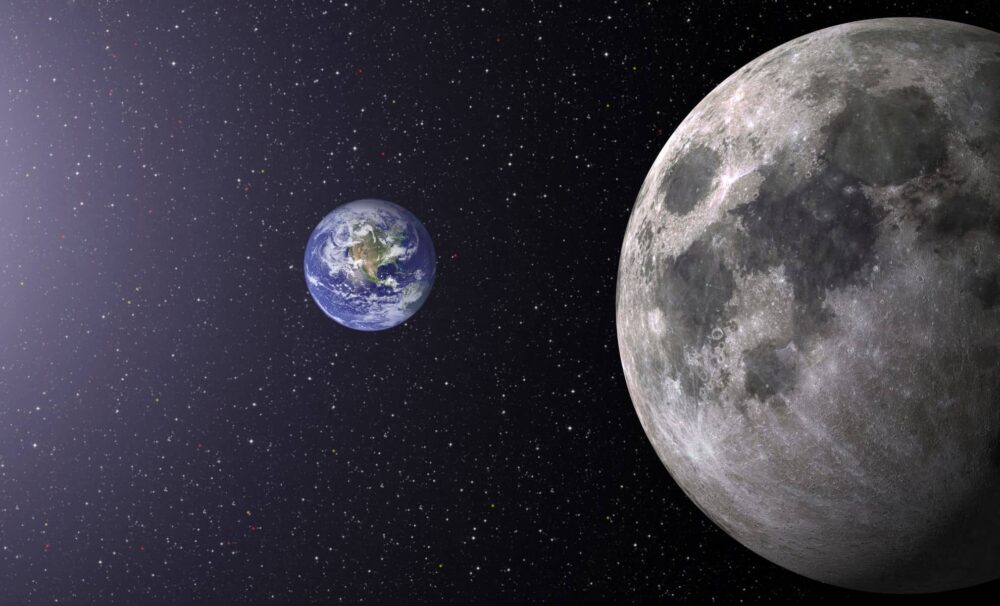
The idea that Earth could one day abandon its familiar 24-hour rhythm and stretch into 25-hour days is the kind of headline that grabs attention instantly. It sounds dramatic, almost apocalyptic—an upheaval of time itself. But while the science behind the claim is real, the timeline is so vast that it belongs more to deep planetary history than to human concern.
Scientists agree that Earth’s rotation is slowly, inexorably decelerating. The reason is not mysterious, nor is it new. It is the result of a cosmic interaction that has been unfolding for billions of years: the gravitational relationship between Earth and the Moon. This celestial tug-of-war is quietly lengthening our days—by milliseconds over centuries, not by hours overnight.
A Day Is Not as Fixed as We Think
Most people are taught that a day lasts exactly 24 hours. In reality, that figure is a convenient average rather than a hard constant. The “solar day”—the time it takes for the Sun to return to the same position in the sky—is about 24 hours. But measured against distant stars, Earth completes a rotation slightly faster, in what astronomers call a sidereal day.
Even more importantly, Earth’s rotation is not perfectly steady. It fluctuates due to internal and external factors, and over very long periods, the overall trend is clear: the planet is slowing down.
According to NASA, this gradual change is measurable with modern atomic clocks and astronomical observations. Ancient eclipse records, combined with today’s precision instruments, reveal that days in the distant past were significantly shorter. Hundreds of millions of years ago, Earth completed a full rotation in less than 23 hours.
The Moon’s Invisible Brake
The primary driver of this slowdown is tidal friction. The Moon’s gravity pulls on Earth’s oceans, creating tidal bulges. Because Earth rotates faster than the Moon orbits, these bulges are dragged slightly ahead of the Moon’s position. This misalignment acts like a brake on Earth’s rotation, siphoning off rotational energy.
That energy is not destroyed—it is transferred. Earth spins more slowly, while the Moon gains orbital energy and gradually drifts farther away, by about 3.8 centimeters per year. Scientists often compare this to a spinning chair that slowly loses speed when your foot lightly drags on the floor.
This interaction is described in detail by researchers studying Earth–Moon dynamics and is tracked closely by institutions such as the International Earth Rotation and Reference Systems Service, which monitors subtle changes in Earth’s orientation and timekeeping.
So When Do We Get 25-Hour Days?
This is where viral headlines tend to mislead. There is no specific date when calendars will suddenly need an extra hour. Based on current models, it would take roughly 200 million years for Earth’s rotation to slow enough that a full day lasts 25 hours.
To put that in perspective, modern humans have existed for about 300,000 years. Civilizations, calendars, and even continents will change beyond recognition long before Earth reaches that milestone.
Astrophysicists studying long-term planetary evolution, including work highlighted by the University of Toronto, emphasize that this process unfolds on geological timescales. It will not affect daily life, work schedules, or biological rhythms for any foreseeable generation.
Other Forces That Nudge Time
While the Moon is the dominant factor, it is not the only influence on Earth’s rotation. Redistribution of mass—such as melting ice sheets, shifting groundwater, or large-scale geological events—can slightly alter how fast the planet spins. Even these effects, however, change day length by microseconds, not minutes.
Because of these tiny mismatches, timekeepers occasionally introduce leap seconds to keep atomic clocks aligned with Earth’s rotation. Agencies like the National Institute of Standards and Technology and the U.S. Naval Observatory monitor these variations with extreme precision.
The Big Picture
The notion of a future 25-hour day is scientifically sound—but practically irrelevant to humanity. It serves instead as a reminder that Earth is not a rigid machine, but a dynamic system shaped by gravity, oceans, and time itself.
Our planet has been slowing since long before humans existed, and it will continue to do so long after we are gone. The clocks on our walls may tick steadily, but on a cosmic scale, time on Earth is always quietly changing.