








The global economic landscape in 2026 is defined by a significant reshuffling of established powers and the continued dominance of the world’s two largest economies. While the United States remains the preeminent global financial leader with a projected GDP exceeding $31 trillion, a historic shift has occurred in the middle tier of the top ten. India has officially surpassed Japan to become the world’s fourth-largest economy, driven by aggressive infrastructure spending and a burgeoning digital sector. Meanwhile, European heavyweights like Germany and France grapple with demographic pressures and energy transition costs, maintaining their positions through high-value exports despite sluggish growth rates.
WASHINGTON, D.C. — As the first quarter of 2026 draws to a close, new data from the International Monetary Fund (IMF) and the World Bank confirm a pivotal shift in the global hierarchy of wealth. The United States and China continue to operate in a league of their own, together accounting for nearly 42% of the world’s total nominal Gross Domestic Product (GDP). However, the narrative of 2026 is as much about the “fast climbers” as it is about the “established titans.”
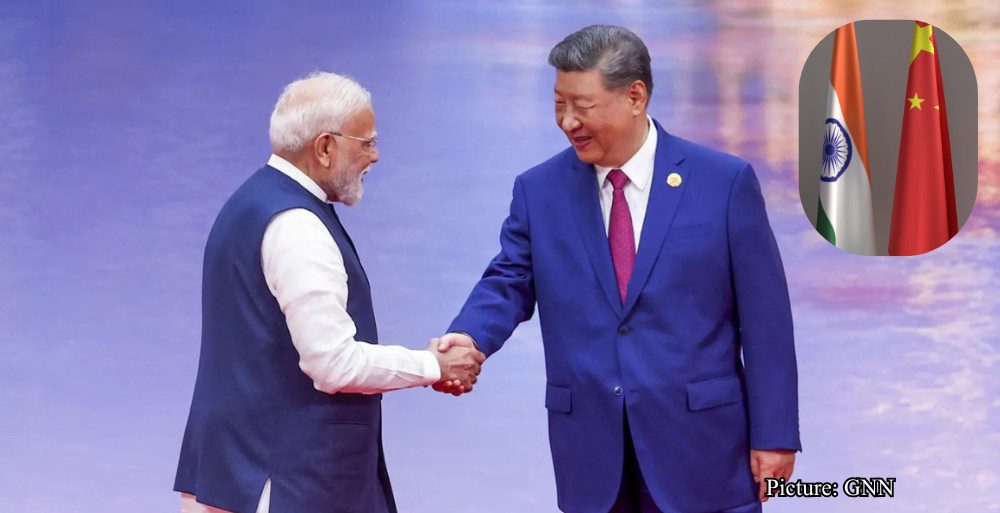
The most striking development in this year’s rankings is India’s ascent. With a projected nominal GDP of $4.51 trillion, India has moved past Japan ($4.46 trillion) to secure the fourth spot globally. This transition marks the first time in decades that Japan has fallen to fifth place, a move analysts attribute to the compounding effects of a shrinking Japanese workforce and a weakened yen.
The Transatlantic and Transpacific Giants
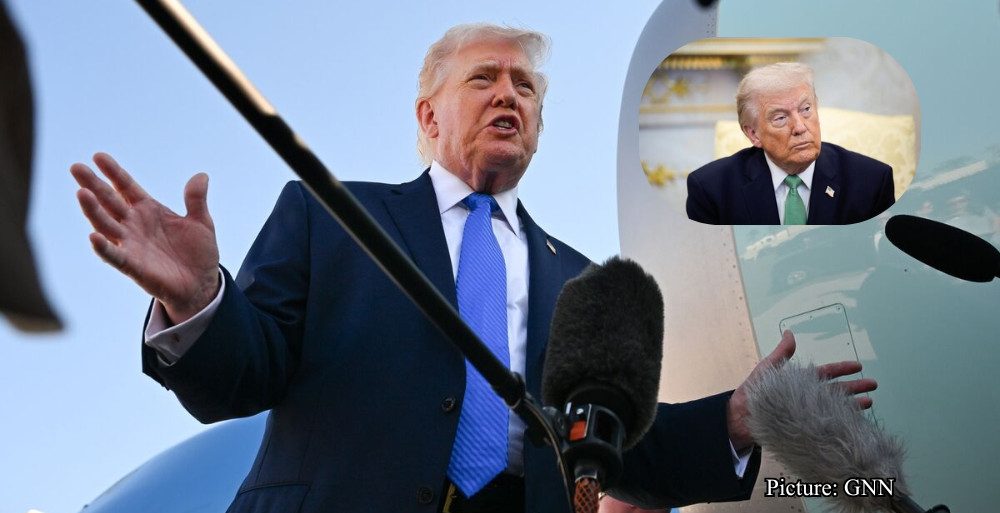
The United States enters 2026 with a projected GDP of $31.82 trillion. This 2.1% growth rate is anchored by a resilient labor market and a massive surge in capital expenditures related to Artificial Intelligence (AI) infrastructure. “The U.S. economy has shown a remarkable ability to absorb high interest rates while maintaining consumer spending,” noted one lead economist during a recent briefing at the Federal Reserve. However, this growth comes alongside a fiscal deficit projected at $1.9 trillion for the year, with public debt now exceeding 100% of GDP.
China follows in second place with a projected $20.65 trillion economy. Beijing has set a 2026 growth target of 4.5% to 5.0%, its lowest in decades, as it manages a protracted property market slump and an aging population. Despite these headwinds, China remains the world’s manufacturing “sturdy anchor,” with a record trade surplus of nearly $1.2 trillion reported in the previous fiscal year.
The European Engine and India’s Surge
Germany remains the third-largest economy at $5.33 trillion. While it holds the title of Europe’s industrial powerhouse, the nation faces a “lower-gear” environment. Growth is expected to remain below 1% as the country continues to decouple from cheap energy sources and navigates labor shortages.
In contrast, India’s $4.51 trillion economy is the fastest-growing major market in the world, with a 2026 growth rate projected at 6.4%. This expansion is fueled by:
- Infrastructure Investment: Record government outlays on transport and digital networks.
- Demographic Dividend: A median age of 28, providing a massive, productive workforce.
- Manufacturing Shift: The “China Plus One” strategy leading global firms to relocate supply chains to Indian hubs.
Analyzing the Mid-Tier: UK, France, and Italy
The United Kingdom holds the sixth position with a GDP of $4.23 trillion. The British economy is heavily reliant on its services sector, particularly high-end finance and life sciences. However, growth remains tempered at roughly 1% as the long-term structural adjustments of the post-Brexit era continue to influence trade dynamics.
France ($3.56 trillion) and Italy ($2.70 trillion) occupy the seventh and eighth spots. France’s economy has been bolstered by strong aerospace and luxury goods exports, though high public spending—accounting for a significant portion of GDP—remains a point of debate in the European Union. Italy continues to benefit from its high-value manufacturing and the “Made in Italy” brand, though analysts warn that its massive public debt and slow pace of structural reforms may limit its upward mobility in future rankings.
Natural Resources and Geopolitical Shifts: Russia and Canada
Russia, despite ongoing international sanctions, maintains the ninth position with a GDP of $2.51 trillion. Its economy remains tethered to energy exports, particularly oil and gas redirected toward Asian markets. However, the lack of economic diversification and the heavy toll of defense spending—projected to rise by 7% this year—pose significant risks to its long-term stability.
Canada rounds out the top ten at $2.42 trillion. The Canadian economy is characterized by its stability, high quality of life, and vast natural resources. Its growth in 2026 is closely tied to its trade relationship with the U.S. and its ability to attract skilled immigrants, which has helped offset the demographic declines seen in other G7 nations.
Comparative Economic Data: 2026 Projections
| Rank | Country | Projected GDP (2026) | Growth Rate (Est.) | Key Drivers |
| 1 | United States | $31.82 Trillion | 2.1% | AI Tech, Consumer Spending |
| 2 | China | $20.65 Trillion | 4.8% | Manufacturing, Exports |
| 3 | Germany | $5.33 Trillion | 0.9% | Automotive, Engineering |
| 4 | India | $4.51 Trillion | 6.4% | Digital Services, Infrastructure |
| 5 | Japan | $4.46 Trillion | 1.0% | Robotics, Precision Tech |
| 6 | United Kingdom | $4.23 Trillion | 1.1% | Financial Services, Life Sciences |
| 7 | France | $3.56 Trillion | 1.3% | Aerospace, Luxury Goods |
| 8 | Italy | $2.70 Trillion | 0.8% | Fashion, High-end Mfg |
| 9 | Russia | $2.51 Trillion | 1.5% | Oil, Gas, Mining |
| 10 | Canada | $2.42 Trillion | 1.8% | Natural Resources, Trade |
The “Per Capita” Reality Check
While nominal GDP provides a measure of a nation’s total economic weight, it often obscures the individual prosperity of its citizens. This is most evident in the comparison between India and the established Western powers. Despite India’s rise to fourth place, its GDP per capita remains roughly $3,051, significantly lower than the United States’ $92,883 or Germany’s $63,600.
“Aggregate size is a metric of geopolitical power, but per capita income is the metric of lived experience,” says a senior researcher at a nonpartisan think tank. For emerging giants like India and China, the challenge of 2026 and beyond is not just growing the “pie,” but ensuring the benefits reach a population that, in India’s case, now exceeds 1.4 billion people.
As the global economy moves further into 2026, the concentration of wealth in these ten nations remains high, though the “gravity” is clearly shifting toward the Indo-Pacific. This redistribution of economic power is expected to reshape international trade agreements, defense alliances, and global climate policy for the remainder of the decade.