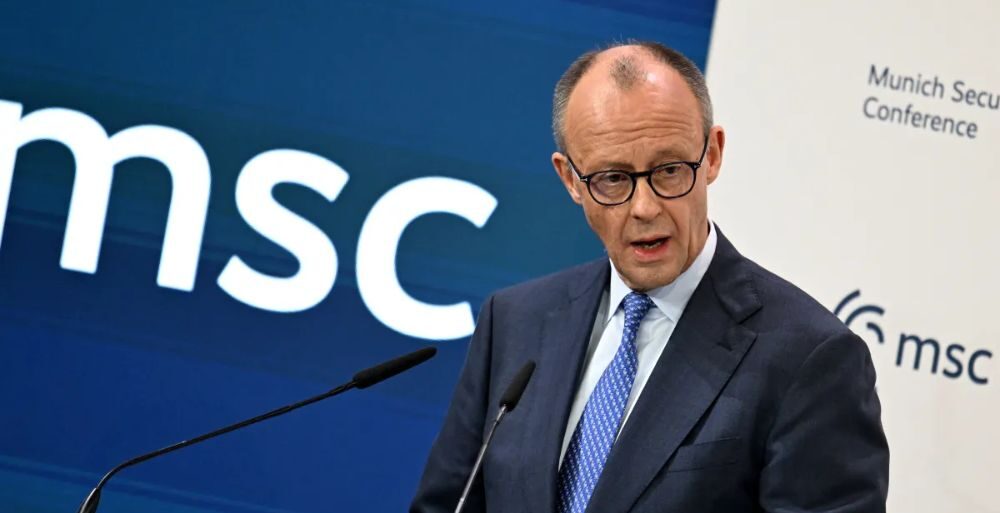







The German Chancellor, Friedrich Merz, delivered a stinging critique of modern American foreign policy at the opening of the Munich Security Conference on Friday, asserting that the United States is no longer powerful enough to maintain its global standing through unilateral action. Addressing a high-profile audience that included US Secretary of State Marco Rubio and various European heads of state, Merz argued that the traditional international rules-based order has effectively ceased to exist in its historical form. He suggested that even for a superpower like the United States, the era of \”going it alone\” has reached its functional limit, requiring a renewed commitment to transatlantic partnerships to counter the rise of competing global rivals.
In a speech designed to be both firm and conciliatory, Merz directed his remarks toward the administration of Donald Trump, emphasizing that the strength of the North Atlantic Treaty Organization is a competitive advantage for Washington just as much as it is for Europe. Switching from German to English to ensure his message was understood clearly by the American delegation, the Chancellor called for a mutual effort to repair and revive transatlantic trust. He noted that in an age increasingly defined by great power rivalry, the ability of democracies to rely on partners and allies distinguishes them from autocracies, which he claimed merely command followers.
The Chancellor’s address comes at a period of heightened friction between the United States and its European allies. Since the beginning of the second Trump term, European leaders have faced a series of diplomatic challenges, ranging from critiques of continental free speech laws to threats of new trade tariffs. Merz specifically referenced the previous year’s conference, where Vice President JD Vance lectured European officials on democracy and freedom of expression. Merz pointedly countered those sentiments on Friday, stating that the cultural conflicts inherent in the American political landscape do not translate to the European context, where freedom of speech is balanced against human dignity and basic law.
Merz also utilized the platform to announce a significant shift in European defense strategy, disclosing that he has entered preliminary discussions with French President Emmanuel Macron regarding the potential for a European nuclear umbrella. This move signals a growing desire within Berlin and Paris to develop a self-standing security pillar that reduces the continent\’s historical dependence on the American nuclear deterrent. Merz clarified that such a project would not be intended to replace NATO, but rather to strengthen it by creating a sovereign European component. He argued that a \”strong, self-sustaining pillar\” within the alliance is necessary for Europe to be taken seriously as a geopolitical actor in a world marked by unpredictable power politics.
The backdrop of the conference remains the ongoing conflict in Ukraine, which is approaching its fourth anniversary. Merz urged the United States to recognize that the economic and military exhaustion of Russia remains a viable path toward a negotiated settlement. He argued that the war has forced Europe to end its \”vacation from world history\” and confront the reality of big-power politics where resources and supply chains are frequently weaponized. By boosting its own defense spending, Germany is positioning itself to lead a partnership-based European defense initiative, which Merz insisted is free of any hegemonic ambitions but focused on collective security and resilience.
French President Emmanuel Macron echoed many of the Chancellor\’s sentiments during his own contributions to the conference. Macron insisted that Europe must have a seat at the table for any future arms control negotiations with Russia, particularly regarding ballistic missiles and nuclear technology. He noted that previous treaties, such as the Intermediate-Range Nuclear Forces Treaty, were negotiated almost exclusively by Washington and Moscow, a dynamic he believes must change if European security is to be preserved. Macron warned that even if a peace agreement is reached in Ukraine, the continent must find a way to coexist with an aggressive Russia that possesses a massive military apparatus and a defense industry operating at peak capacity.
The rhetoric from both Merz and Macron reflects a broader European consensus that the geopolitical architecture designed during the Cold War is no longer sufficient for the current era. Macron specifically addressed the criticisms leveled against Europe by the Trump administration over the past year, defending the European model of governance and regulation. He argued that the continent has been unfairly vilified as repressive and stated that the post-World War II security framework requires a total rearticulation to account for the current global landscape. This includes establishing independent European channels of communication with Moscow to manage the long-term threat posed by an unreconstructed Russia.
Despite the sharp criticisms of the current American administration’s style, Merz remained adamant that the goal is not the dissolution of the transatlantic bond but its evolution. He described the Munich Security Conference as a seismograph for the health of US-European relations, which currently indicates significant tremors. By advocating for a \”sovereign Europe,\” Merz is calling for a continental mindset shift that fully utilizes European economic and technological potential. This approach seeks to transform Europe from a junior partner into a more capable ally that can share the burden of global security, provided the United States is willing to listen to European concerns and respect the legitimacy of its regional interests.
The reaction from the American delegation was measured, though the tension in the room was palpable during Merz’s direct rebuffs of protectionism and climate policy reversals. The Chancellor reaffirmed Germany’s commitment to international climate agreements and the World Health Organization, contrasting these positions with the isolationist trends currently seen in Washington. He suggested that the assertion of freedom in the modern age requires a level of willpower and firmness that can only be sustained through genuine collaboration between democratic nations. For Merz, the path forward involves a rejection of \”alternative facts\” in favor of a security strategy grounded in the reality of shared threats and mutual dependence.
As the conference continues, the focus is expected to remain on how these two diverging visions of global leadership—American unilateralism and European sovereign partnership—can be reconciled. With Germany taking a more assertive role in military and diplomatic affairs, the traditional dynamics of the NATO alliance are being tested. The proposal for a joint nuclear deterrent with France represents one of the most significant shifts in German foreign policy in decades, highlighting the urgency felt in Berlin to prepare for a future where American support may no longer be a guaranteed constant. Whether this move leads to a more balanced alliance or a deeper rift remains the central question for the diplomats gathered in Munich.
German Chancellor Friedrich Merz Challenges US Unilateralism at Munich Security Conference