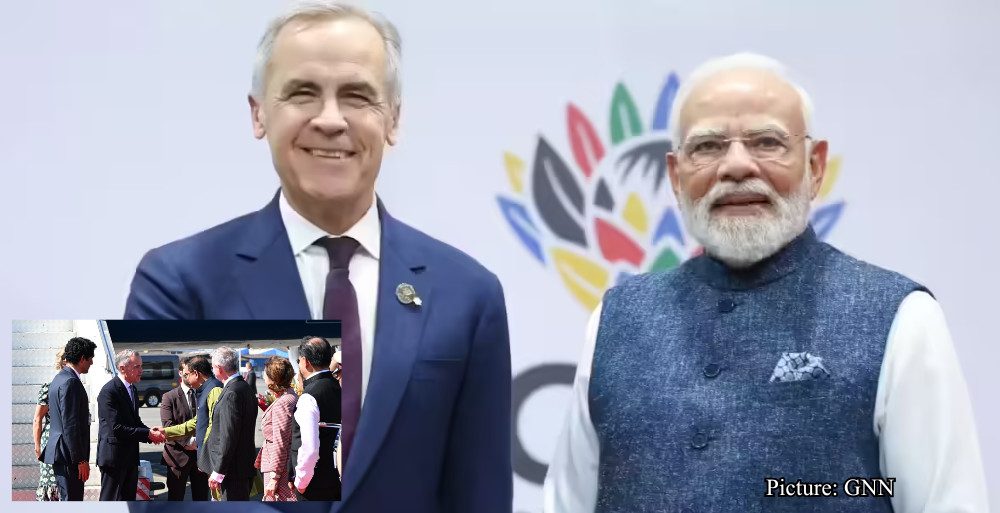







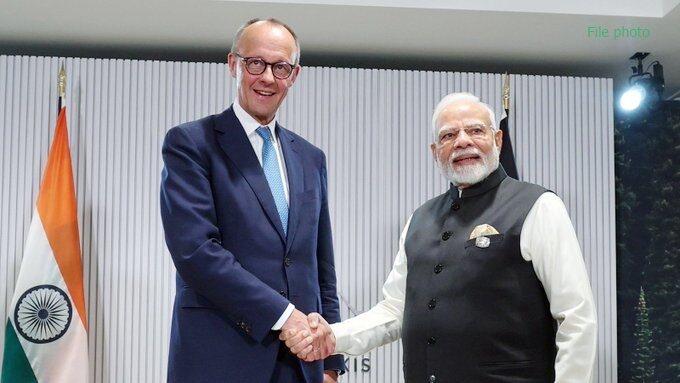
German Chancellor Friedrich Merz began his first official visit to India on January 12, 2026, marking a significant moment in India–Germany relations as both countries look to deepen cooperation across strategic, economic, and technological domains. Hosted by Prime Minister Narendra Modi in Ahmedabad, the visit underscores the growing importance of the India–Germany Strategic Partnership at a time of major global transition.
Chancellor Merz received a warm welcome in Gujarat, beginning his visit with a stop at the Sabarmati Ashram, a site symbolising Mahatma Gandhi’s ideals of peace, non-violence, and global harmony. The visit set a reflective tone for the diplomatic engagements, highlighting shared democratic values and respect for historical legacies that guide both nations’ foreign policies.
Following the cultural engagement, Prime Minister Modi and Chancellor Merz participated in the International Kite Festival at the Sabarmati Riverfront. The leaders were seen engaging with local traditions, sending a strong message about people-to-people connections forming the foundation of bilateral relations. Observers noted that the cultural diplomacy on display reflected a conscious effort to connect beyond formal negotiations.
Substantive Talks on Strategic and Economic Cooperation
The core of the visit centred on bilateral talks between Prime Minister Modi and Chancellor Merz at Gandhinagar, where both leaders reviewed progress in the India–Germany Strategic Partnership and outlined priorities for the coming decade. Discussions focused on expanding cooperation in trade, investment, advanced manufacturing, green energy, education, skill development, and innovation.
Prime Minister Modi emphasised Germany’s role as one of India’s most trusted partners in Europe. “India values Germany’s leadership in engineering, technology, and sustainable industrial development. Our partnership is built on mutual trust and shared aspirations for global stability and growth,” he said.
Chancellor Merz echoed these sentiments, describing India as a vital partner in a changing global order. “Germany sees India as a key force for economic growth, technological progress, and strategic stability. This visit is about strengthening long-term cooperation and preparing our partnership for the future,” he noted.
Focus on Trade, Defence, and Technology
A major component of the talks involved strengthening economic ties, particularly in the context of ongoing efforts to advance an India–European Union trade agreement. Chancellor Merz expressed optimism that negotiations were entering a decisive phase, highlighting the potential benefits of deeper market access, resilient supply chains, and increased investment flows.
Defence and security cooperation also featured prominently in the discussions. Both leaders acknowledged the need for closer collaboration in defence manufacturing, joint research, and capacity building. Reducing dependence on limited suppliers and enhancing indigenous capabilities were identified as shared priorities.
In the technology sphere, conversations explored collaboration in semiconductors, artificial intelligence, digital infrastructure, and clean technologies. Officials said both countries see joint innovation and research partnerships as essential to maintaining competitiveness and shaping global technology standards responsibly.
People-to-People Ties and Cultural Diplomacy
Beyond policy and strategy, the visit highlighted the strength of cultural and societal links between India and Germany. Chancellor Merz’s engagement with Indian traditions during the kite festival and his interaction with local communities were widely seen as gestures reinforcing mutual respect and goodwill.
Education and skilled mobility were also discussed as critical pillars of the partnership. With thousands of Indian students and professionals contributing to Germany’s economy, both sides agreed on the importance of smooth mobility frameworks and expanded academic collaboration.
Partnership in a Changing World
The India visit comes at a time when both nations face complex global challenges — from economic uncertainty and geopolitical realignments to climate change and rapid technological disruption. Leaders agreed that stronger India–Germany cooperation can contribute to stability, sustainable growth, and a rules-based international order.
As the visit progresses, officials from both sides are expected to hold sector-specific meetings aimed at translating political intent into concrete outcomes. The emphasis, diplomats say, is on building a partnership that delivers tangible benefits for citizens while contributing positively to global governance.
A Forward-Looking Engagement
Chancellor Merz’s visit to India is being viewed as a reset moment that injects fresh momentum into a long-standing relationship. With shared democratic values, complementary economic strengths, and aligned strategic interests, India and Germany appear well-positioned to expand their partnership in the years ahead.
As Prime Minister Modi summed up, “India and Germany are partners not just for today, but for shaping a stable and prosperous future together.”