







European Union leaders are gathering this week for one of the most consequential summits in the bloc’s history, as they weigh an extraordinary and risky proposal to sustain Ukraine’s economy and war effort amid mounting financial pressure. The decisions taken at this meeting could reshape Europe’s financial governance, strain unity among the EU’s 27 member states, and set far-reaching precedents in international law and global markets.
At the heart of the summit, which begins Thursday, is a bold plan to mobilize tens of billions of euros in frozen Russian assets held in Europe to help Ukraine meet its economic and military needs over the next two years. The move would mark an unprecedented escalation in how the EU uses sanctioned assets and comes at a moment when Ukraine’s financial situation is becoming increasingly dire.
According to the International Monetary Fund, Ukraine will require approximately €137 billion ($160 billion) in external funding during 2026 and 2027 to avoid bankruptcy. Much of that money must be secured by spring. European leaders have already pledged that Ukraine will not be allowed to collapse financially—but how to honor that promise remains deeply contentious.
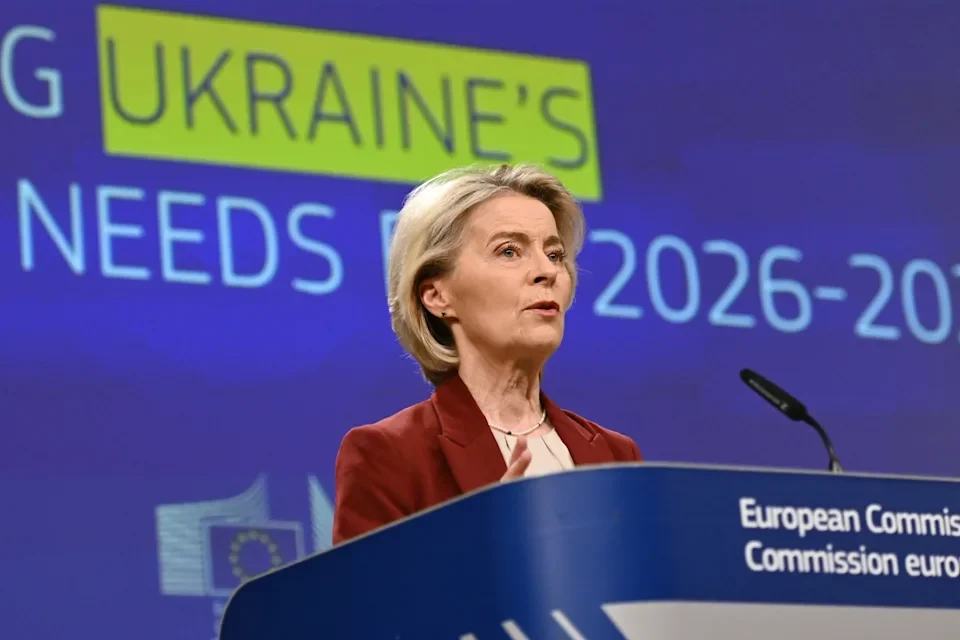
“One thing is very, very clear,” European Commission President Ursula von der Leyen told EU lawmakers ahead of the summit. “We have to take the decision to fund Ukraine for the next two years in this European Council.”
A High-Risk Financial Experiment
The European Commission’s primary proposal—known informally as Plan A—would use frozen Russian assets worth around €210 billion ($246 billion) as collateral to underwrite a €90 billion ($105 billion) ‘reparations loan’ to Ukraine. Additional contributions would come from partners including the United Kingdom, Canada, and Norway.
Most of the frozen assets belong to the Russian Central Bank and are held at Euroclear, a major Belgium-based financial clearing house. While the European Commission insists the plan has a sound legal basis, critics warn it could damage confidence in the euro and Europe’s financial system.
The European Central Bank has expressed concern that such a move might undermine the euro’s credibility if global investors believe state assets can be effectively seized for political purposes. Belgium, where Euroclear is headquartered, has also raised alarms about potential Russian retaliation—both through legal channels and other forms of pressure.
Euroclear itself has warned that transferring the frozen Russian funds into an EU-backed debt instrument could harm its reputation and prompt international investors to shift business elsewhere. Adding to the tension, Russia’s central bank announced last week that it has filed a lawsuit against Euroclear in a Moscow court, increasing pressure ahead of the summit—even if the case is widely seen as unlikely to succeed.
Divisions Inside the EU
Politically, the proposal exposes sharp divisions within the bloc. Plan A requires approval by a qualified majority—roughly two-thirds of member states—meaning it cannot be vetoed by a single country. That structure is crucial, given that Hungary, led by Prime Minister Viktor Orbán, has repeatedly refused to fund Ukraine and remains Moscow’s closest ally within the EU.
Slovakia is also expected to oppose the plan, while Belgium, Bulgaria, Italy, and Malta remain undecided. Even if all six were to vote against the loan, they would still fall short of a blocking minority.
Yet forcing the plan through over Belgium’s objections carries serious political risks. As one senior EU diplomat involved in the negotiations warned, sidelining a country with such a large stake in the outcome could damage trust within the bloc for years.
“Running a steamroller over Belgium would make future compromises much harder,” the diplomat said, speaking on condition of anonymity. “This is not just about Ukraine. It’s about how decisions are made in Europe.”
An Uncertain Plan B
The European Commission has floated a Plan B: raising the funds directly from international markets, similar to the joint borrowing used to finance the EU’s post-pandemic recovery fund. Belgium favors this option, viewing it as legally safer and less damaging to investor confidence.
However, Plan B requires unanimous approval from all 27 member states—an almost insurmountable hurdle given Hungary’s opposition. Orbán has cast himself as a peacemaker and argues that continued financial support only prolongs the war, a position widely rejected by other EU leaders.
Legal, Political, and Economic Risks
Beyond the political math, the proposal raises fundamental legal and institutional questions. Because the loan would involve public finances, national parliaments in several countries may need to approve it, potentially delaying implementation.
“It’s a really new approach. Everyone has questions,” the senior EU diplomat said. “You’re talking about mobilizing public finances at scale. This is not easy.”
European Council President António Costa, who will chair the summit, has pledged to keep leaders at the negotiating table until a deal is reached—even if discussions stretch on for days. But as of Wednesday night, key details remained unresolved, including how guarantees would be structured to protect countries like Belgium from retaliation and whether leaders can approve the plan outright this week.
A Defining Moment for Europe
The stakes could hardly be higher. Failure to secure funding risks pushing Ukraine toward financial collapse, with profound consequences for the war and European security. Success, however, could permanently alter how the EU uses economic power in geopolitical conflicts.
As one EU official put it privately, “This summit will be remembered either as the moment Europe stepped up—or the moment its internal fractures became impossible to ignore.”