




The Election Commission of India has officially announced the schedule for Assembly elections across Tamil Nadu, West Bengal, Kerala, Assam, and Puducherry. With a massive 17.4 crore electorate heading to the polls starting April 9, the Commission’s decision to drastically reduce the number of voting phases in West Bengal has emerged as the central point of political contention.
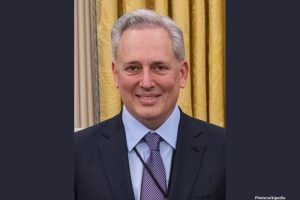
The landscape of Indian domestic politics underwent a definitive shift on Sunday as the Election Commission of India (ECI) activated the Model Code of Conduct, unveiling the roadmap for a pivotal set of Assembly elections. Chief Election Commissioner Gyanesh Kumar, flanked by Election Commissioners Sukhbir Singh Sandhu and Vivek Joshi, detailed a logistical marathon involving 824 constituencies and 2.19 lakh polling stations.
While the routine of the electoral cycle is a hallmark of the world’s largest democracy, the 2026 announcement carries an undercurrent of heightened friction. The Commission’s decision to compress the West Bengal election into just two phases—down from the grueling eight-phase schedule of 2021—has immediately refocused the national spotlight on the volatile political climate of the eastern state.
The Bengal Gambit: Reduced Phases and Legal Battles
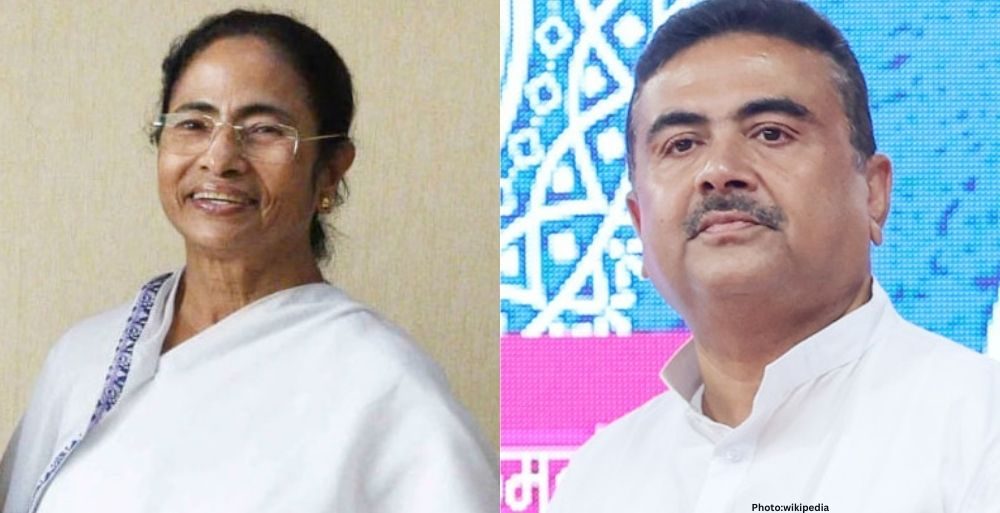
In West Bengal, Chief Minister Mamata Banerjee and her Trinamool Congress (TMC) are fighting for a historic fourth consecutive term. The stakes are underscored by a bitter dispute over the Special Intensive Revision (SIR) of electoral rolls. The Chief Minister has alleged that the exercise led to the arbitrary deletion of voters, a claim that has seen the TMC and other petitioners move the Supreme Court.
Addressing the sharp reduction in phases for the state’s 294 seats, CEC Gyanesh Kumar noted that the Commission had “detailed deliberation” and deemed the change “necessary to reduce the number of phases to an extent where it is convenient for everybody.” Despite this, the move is likely to be scrutinized by the TMC, which has often accused the central machinery of bias. The state will vote on April 23 and April 29, setting up a direct and condensed confrontation between the TMC and a resurgent BJP, which continues its aggressive push to flip the coastal heavyweight.
Southern Strongholds: Consolidation and New Entrants
In the south, the electoral dynamics are equally complex but follow a more streamlined schedule. Tamil Nadu, Kerala, and the Union Territory of Puducherry will all vote in a single phase.
In Tamil Nadu, Chief Minister MK Stalin is leading the DMK-led alliance in a bid for a second term, buoyed by a platform of social justice and federal rights. However, the 2026 contest features a wild card: actor-politician Vijay and his newly launched Tamilaga Vettri Kazhagam (TVK). His entry threatens to disrupt the traditional bipolarity between the DMK and the AIADMK-BJP combine, potentially siphoning off youth votes in a state where cinema and politics are inextricably linked.
Kerala presents a traditional ideological showdown between the CPM-led LDF and the Congress-led UDF. Chief Minister Pinarayi Vijayan is eyeing an unprecedented third term, a feat that would solidify the Left’s last remaining bastion in India. Conversely, the Congress is banking on momentum from its 2024 Lok Sabha performance, though internal fractures over candidate selection continue to plague the party’s state unit.
The Northeast and the UT: Incumbency on Trial
In Assam, Chief Minister Himanta Biswa Sarma remains the face of the BJP’s dominance in the Northeast. Seeking a second term, Sarma’s administration has focused on infrastructure and identity politics. The opposition, spearheaded by Gaurav Gogoi, is attempting to rebuild a fractured Congress base that has suffered from high-profile defections, including that of former state president Bhupen Borah. Assam will vote in a single phase on April 9, a significant shift from the three-phase election seen in the previous cycle.
Finally, in Puducherry, Chief Minister N. Rangasamy is looking to secure a fourth term for the All India NR Congress-led NDA alliance. The small but politically active Union Territory remains a battleground for seat-sharing negotiations as the AIADMK and DMK look to maximize their influence in the 30-member house.
Logistical Prowess and the Ethics of “Freebies”
The ECI’s task is Herculean: managing 25 lakh election officials to ensure the integrity of the vote. The CEC emphasized that while governments have the right to make policy decisions before the announcement, the “inducement” of voters through freebies is strictly prohibited under the Model Code of Conduct.
This warning comes as various state governments have accelerated welfare rollouts in recent weeks—a practice often decried by critics as “fiscal populism.” The ECI’s ability to monitor these inducements, alongside the security challenges of a condensed Bengal poll, will serve as the ultimate test of Gyanesh Kumar’s leadership.
As the nation moves toward the counting date of May 4, the results of these five elections will likely serve as a referendum on the current national political climate, signaling whether the incumbents can withstand the localized pressures of anti-incumbency and the broader shifts in voter sentiment.