





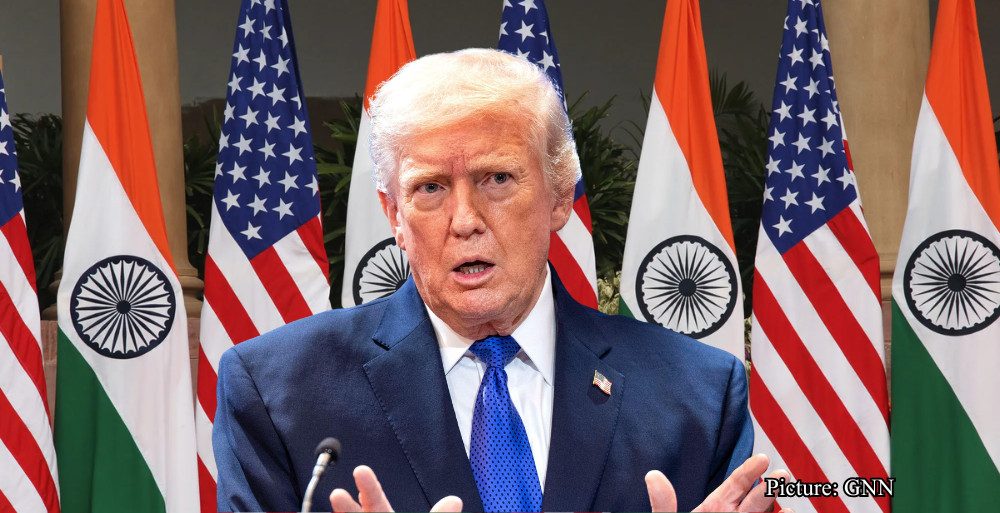
A new 2026 Indian American Attitudes Survey (IAAS) released by the Carnegie Endowment for International Peace finds that many Indian Americans are encountering increased online hostility while expressing strong dissatisfaction with President Donald Trump’s first year back in office. At the same time, the data suggest that while Democrats retain an advantage within the community, party loyalty is softening and political ambivalence is growing.
Conducted in partnership with YouGov, the nationally representative survey shows that 48 percent of respondents say they have seen racist content targeting Indians or Indian Americans on social media “very” or “somewhat often” since the start of 2025. Half reported feeling anger in response to such content, while roughly one-third said it left them anxious or fearful.
The report also highlights offline incidents. Since early 2025, about 25 percent of respondents said they had been called a slur. Smaller percentages reported being physically threatened (9 percent), receiving hate mail (8 percent), experiencing property damage (6 percent), or being physically assaulted (4 percent).
Strong Disapproval of Trump’s Policies
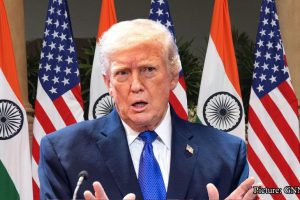
The survey indicates widespread dissatisfaction with Trump’s performance. Overall, 71 percent disapprove of his job performance, including 55 percent who strongly disapprove. Majorities also expressed disapproval of his handling of immigration (64 percent), domestic economic policy (68 percent), and trade and tariff policy (70 percent).
Large majorities opposed specific immigration proposals associated with the administration. Seventy-four percent objected to deporting immigrants to third countries, and about two-thirds opposed a proposed $100,000 fee on new H-1B petitions — a policy with particular significance for Indian-origin professionals.
Democratic Advantage Narrows
Although Indian Americans continue to lean Democratic, party identification has shifted. The share identifying as Democrats fell from 52 percent in 2020 to 46 percent in 2026. Republican identification rose modestly from 15 percent to 19 percent, while independents now account for 29 percent of respondents.
Ideologically, moderates form the largest group at 32 percent, followed by conservatives (22 percent) and liberals (21 percent), suggesting a movement toward the political center.
In a hypothetical rerun of the 2024 presidential race, 57 percent said they would back then–Democratic nominee Kamala Harris, compared to 25 percent for Trump. Support for third-party candidates rose to 10 percent, and 5 percent said they would not vote.
Notably, support for Trump among younger Indian American men — a demographic where he saw gains in 2024 — dropped from roughly 40 percent in 2024 to 24 percent in early 2026.
Discrimination and Daily Life
About half of respondents reported experiencing some form of personal discrimination since early 2025. Skin color (36 percent), country of origin (21 percent), and religion (17 percent) were the most frequently cited reasons. Incidents most commonly occurred in retail settings (42 percent) and during job applications (38 percent).
Nearly one-third said they avoid discussing politics online out of concern about discrimination. Others reported avoiding travel abroad, refraining from displaying political signs, or choosing not to wear Indian attire in public.
Despite these concerns, most are not planning to leave the United States. Fourteen percent said they frequently think about emigrating, while 26 percent said they occasionally consider it. Among those contemplating departure, frustrations with U.S. politics (58 percent), cost of living (54 percent), and personal safety (41 percent) were key factors. Only about one-quarter of those considering emigration said they would choose India as their destination.
U.S.–India Relations and Identity Politics
Foreign policy appears less central to voting decisions. Only 20 percent approved of Trump’s handling of U.S.–India relations, while 55 percent disapproved. However, 25 percent expressed no opinion, indicating relatively low salience.
The survey also measured reactions to public controversies. Respondents expressed strong enthusiasm for New York City Mayor Zohran Mamdani, with 68 percent saying they were somewhat or very enthusiastic about his election. Enthusiasm appeared driven more by ideological alignment than identity factors.
On comments by Vice President JD Vance regarding religion and interfaith marriage, large majorities said political leaders should exercise caution when discussing a spouse’s faith. About two-thirds rejected the notion that it is reasonable to expect a spouse to convert religions.
A Community in Transition
Based on responses from 1,000 Indian American adults surveyed between late November 2025 and early January 2026, the IAAS carries a margin of error of ±3.6 percentage points. The latest wave also included multiracial respondents to better reflect demographic changes within the community.
Overall, the findings portray an electorate unsettled by rising online hostility and skeptical of the current administration, yet increasingly independent in its political identity. While Indian Americans continue to favor Democrats, party allegiance appears less automatic, suggesting a more fluid and competitive political landscape ahead.