





The Bangladesh Nationalist Party has returned to power with a resounding landslide victory following the conclusion of the country’s first national elections since the political upheaval of 2024. In an official announcement released Friday, the Election Commission confirmed that the center-right party secured 209 out of 300 parliamentary seats. This commanding performance grants the party a two-thirds majority in the Jatiyo Sangsad, allowing it to form a government independently and advance a comprehensive legislative agenda without the immediate need for coalition partners.
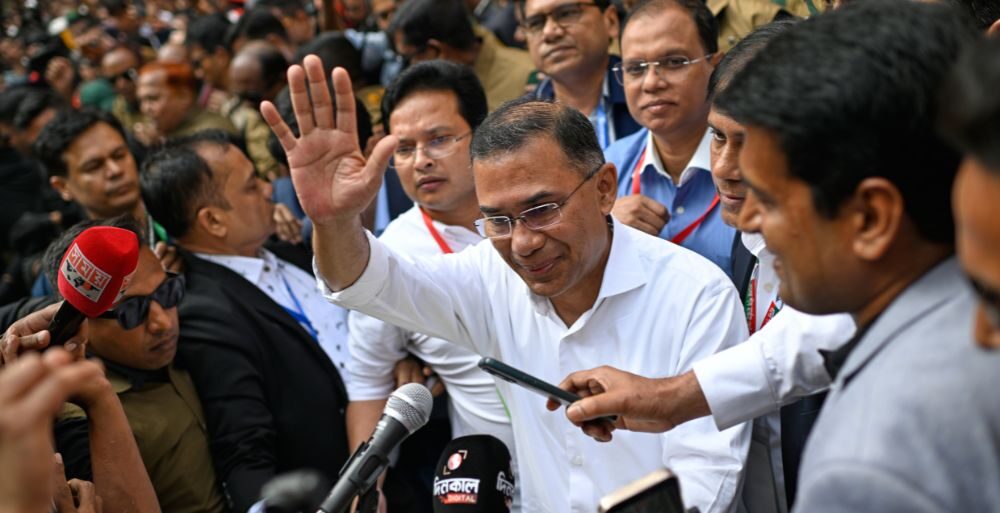
Tarique Rahman, the 60-year-old chairman of the Bangladesh Nationalist Party, is widely expected to be sworn in as the next Prime Minister. His ascent to the leadership marks the conclusion of a significant personal and political odyssey, following nearly two decades of self-imposed exile in the United Kingdom. Rahman returned to his home country in December 2025, just days before the passing of his mother, former Prime Minister Khaleda Zia. His victory represents a major restoration for the Zia political dynasty, which had been sidelined during the lengthy tenure of the previous administration.
The election process also served as a referendum on the country’s future governance structure. Voters were presented with a sweeping package of constitutional reforms known as the July Charter. The Election Commission reported that the referendum passed with significant support, recording approximately 4.8 crore votes in favor of the changes against 2.25 crore opposing votes. The approved reforms include the reinstatement of a caretaker government system for future elections, the introduction of a bicameral parliament, and a mandatory 10-year term limit for any individual serving as Prime Minister. The package also aims to strengthen the independence of the judiciary and reconfigure the balance of power between the executive and legislative branches.
In a notable shift within the political landscape, the Jamaat-e-Islami emerged as the second-largest party in parliament with 68 seats. This result establishes the group as the primary opposition force, a dramatic reversal of fortune for a party that had been a political pariah for over a decade. While the party saw a surge in popularity among students and rural voters in certain regions, it was unable to overcome the broader national appeal of the mainstream Bangladesh Nationalist Party. Analysts suggested that while the Jamaat-e-Islami made significant gains in northern and southwestern districts near the border, concerns regarding its conservative social policies and the status of women may have limited its broader reach in urban centers.
The election took place in a vacuum created by the absence of the Awami League, which was banned from participating in the polls following the student-led uprising in August 2024. That movement led to the ouster of former Prime Minister Sheikh Hasina, who subsequently fled to India. Members of the Awami League have since characterized the 2026 election as a farce, though international observers and local officials described the polling as largely peaceful and representative of the current public sentiment.
As the results were finalized, the Jamaat-e-Islami leadership raised concerns over the conduct of the count, alleging abnormal delays and potential tampering by returning officers. Party officials threatened to launch public protests if they perceived the mandate was being manipulated to favor a specific party. However, the Election Commission rejected these allegations, maintaining that the process was transparent and that the delays were merely a result of the rigorous verification required for such a high-stakes transition.
The electoral performance of newer political entities was notably muted. The National Citizen Party, which was founded by student leaders instrumental in the 2024 protests, secured only six seats. Despite an alliance with the Jamaat-e-Islami, the party failed to convert its revolutionary momentum into significant parliamentary representation. Observers attributed this outcome to public dissatisfaction with the performance of student leaders who had served as advisors in the interim government, as well as lingering allegations of corruption that emerged during the transitional period.
The victory for the Bangladesh Nationalist Party has already drawn international attention. Prime Minister Narendra Modi of India was among the first world leaders to congratulate Tarique Rahman, signaling a desire for regional stability. The new government will inherit a nation undergoing profound institutional change, with the mandate to implement the constitutional reforms approved in the concurrent referendum. Rahman’s administration will be tasked with navigating a complex transition from the interim leadership of Nobel laureate Muhammad Yunus to a permanent civilian government.
With the gazette of newly elected members of Parliament now published for the majority of constituencies, the path is clear for the swearing-in ceremony. The incoming government is expected to prioritize economic recovery and the formalization of the bicameral legislature as outlined in the new constitutional framework. As the country prepares for this new chapter, the immediate focus remains on the peaceful handover of power and the establishment of the new parliamentary session in Dhaka.
For the Bangladesh Nationalist Party, the path forward involves balancing the expectations of a diverse electorate with the specific demands of the student movements that facilitated the current political environment. The commanding majority provides Rahman with the authority to enact swift changes, yet the presence of a revitalized opposition in the form of the Jamaat-e-Islami suggests that the next term of the Jatiyo Sangsad will be marked by more vigorous debate than the previous decade of one-party dominance.
The Election Commission confirmed that polling for one seat was cancelled due to technical issues, while results for two others remain under legal challenge. Despite these minor discrepancies, the overall outcome has been accepted as a definitive shift in the national trajectory. The transition marks the end of the interim administration’s tenure and the beginning of a period that supporters hope will bring stability and democratic consolidation to the South Asian nation.
BNP Landslide Victory In Bangladesh 2026 Election Secures Power For Tarique Rahman