






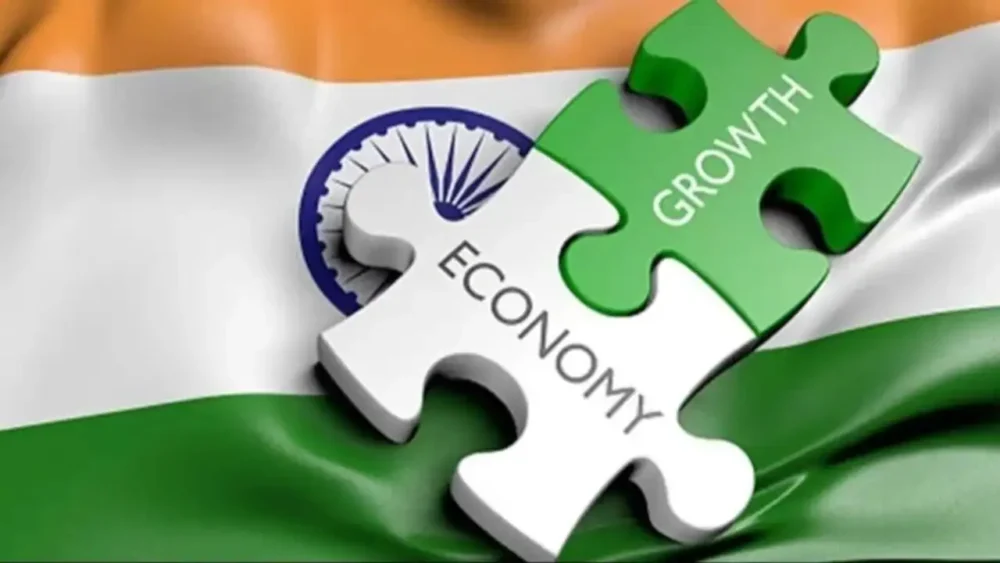
India began the year on a historic note, surpassing Japan to become the world’s fourth-largest economy by nominal GDP. The milestone has been hailed as a symbol of India’s rising global stature and the momentum of its high-growth trajectory. Yet behind the celebratory headlines lies a sobering reality: economic scale has surged faster than living standards for much of the population.
Economists and industry leaders caution that while India’s growth story is impressive, it has yet to translate into broad-based prosperity for a country of more than 1.4 billion people. Gross domestic product rankings may capture global attention, but they do not automatically generate jobs, lift wages, or narrow the deep inequalities that persist across regions and social groups.
“GDP growth alone doesn’t put food on the table,” said an economist familiar with India’s development planning. “The challenge now is to convert scale into sustained, inclusive progress.”
Manufacturing Push Shows Promise — and Limits
On factory floors across the country, the effects of reform are visible. Kunal Gupta, CEO of electric bicycle manufacturer EMotorad, says India’s manufacturing landscape has begun to shift in tangible ways.
“We are constantly seeing more businesses entering manufacturing under the Make in India push,” Gupta said. “There’s a clear move toward localisation, which wasn’t the case a decade ago.”
His company, which previously relied heavily on imported components, now operates a manufacturing unit in Pune to produce batteries and chargers domestically. Government incentives under the Production Linked Incentive (PLI) scheme played a key role in that transition.
Still, Gupta points to persistent obstacles. Export incentives remain limited, logistics costs are higher than in regional competitors such as Vietnam and Thailand, and access to affordable credit continues to constrain expansion. Even as digital payments flourish through platforms like the Unified Payments Interface, financing challenges endure.
A Demographic Opportunity — or Risk
India’s youthful population is often described as its greatest asset. More than a quarter of Indians are between the ages of 10 and 26. But that advantage could quickly turn into a liability if job creation fails to keep pace with growth.
The country needs to generate at least eight million jobs annually over the next decade to meet its development ambitions. Economists stress that this will require faster growth sustained over a longer period, driven by productivity gains and deeper reforms.
“India needs to grow faster for longer,” said economist N.R. Bhanumurthy. “Potential growth must be at least 7.5 percent if the country wants to close income gaps.”
Despite strong projections, India’s per-capita income remains far behind advanced economies, underscoring how economic size masks disparities in individual prosperity.
Reforms Accelerate Amid Global Pressures
External pressures, including higher U.S. tariffs and global trade uncertainty, have sharpened Delhi’s focus on reform. Recent measures include rationalising the goods and services tax, easing labour regulations, opening the insurance sector fully to foreign investment, and reviewing customs rules that disadvantage domestic manufacturers.
“These reforms are important signals,” Bhanumurthy said. “Many more are in the pipeline, and together they can support growth.”
Multinational companies have responded. Major global manufacturers, including electronics giants, have expanded production in India. Yet manufacturing still accounts for only about 16 to 17 percent of GDP — well below East Asian benchmarks.
Fixing the Foundations: Agriculture, Education, Health
Agriculture remains India’s largest employer but suffers from low productivity. Nearly half the workforce depends on farming, yet yields lag far behind global standards.
“Stronger agricultural research and innovation are essential,” said development economist Biswajit Dhar. “We’ve done it before — the Green Revolution and the White Revolution show how inclusive models can transform livelihoods.”
Dhar argues that raising rural incomes would stimulate demand across the economy and help tackle inequality. Without such measures, disparities could fuel social tension.
Human capital is another critical gap. Despite progress in school enrolment and health coverage, access to quality education and healthcare varies widely across regions. Experts say sustained investment in these areas is essential if India is to integrate its workforce into global supply chains and move up the value ladder.
Cautious Optimism from the Ground
Business leaders acknowledge that change is underway, even if challenges persist. Sarvadnya Kulkarni, CEO of an industrial manufacturing firm, credits recent reforms with reducing operational friction.
“A continuous focus on execution will unlock more value,” he said. “The systems now in place are much better than before.”
Pharmaceutical entrepreneur Dr. Satya Ramani Vadlamani echoed that sentiment, noting that bureaucratic hurdles have eased compared to two decades ago. “Things aren’t perfect,” she said, “but the direction is clearly forward.”
The Road Ahead
India’s rise as a global economic heavyweight is undeniable. But the true measure of success will be whether growth delivers decent jobs, higher incomes, and improved quality of life for ordinary citizens. The next phase of India’s journey will be defined not by rankings, but by results felt on the ground.