






A growing share of America’s closest allies now view the United States as an unreliable and destabilizing force on the global stage, according to fresh international polling — a signal of how sharply perceptions have shifted since Donald Trump returned to the White House and began reshaping U.S. foreign policy.
New POLITICO–Public First polling conducted across key allied nations shows that pluralities in Germany and France, along with a majority of respondents in Canada, now believe the U.S. is a negative force in world affairs. Sentiment in the United Kingdom is more divided, though skepticism remains significant.
Across all four countries surveyed, near-majorities agree on one core concern: the United States is increasingly seen as creating problems for other countries rather than solving them.
A Shift in Allied Perceptions
The polling paints a stark picture of how Trump’s sweeping foreign policy overhaul — including aggressive trade measures, confrontational rhetoric toward long-standing partners, and a recalibration of U.S. military commitments — is resonating abroad.
When respondents were asked whether the U.S. tends to support its allies or challenge them, most Canadians said Washington now does more to challenge than support its partners. Similar views were shared by just under half of respondents in Germany and France. In the U.K., roughly four in ten respondents said the U.S. challenges its allies, while more than a third said it cannot be relied upon in a crisis.
In Britain alone, nearly half of respondents said the U.S. creates problems for other countries, and 35 percent described it as a negative force globally.
“These are not marginal opinions,” a European diplomat familiar with the polling said. “They reflect a broader sense of uncertainty about whether the U.S. still sees alliances as strategic assets rather than transactional relationships.”
Trump’s Rhetoric and Policy Choices
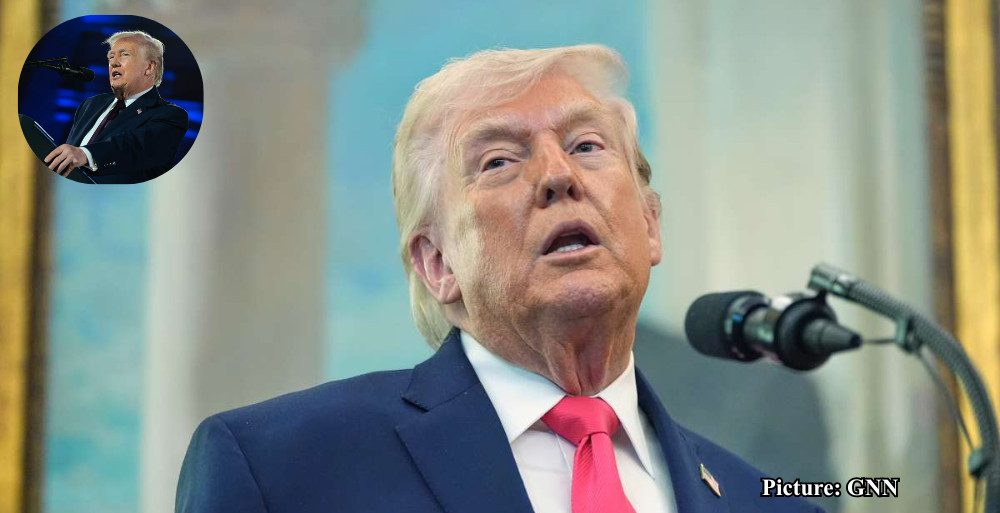
Trump has repeatedly unsettled allies during his first year back in office, particularly in Europe and Canada. In a recent POLITICO interview, he described Europe as a “decaying” group of nations led by “weak” leaders. His administration’s National Security Strategy argued that the continent has lost its “national identities and self-confidence.”
By contrast, the document used noticeably softer language toward Russia — even as European leaders warn of an intensifying “hybrid war” with Moscow that blends cyber operations, political interference, and military pressure.
Defending the administration’s approach, Marco Rubio pushed back against European criticism, insisting that the transatlantic relationship remains anchored in shared values.
“I do think that at the core of these special relationships we have is the fact that we have shared history, shared values, shared civilizational principles that we should be unapologetic about,” Rubio said during a recent briefing.
Still, analysts say public skepticism among allies may be tracking elite concerns about the direction of U.S. leadership.
“Public opinion in democracies often reflects elite opinion,” said Atlantic Council expert Matthew Kroenig. “What you’re probably seeing is politicians in these countries expressing skepticism about the United States and about the Trump administration, and that’s being reflected in the public opinion polling.”
Europe and Canada Recalibrate
The strain is already reshaping policy decisions across Europe and North America.
In Germany, uncertainty over U.S. military support for Ukraine, questions about Washington’s commitment to NATO, and the impact of Trump’s tariff policies have pushed leaders toward greater self-reliance. Chancellor Friedrich Merz recently secured a historic spending overhaul, unlocking hundreds of billions of euros for defense and infrastructure after decades of fiscal restraint.
“Every foreign policy statement by Trump is followed closely,” said Dominik Tolksdorf of the German Council on Foreign Relations. “They’re analyzed for what they might mean for NATO, U.S. troop presence in Europe, and continued support for Ukraine.”
In France, where skepticism of U.S. leadership predates Trump, President Emmanuel Macron has balanced direct engagement with Trump while using his unpredictability to reinforce calls for European strategic autonomy.
“Handing over one’s sovereignty to another power is a mistake,” a senior French military officer told POLITICO, invoking the legacy of Charles de Gaulle. Another defense official said Trump’s National Security Strategy had raised “awareness that something is not right.”
The U.K. faces a delicate balancing act. Prime Minister Keir Starmer has avoided open confrontation, prioritizing a U.K.–U.S. trade deal while coordinating with European partners on Ukraine — all without provoking the White House.
Canada, however, has seen the sharpest deterioration. Relations have been strained by a bruising trade war and Trump’s intermittent rhetoric about annexation.
“People lost their jobs — ones they worked their entire lives,” said Flavio Volpe, president of Canada’s Automotive Parts Manufacturers’ Association. “Billions of dollars in Canadian capital evaporated in an unexplainable turn away from the post–Cold War balance of power.”
Divided Views Inside the U.S.
Despite the criticism abroad, Americans overall continue to view their country more favorably. Nearly half of U.S. respondents say the country supports its allies, a majority believe it can be relied upon in a crisis, and just over half still see the U.S. as a positive global force.
But the divide between political camps is stark.
Almost half of voters who supported former Vice President Kamala Harris say the U.S. is a negative force globally, compared with just 13 percent of Trump voters. Three-quarters of Trump supporters view the U.S. as a positive influence.
“Americans themselves are not blind to how perceptions are changing,” said Seb Wride, head of polling at Public First. “The shift among Democrats in just one year is striking.”