




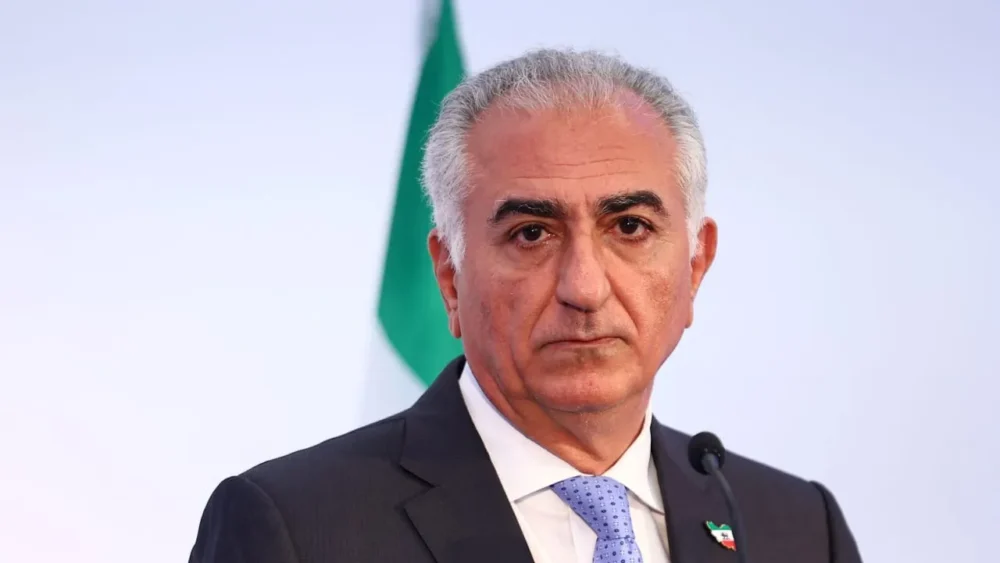
Iran’s exiled crown prince Reza Pahlavi has said that a future democratic Iran would actively pursue closer and more cooperative relations with India, underlining New Delhi’s importance in addressing shared global challenges ranging from energy security to technological innovation.
Speaking at a press conference on Friday, Pahlavi articulated a vision of Iran’s foreign policy that is rooted in democratic values, sovereignty, and international collaboration. He stressed that India would be a natural and strategic partner in this vision, given the two countries’ long-standing historical ties and shared civilisational heritage.
“A democratic Iran is committed to having the best possible relationship, in the context of sovereignty and liberty, with any country that adheres to the same values and can work with us and partner with us in many different domains,” Pahlavi said, outlining how a post-authoritarian Iran would re-engage with the global community.
Recalling a Long Shared History
Pahlavi highlighted that relations between India and Iran stretch back decades, well before the political shifts that followed Iran’s 1979 Islamic Revolution. Recalling a personal memory, he spoke about the visit of former Indian Prime Minister Indira Gandhi to Iran during his youth.
“In modern history, Iran and India have enjoyed good relations. I remember when Prime Minister Indira Gandhi visited Iran. I was very young at the time, so the relationship goes back a long time,” he said, pointing to the depth and continuity of bilateral ties.
Beyond political engagement, Pahlavi emphasised the cultural and civilisational connections that bind the two nations. Praising India’s rich heritage, he said both countries could draw pride and strength from their histories.
“It’s a rich culture and a rich history that we observe in India as well. I think we can, as nations, be very proud of our heritage, and this could be a natural path to a very good bond and cooperation,” he noted.
India’s Role in Addressing Global Challenges
Pahlavi argued that the scale and complexity of today’s global challenges demand stronger international partnerships, and he identified India as a key player in shaping solutions. From climate stress to population pressures, he said no country could tackle these issues alone.
“We have so many challenges to face on our planet. We have issues of energy, and we have issues of population. We have issues of energy shortages. We have a water crisis,” Pahlavi said, stressing the need for collaborative approaches.
He singled out India’s technological capabilities and expertise as areas where cooperation could be particularly impactful. Describing India as a global leader in technology and innovation, he suggested that a democratic Iran would seek partnerships across emerging and future-facing sectors.
“India is a leading country when it comes to technology and expertise,” he said, adding that collaboration could extend to renewable energy, innovation-driven industries, and sustainable development.
Looking Ahead to Economic and Technological Cooperation
Pahlavi expressed optimism about deeper engagement between Iranian and Indian experts, entrepreneurs, and business communities once political conditions in Iran change. He said economic cooperation would be a cornerstone of renewed bilateral relations.
“I’m looking forward to having our experts, our entrepreneurs, our business sector, and anybody else working very closely with our Indian counterparts,” he said. “Hopefully, once we are freed, we can start an entirely new chapter.”
His remarks signal an intent to move beyond traditional energy-based ties and focus on broader, future-oriented collaboration that reflects the realities of the 21st century global economy.
A Relationship Shaped by History and Politics
India and Iran share centuries-old connections rooted in trade, literature, language, and cultural exchange. For much of the 20th century, the two countries maintained close diplomatic and economic ties. However, relations have evolved significantly since the 1979 Islamic Revolution in Iran and have been further shaped in recent years by regional geopolitics, international sanctions, and shifting energy dynamics.
Pahlavi’s comments suggest a desire to reset and revitalise this relationship under a democratic framework, positioning India as a trusted and like-minded partner in Iran’s re-engagement with the world.
As Iran’s political future continues to be a subject of international debate, Pahlavi’s remarks offer a glimpse into how a democratic Iran might recalibrate its global relationships—placing India at the centre of its outreach and cooperation strategy.