








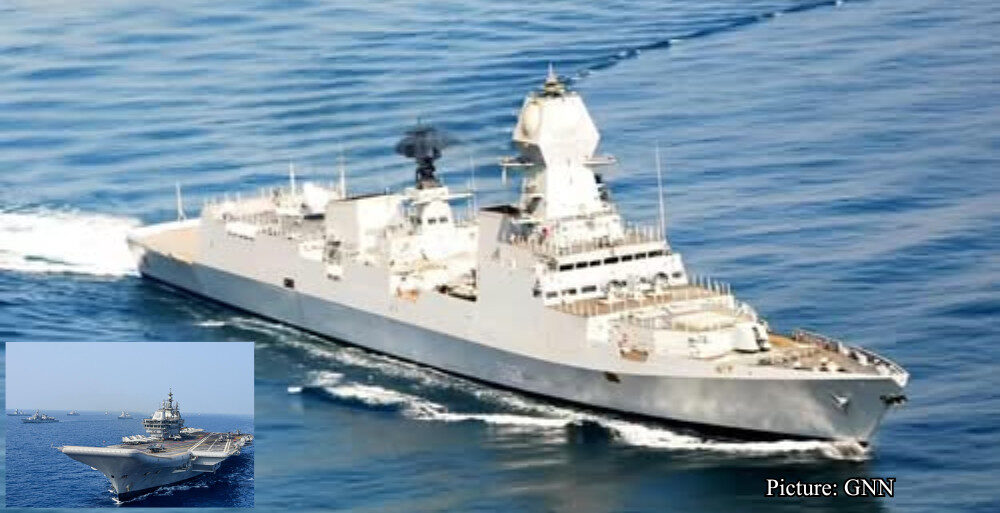
In a striking display of maritime diplomacy and naval prowess, the Indian Navy is set to host a grand international fleet review and the MILAN exercise in Visakhapatnam. This event, which will see the participation of 72 countries and 60 warships, underscores India\’s growing influence in the maritime domain and its strategic importance in the Indo-Pacific region.
The International Fleet Review (IFR) is not merely a ceremonial event but a significant demonstration of naval cooperation and mutual respect among the world\’s maritime forces. Such reviews have a storied history, serving as platforms for nations to showcase their naval capabilities and foster diplomatic ties. For India, hosting the IFR is an opportunity to project its naval strength and engage with global powers, including the United States and Russia, who are often seen as adversaries in the geopolitical arena.
The inclusion of both US and Russian warships in the event is particularly noteworthy. It reflects India\’s adeptness at maintaining strategic autonomy and balancing its relationships with major powers. This balancing act is a cornerstone of India\’s foreign policy, allowing it to navigate complex international waters while safeguarding its national interests.
The concurrent MILAN exercise further amplifies the significance of this gathering. MILAN, which means \’meeting\’ in Hindi, is a biennial multilateral naval exercise that began in 1995. It aims to enhance interoperability and maritime cooperation among the participating navies. This year\’s edition promises to be the largest ever, with an unprecedented number of participants, reflecting the growing importance of collaborative maritime security in the face of evolving threats such as piracy, terrorism, and regional conflicts.
Visakhapatnam, the venue for these events, is a fitting choice given its strategic location on India\’s eastern seaboard. It houses the Eastern Naval Command, one of the three major commands of the Indian Navy, and is pivotal to India\’s efforts to maintain a secure and stable maritime environment in the Bay of Bengal and beyond.
The timing of this international fleet review and exercise is also significant. The Indo-Pacific region is increasingly becoming a focal point of global geopolitical competition, with China expanding its naval footprint and asserting its claims in the South China Sea. By hosting such a large-scale naval gathering, India is sending a clear message about its commitment to a free, open, and inclusive Indo-Pacific, where the rule of law prevails.
Historically, fleet reviews have served as a platform for showcasing naval innovation and technology. This event will likely feature state-of-the-art warships and submarines equipped with advanced weaponry and surveillance systems. It provides an excellent opportunity for navies to exchange best practices and technological know-how, fostering a spirit of collaboration and learning.
Moreover, the international fleet review and MILAN exercise are expected to have broader implications for regional security architecture. They will facilitate dialogue and cooperation among navies, enhancing collective capabilities to address common challenges. In an era where maritime security is paramount, such gatherings are crucial for building trust and understanding among nations.
As the world grapples with the complexities of maritime security, India\’s role as a net security provider in the region is coming to the fore. The international fleet review and MILAN exercise are testament to India\’s proactive approach in fostering a stable and secure maritime environment. By bringing together a diverse array of naval forces, India is not only strengthening its own maritime capabilities but also contributing to global peace and stability.
In conclusion, the upcoming international fleet review and MILAN exercise represent a milestone in India\’s maritime journey. They highlight the country\’s strategic vision and its commitment to playing a constructive role on the world stage. As the warships gather in Visakhapatnam, the event will serve as a powerful reminder of the importance of maritime diplomacy and cooperation in ensuring a peaceful and prosperous future for all.