







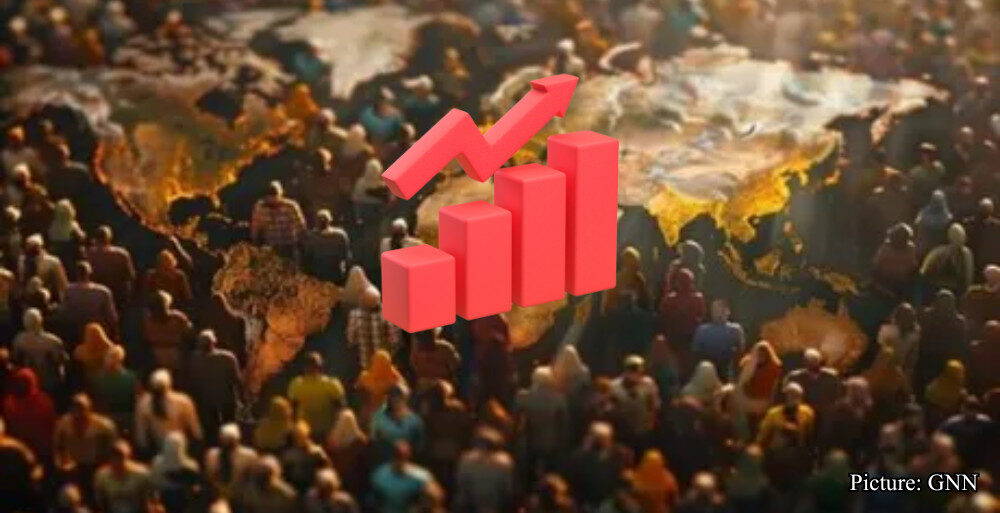
In a world where demographic shifts often underscore geopolitical and economic narratives, the recent findings from Pew Research Center regarding the Hindu population growth offer a fascinating lens through which to view broader global trends. The study, spanning a decade from 2010 to 2020, reveals that the Hindu population has grown by 126 million, maintaining a steady pace that mirrors the overall global population increase. This growth, which positions Hindus at 14.9% of the global population, prompts a deeper exploration into the factors driving these numbers and their implications on a global scale.
The term \’Hindu rate of growth\’ historically referred to India\’s sluggish economic growth rate in the decades following independence. However, in this context, it takes on a new dimension, reflecting not economic stagnation but rather a sustained demographic expansion. This growth is largely concentrated in India, home to the majority of the world\’s Hindus, but it also reflects a broader diaspora spread across the globe. The increase in numbers is not just a matter of birth rates but also migration patterns, cultural resilience, and the ability to maintain religious identity in diverse environments.
India, as the world\’s largest democracy, provides a fertile ground for understanding these dynamics. The country\’s population policies, economic reforms, and social structures all play pivotal roles in shaping demographic trends. Over the past decade, India has witnessed significant economic transformations, urbanization, and shifts in societal norms, all of which contribute to its population dynamics. The Hindu population\’s growth aligns with these changes, highlighting the interplay between cultural identity and modernity.
Globally, the Hindu diaspora is expanding, particularly in countries like the United States, Canada, the United Kingdom, and Australia. This spread is not just a result of economic migration but also educational pursuits and familial ties. As Hindus establish themselves in these new environments, they bring with them a rich tapestry of cultural and religious traditions that contribute to multicultural societies. This expansion has implications for global cultural exchanges, economic contributions, and even political landscapes, as seen in the increasing political engagement of Hindu communities in their adopted countries.
At the heart of this demographic growth is the question of identity and integration. How do Hindu communities maintain their cultural heritage while adapting to new societal norms? This balance is crucial, as it affects everything from religious practices to language preservation and intergenerational relationships. The ability of the Hindu diaspora to navigate these challenges speaks to the broader human experience of migration and assimilation.
Furthermore, the growth of the Hindu population intersects with pressing global issues such as climate change, resource management, and urban development. As populations grow, so does the demand for resources, infrastructure, and sustainable development. In India, this is particularly poignant as the country grapples with environmental challenges and strives for economic growth that is inclusive and sustainable. The Hindu population\’s growth, therefore, is not just a statistic but a critical component of broader discussions on sustainability and development.
In conclusion, the Pew survey\’s findings on Hindu population growth are more than mere numbers. They reflect a dynamic interplay of cultural, economic, and social factors that shape the lives of billions. As the world continues to evolve, understanding these demographic trends becomes essential in crafting policies and narratives that are inclusive and forward-thinking. The Hindu rate of growth, in this context, is a testament to the resilience and adaptability of a community that continues to thrive amidst global changes.