






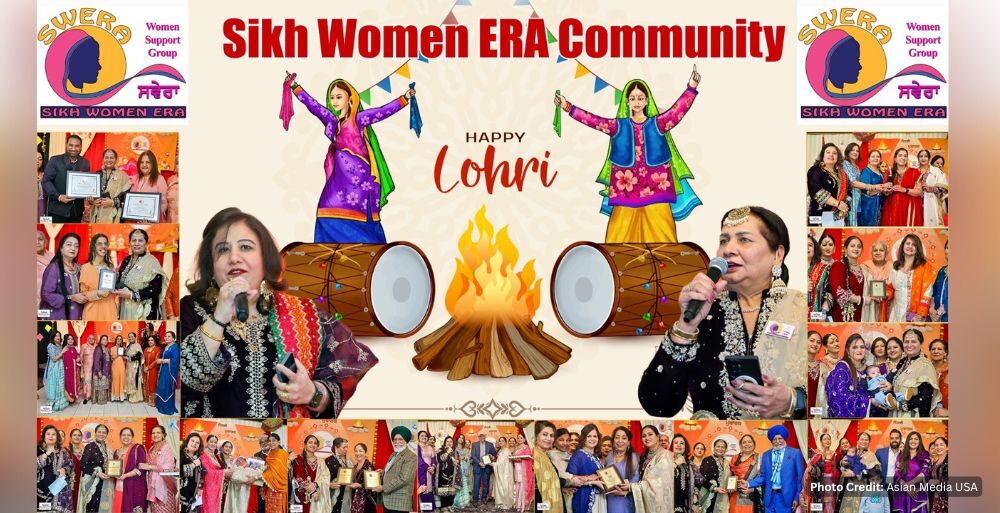
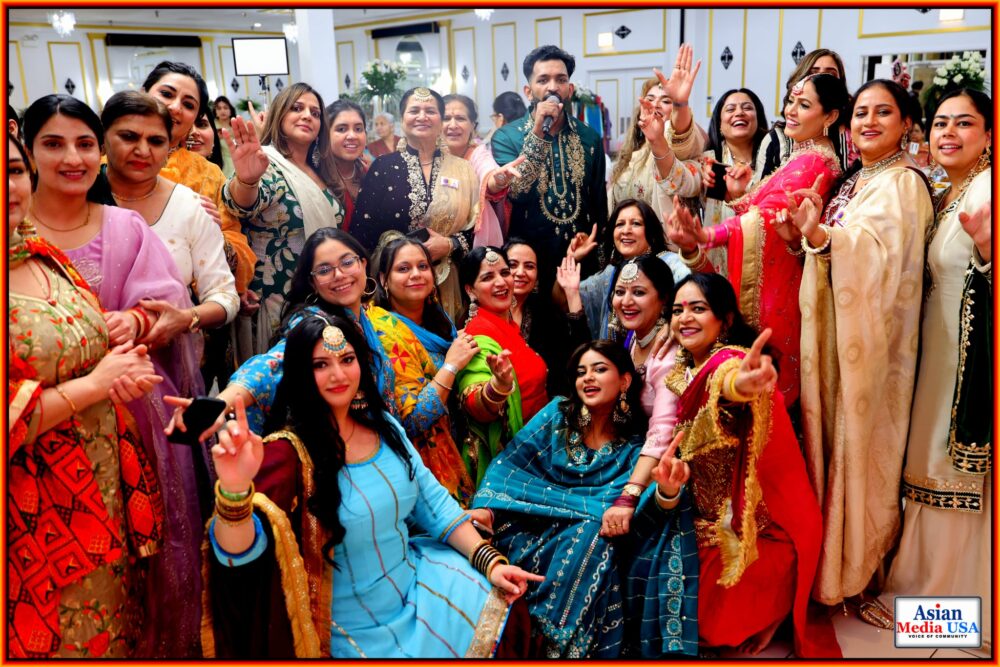
The winter chill of a February evening in Arlington Heights, Illinois, was effectively dispelled by the warmth of cultural celebration as the Sikh Women Era hosted its annual Community Lohri. Held at the Atlantis Banquets on Saturday, February 7, 2026, the event served as a vibrant nexus for the Punjabi diaspora in the Midwest. The gathering transformed the traditional harvest festival into a sophisticated showcase of heritage, empowerment, and communal solidarity, drawing hundreds of attendees from across the Chicago metropolitan area.
As a registered 501(c)(3) nonprofit organization, the Sikh Women Era, commonly known as SWERA, has established a significant footprint in the region since its inception in 2016. The organization focuses on the dual goals of empowering Sikh women and preserving Punjabi traditions within the American context. This year’s Lohri celebration underscored those objectives by honoring the historical roots of the festival while centering the leadership and artistic contributions of women. Traditionally, Lohri marks the passing of the winter solstice and the promise of longer days, famously associated with the folk legend of Dulla Bhatti, a hero who championed the rights of the underprivileged.
The evening commenced with an official welcome from Jasbir Kaur Mann, a central figure within the SWERA leadership. Her opening remarks emphasized the importance of gratitude and unity within the immigrant experience. Following the welcome, the program transitioned to a formal acknowledgment of the dual identity shared by many in attendance as Mini Singh performed the National Anthem. This fusion of American civic pride and Punjabi cultural roots set a respectful and inclusive tone for the remainder of the festivities.
The cultural program was inaugurated by Gurleen Kaur, who served as the primary master of ceremonies for the first half of the evening. The stage was first claimed by a Gidha group performing a piece titled Dheeyan Da, which translates to Daughters of the Soil. Performers including Gurleen Kaur, Parmleen Kaur, Simar Kaur, Reeya Hunjan, and Savreen Kaur executed the high-energy folk dance with precision. Under the coordination of Payal Virdi and Navneet Kaur, the performance acted as a rhythmic thesis for the event, highlighting the strength and visibility of Punjabi women in the modern era.
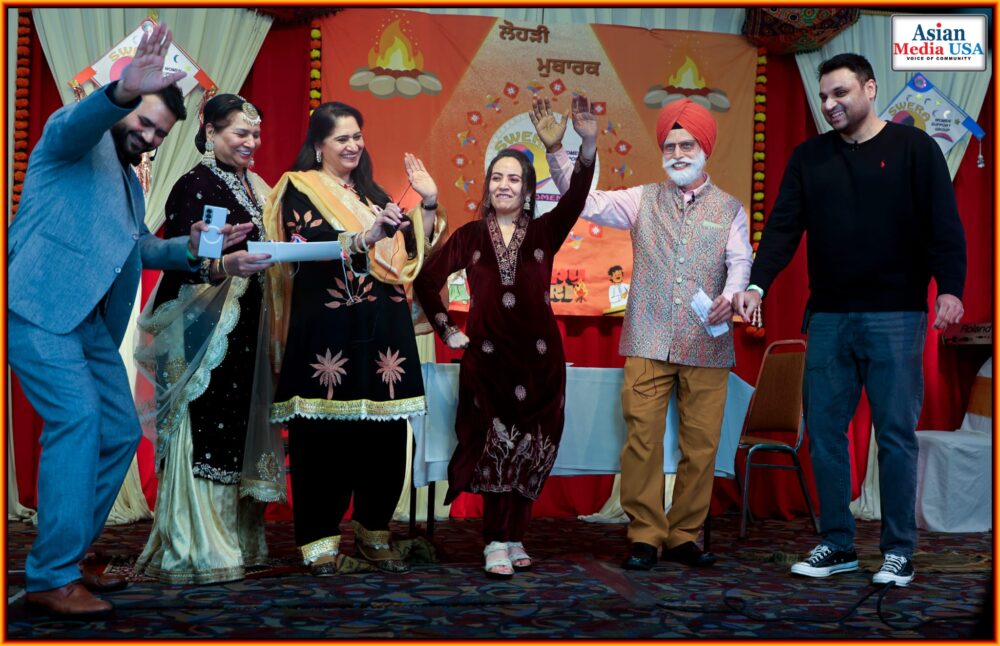
As the evening progressed, Kirandeep Kaur assumed the duties of master of ceremonies, maintaining the momentum of the scheduled performances. The musical variety continued with Minoo Singh, who performed the classic folk song Mele Nu Chal Mere Naal Kureh. The selection resonated deeply with the older generations in the audience, invoking a sense of nostalgia for the village fairs of Punjab, while the infectious beat engaged the younger attendees.
Recognizing the educational aspect of the festival, the organizers included a segment dedicated to the historical and folkloric origins of Lohri. Tahira Rida provided a compelling narration of the story of Dulla Bhatti. By recounting his efforts to rescue young women from injustice and facilitate their marriages, Rida bridged the gap between ancient folklore and the contemporary mission of SWERA to protect and uplift women within the community.
Humor played a vital role in the evening’s entertainment, reflecting the boisterous and resilient spirit often associated with Punjabi culture. A musical skit titled Pension Lag gai bebe nu, performed by Baljeet, Kulwant, and Rimple, utilized witty lyrics and comedic timing to address social themes with a lighthearted touch. This was followed by a more contemplative segment featuring the poetry of Rakind Kaur, whose verses offered a soulful reflection on identity and belonging.
The theatrical highlight of the night was the skit Kush Khatti Kush Mithi, written by Mandeep Kumar and Ritu Kaur. Directed by Ritu Kaur, the ensemble cast included Rajinder Bir Mago, Gurpreet K Singh, Ritu Kaur, Mandeep Kumar, Nitish, Raj Dhaliwal, and Rajwinder Kaur. The performance captured the nuances of Punjabi domestic life and the immigrant experience, eliciting significant laughter and applause from the audience.
The energy reached a crescendo with a grand Gidha performance featuring a large ensemble of dancers including Rajwinder Kaur, Rimple Dogra, Kirandeep Kaur, Diljot Kaur, Narinder Kaur, Sarabjit Kaur, Hardeep Kaur, Manmeet Kaur, Anudeep Sandhu, and Baljeet Kaur. The synchronized movements and traditional boliyan, or rhythmic verses, reaffirmed the communal bond that Lohri is intended to foster. The musical atmosphere was further enhanced by the soulful vocals of the evening’s featured singer, Rav Inder Singh, whose performance drew many attendees to the dance floor.
Culinary traditions were also central to the celebration. Guests were served traditional Punjabi fare provided by Touch of Spice, with additional contributions from K K Pamma. In keeping with Lohri customs, Star Foods and Singh Grocer provided moongfali and gachak, the peanuts and jaggery-based sweets that are synonymous with the winter harvest. The visual ambiance of the hall was managed by SWERA members Baljeet Athwal and Narinder Kaur, who incorporated traditional motifs into the decor.
Beyond the performances, SWERA utilized the platform to recognize significant life milestones within the community. Dimpy Kaur and Sukhvir Dhillon oversaw the distribution of gift hampers to newlywed couples and families with newborns, a practice that aligns with the traditional observation of a child’s or couple’s first Lohri. This gesture reinforced the organization’s role as a support system for families navigating life in the United States.
The success of the event was bolstered by significant philanthropic support. Grand sponsor Darshan Singh Dhaliwal led a list of contributors that included Dawinder Singh Rangi, Jassi Sahota, Kamaljit Sahota, Maddy Singh, Chankirat Singh, and several others. These contributions allow SWERA to maintain its status as a resource for Sikh women in Illinois, providing a space where cultural literacy and social support intersect.
The administrative and logistical execution of the night was the result of a coordinated effort by a large committee of volunteers. Key organizers included Jasbir Kaur Mann, Manjind Brar, Baljeet Athwal, Sukhvir Dhillon, Dimpy Kaur, Pammi Vohra, and several other dedicated members. Their work ensured that the transition from a traditional village celebration to a large-scale suburban gala was seamless and professional.
As the event concluded, the impact of the gathering was evident in the continued networking and socializing among the guests. The Sikh Women Era’s Community Lohri proved to be more than a seasonal party; it functioned as a vital cultural touchstone for the Midwest Punjabi community. By emphasizing the role of women as the primary carriers of tradition, the event underscored a message of resilience and progress.
In an increasingly globalized world, such community-led festivals serve as essential anchors for cultural identity. The 2026 Lohri celebration in Arlington Heights demonstrated that the roots of Punjabi heritage remain deep and vibrant in the American Midwest, nourished by the leadership of women and the collective spirit of the diaspora.