








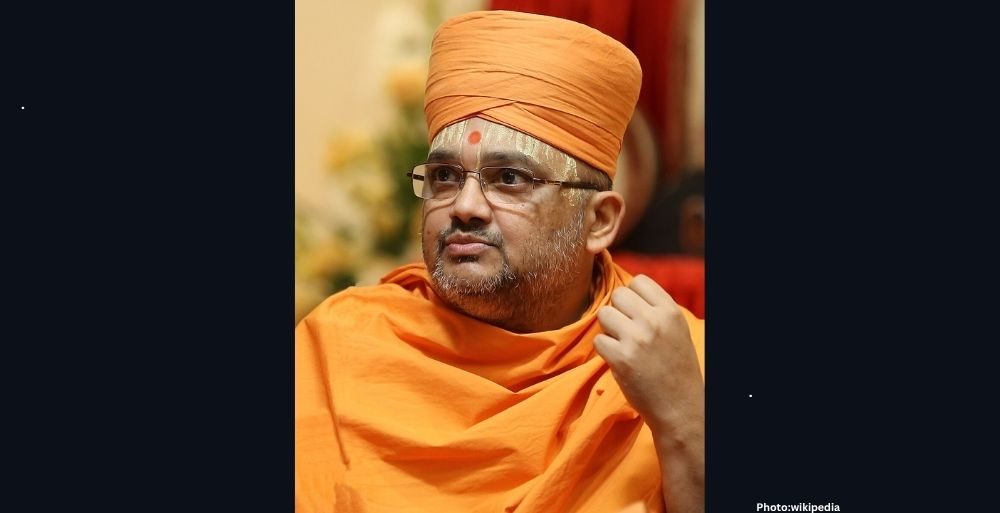
A landmark recognition of Sanskrit scholarship and Hindu philosophy, Mahamahopadhyaya Dr. Bhadreshdas Swami of the BAPS Swaminarayan Sanstha has been awarded the Sahitya Akademi Award for his literary work “Prasthanachatushtaye Brahmaghosha,” highlighting the vitality of Sanskrit in contemporary scholarship.
March 17, 2025 — In a significant development for the field of Sanskrit literature and Hindu philosophy, Mahamahopadhyaya Dr. Bhadreshdas Swami of the BAPS Swaminarayan Sanstha has been awarded the Sahitya Akademi Award for the year 2025. This prestigious accolade, conferred by the Government of India, recognizes his literary work titled “Prasthanachatushtaye Brahmaghosha,” which has been selected as the finest Sanskrit work in the country.
Dr. Bhadreshdas Swami’s text serves as a comprehensive exposition of the Brahma principle, drawing from the foundational scriptures of Hinduism, namely the Upanishads, the Bhagavad Gita, and the Brahma Sutras. Additionally, it incorporates the teachings from the Vachanamrut delivered by Bhagwan Swaminarayan. The work is characterized by its poetic style and the use of aphorisms (sutras), which scholars have described as a blend of philosophical depth and literary elegance.
Significance of the Award
The Sahitya Akademi, established in 1954, plays a crucial role in the promotion of literature in multiple languages across India. The decision to award Dr. Bhadreshdas Swami highlights not only his individual achievements but also reinforces the enduring significance of Sanskrit as a medium for both intellectual rigor and creative expression. The recognition has been met with widespread celebration among scholars and literary figures across India, who view it as an affirmation of the relevance of ancient languages in contemporary discourse.
Background of the Work
Published in 2018, “Prasthanachatushtaye Brahmaghosha” was created under the guidance of His Holiness Mahant Swami Maharaj, the spiritual leader of the BAPS Swaminarayan Sanstha. The text aims to present the philosophical principles articulated by Bhagwan Swaminarayan in a literary framework that resonates with both traditional scholarship and modern interpretations. The selection committee of scholars recognized the work for its literary characteristics and philosophical insights, ultimately deeming it the best Sanskrit work of 2025.
Dr. Bhadreshdas Swami is an esteemed scholar with a longstanding commitment to advancing Sanskrit scholarship and Vedic philosophy. Holding multiple academic qualifications, including an M.A., Ph.D., and D.Litt., he also received an honorary Doctor of Science (D.Sc.) from IIT Kharagpur. As the Head of the BAPS Swaminarayan Research Institute, he has contributed significantly to the field through various publications and commentaries.
Previous Contributions and Recognition
Prior to this award, Dr. Bhadreshdas Swami authored “Swaminarayana Siddhanta Sudha” in 2022, which presents a detailed exposition of the Akshar-Purushottam Darshan, the philosophical doctrine revealed by Bhagwan Swaminarayan. His notable works include the “Swaminarayan Bhashyam,” a five-volume commentary on the Prasthanatrayi that reaffirms the Akshar-Purushottam Darshan as a distinct Vedantic tradition. His contributions have garnered recognition both domestically and internationally.
Throughout his career, Dr. Bhadreshdas Swami has received numerous accolades, including the Lifetime Achievement Award from the Indian Council of Philosophical Research (ICPR) and the Vedant Martand Sanman from Silpakorn University in Thailand. He was also honored with the Acharya Pravar title by the Uttar Pradesh State Government and recognized for Excellence in Philosophy by Babasaheb Bhimrao Ambedkar University in Lucknow. Further acknowledgments include the Darshankesari Award and the Professor G.M. Memorial Award from the University of Mysore, along with several others from prestigious institutions.
Reflections on the Award
In response to receiving the Sahitya Akademi Award, Dr. Bhadreshdas Swami expressed profound gratitude, dedicating the honor to Bhagwan Swaminarayan and his gurus, Pramukh Swami Maharaj and Mahant Swami Maharaj. He emphasized that this recognition not only honors his work but also reflects the timeless relevance of Sanskrit literature and the enduring vitality of India’s rich philosophical tradition. This award is expected to inspire further scholarship and engagement with Sanskrit texts, reinforcing their importance in the modern academic landscape.
The Role of BAPS Swaminarayan Sanstha
The BAPS Swaminarayan Sanstha, established in the early 20th century, is a prominent socio-spiritual organization known for its commitment to promoting spiritual values and cultural heritage through education and community service. The organization’s emphasis on academic excellence and philosophical inquiry aligns with its broader mission of fostering a deeper understanding of Hindu principles and their applicability in contemporary society. Dr. Bhadreshdas Swami’s recognition through the Sahitya Akademi Award aligns with BAPS’s overarching goal of elevating the status of Sanskrit and encouraging scholarly engagement with its texts.
Impact on Sanskrit Literature
The Sahitya Akademi Award serves as a vital platform for highlighting the importance of Sanskrit literature in India’s cultural landscape. As the world increasingly recognizes the significance of ancient languages in shaping philosophical thought, Dr. Bhadreshdas Swami’s award is a timely reminder of Sanskrit’s relevance. By celebrating works like “Prasthanachatushtaye Brahmaghosha,” the Sahitya Akademi not only honors individual scholars but also promotes a broader dialogue about the role of traditional literature in today’s intellectual discourse.
As contemporary scholars grapple with the challenges posed by globalization and technological advancements, the recognition of Sanskrit literature through prestigious awards can inspire new generations of scholars to explore and engage with these rich textual traditions. This award, therefore, not only acknowledges Dr. Bhadreshdas Swami’s contributions but also reinforces the importance of preserving and promoting the Sanskrit language and its philosophical heritage for future generations.