







Malayalam cinema carries a rhythm unlike any other. It doesn’t rush into drama or loud spectacle. Instead, it often opens with the simple clink of a tea glass, a complaint about the sticky heat, or a lingering frame of moss settling on a compound wall. For years, this unique cinematic pulse remained Kerala’s treasured secret, passed among the diaspora in carefully packed DVD collections.
Today, the rest of India — and increasingly the world — is experiencing this magic. A software engineer in Pune analyzes the writing of Kishkindha Kaandam during lunch, a student in Delhi hums “Illuminati” from Aavesham, and moviegoers in Tamil Nadu turned Manjummel Boys into one of their highest-grossing films despite featuring no Tamil superstar.
From the warmth of Premalu and the chaos of 2018, to the gentle melancholy of Kumbalangi Nights and the polished emotions of Hridayam, Malayalam films have moved far from the “regional cinema” label. They now dominate watchlists across languages and cultures.
So why is Malayalam cinema touching hearts everywhere?
A Transformation Decades in the Making
Although it seems like Malayalam cinema became mainstream overnight, its reinvention began many years ago. Filmmaker Arun Chandu traces this shift back to the mid-1980s, when the industry experienced a creative renaissance.
He explains how parallel and commercial cinema slowly merged, sharpening writing, grounding performances, and dissolving the boundaries between artistic and mainstream storytelling. Audiences began embracing films with relatable characters and lived-in emotions rather than just spectacle.
“It’s about connection,” Chandu says. “When stories stay rooted in real life, they become universal.”
This approach removed the “rules” around who a hero must be or how a film should unfold. Viewers simply follow the narrative — no gimmicks, no glamour expectations, only honesty.
And perhaps that’s the real secret: Malayalam cinema treats viewers not as passengers, but as participants.
Local Stories With Universal Hearts
Director Mahesh Narayanan believes audiences respond to this authenticity above all else. “The more rooted a story is, the stronger the emotional link,” he says.
Streaming platforms only amplified what Malayalam cinema had already perfected — craftsmanship, writing, and emotional truth.
Actor Makarand Deshpande, who works extensively in Malayalam films, notes that even casual viewers outside Kerala can sense the quality. “You can feel the sincerity in the filmmaking,” he says.
Aju Varghese echoes this: Malayalam films maintain realism even when they incorporate drama, which makes them feel organic rather than manufactured.
In a film landscape often built around larger-than-life stars, Malayalam cinema focuses on flawed, grounded characters. They make tea, sulk, argue, worry, hope, and change. They don’t aim to be invincible — only believable.
When cinema stops trying to be universal, it ends up becoming truly relatable.
2024: The Year The World Tuned In
This year marked the moment Malayalam cinema went from admired to unavoidable.
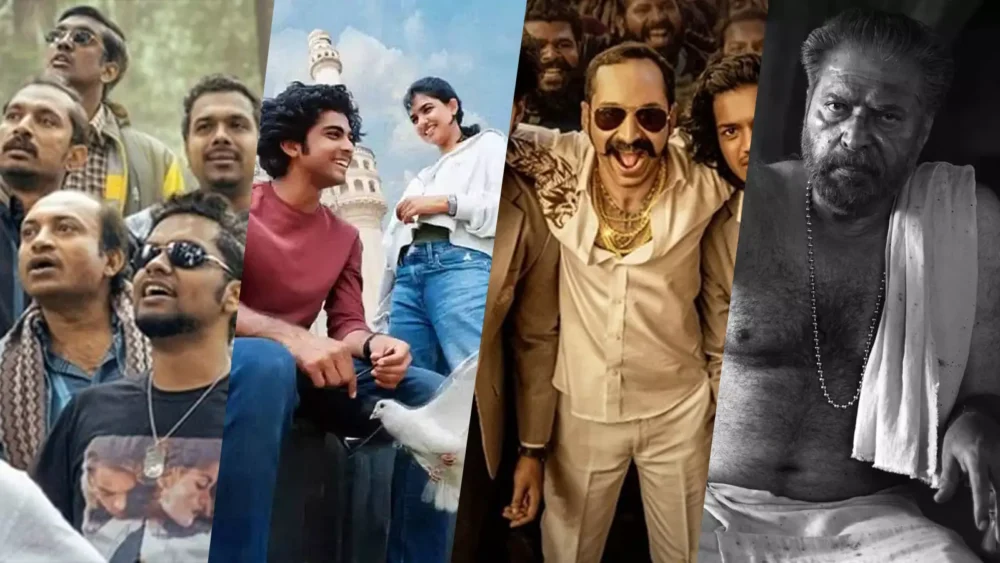
- Manjummel Boys delivered an exhilarating story of friendship with no dependence on star power.
- Aadujeevitham showcased extreme physical transformation and intense visual storytelling.
- Aavesham turned into a cultural phenomenon, with Fahadh Faasil’s performance spreading faster than subtitles.
- Premalu and Kishkindha Kaandam proved the industry could effortlessly shift between genres without losing authenticity.
Instead of chasing the “pan-India” label, Malayalam films stayed true to humanity first, language second.
What Makes Malayalam Cinema Universal?
Three qualities consistently stand out:
1. Authenticity
Homes look lived-in. Clothes repeat. People behave like real people.
2. Unpolished Realism
Canteens, barber shops, old offices, small towns — these aren’t sets, they’re environments that feel lived.
3. Deep Humanity
Characters carry emotional weight, moral complexity, and individuality.
Gateway films like Premam, Bangalore Days, and Hridayam brought non-Malayali viewers closer. Then came the layered titles — Drishyam, Kumbalangi Nights, Joseph, Joji — which drew cinephiles into deeper waters.
Word of mouth became the industry’s biggest marketing tool.
Aju Varghese says it simply: “We have great writers. That honesty keeps the audience with us.”
An Audience That Grew With Its Cinema
Kerala’s evolving audience is a major reason behind this cultural shift. The state once embraced loud commercial entertainers and soft-porn content, but over time, expectations changed. Families returned to theatres. Cinema became a serious cultural experience.
Director Mahesh Narayanan says the industry’s strength is its simplicity and lack of rigid formulas. No hero template. No predictable arc. Pure storytelling.
Chandu adds that after the ’80s renaissance, audiences demanded quality — and that expectation trained filmmakers to deliver it.
Even “bad” Malayalam films, as he jokes, are often more sincere than many mainstream movies elsewhere.
Craft Over Noise
Malayalam filmmaking is known for clarity, precision, and humility. There is little hype — only hard work. Actor Makarand Deshpande notes that filmmakers know exactly what they want, from character design to narrative beats.
Even the industry’s biggest stars — Mammootty, Mohanlal, Fahadh Faasil, Manju Warrier, Vineeth Sreenivasan — routinely choose intimate, character-driven films instead of spectacle-heavy projects.
The result? Authentic cinema that values emotional depth over shock value.
Deshpande believes other industries may struggle to replicate this because their massive budgets force them to prioritize “what will sell” instead of “what feels true.”
But he believes Malayalam cinema can inspire change:
“Even if 25% of films across industries adopt this honesty, the landscape will evolve.”
The Essence of Malayalam Cinema
Malayalam cinema doesn’t race.
It doesn’t scream.
It doesn’t perform for applause.
It breathes.
It watches.
It listens.
For a non-Malayali viewer, watching a Malayalam film feels like discovery — the joy of stories lived, not dressed up. Moments where a sigh, a pause, or a glance carries more weight than a punchline.
When the subtitles fade and the lights return, the feeling is not just admiration — it’s relief.
Relief that cinema can still be human.