








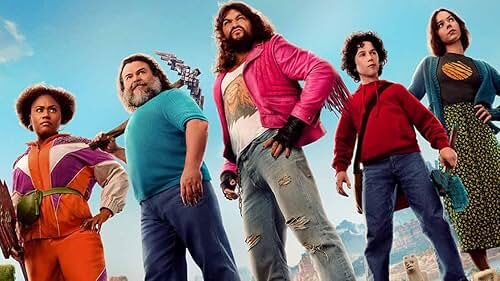
At first glance, A Minecraft Movie and Oppenheimer appear to exist at opposite ends of the cinematic spectrum. One is a cerebral historical drama led by Cillian Murphy, chronicling the creation of the atomic bomb. The other is a brightly coloured, anarchic video-game adaptation featuring Jack Black belting out songs about “lava chicken.” Yet, in an unexpected way, the two films share a defining legacy: both reshaped how audiences engage with cinema in the post-pandemic era.
By the end of 2025, A Minecraft Movie had emerged as the highest-grossing film of the year in the United States and the fourth biggest globally, nearing the $1 billion mark — a feat Oppenheimer achieved in 2023. But box-office numbers alone do not explain why A Minecraft Movie may ultimately be remembered as the year’s most important release. Its true significance lies in how it transformed moviegoing into a participatory, social, and viral event — pointing to the future of cinema itself.
Hollywood’s growing reliance on video-game adaptations made the film’s success seem possible, if not inevitable. Recent years have seen hits such as The Super Mario Bros. Movie, Sonic the Hedgehog 3, and Five Nights at Freddy’s, with more adaptations already lined up. As superhero fatigue sets in, video games have become Hollywood’s most reliable intellectual property.
Still, Minecraft hardly seemed like the most cinematic of source materials. The best-selling video game of all time is defined by blocky landscapes, pixelated minerals, and an open-ended structure that resists traditional storytelling. Handing the project to Jared Hess, known for offbeat comedies like Napoleon Dynamite, raised further doubts. Critics were unconvinced: the film scored just 48% on Rotten Tomatoes, with some reviews dismissing it as noisy and chaotic.
Audiences, however, had a very different reaction.
From its opening weekend, A Minecraft Movie became less of a screening and more of a spectacle. Fans shouted out lines, hurled popcorn, filmed themselves dancing in aisles, and erupted during the now-infamous “chicken jockey” moment — when a zombie child rides a chicken and Jack Black bellows the phrase with manic glee. At some screenings in the U.S., police were reportedly called, and in one Utah cinema, attendees even brought a live chicken.
Not everyone welcomed the chaos. A Guardian column warned that audience participation had gone “too far,” urging “the grownups to lay down the law.” Yet for many families, the disorder was the appeal. British comedian Sam Avery told the BBC that watching the film with his sons was “honestly the most joyous cinema-going experience I’ve ever had.”
Hess himself embraced the phenomenon. “It’s been way too fun,” he said in Entertainment Weekly, referring to fans recording speeches before the film and posting them online. “I’m just glad people are making memories with their friends and families.”
That social-media dimension proved crucial. Unlike The Rocky Horror Picture Show, which took years to build its participatory cult, A Minecraft Movie achieved viral status within days. TikTok clips of raucous screenings acted as free marketing, transforming chaos into commercial fuel.
The trend is part of a broader shift toward what some critics call the “eventification” of cinema. From the “Gentleminions” craze around Minions: The Rise of Gru to singalong screenings of Wicked, studios and audiences alike are rediscovering the joy of communal spectacle. Warner Bros eventually formalised the mayhem by announcing official audience-participation screenings for A Minecraft Movie.
This brings the story back to Oppenheimer — and the 2023 cultural phenomenon known as Barbenheimer. When Nolan’s sombre biopic opened opposite Barbie, audiences turned the contrast into a themed social event, dressing up and watching both films back-to-back. The lesson was clear: people no longer go to cinemas just to watch films; they go to participate.
In the wake of Covid-19 and the rise of streaming, cinemas have struggled to justify their relevance. Yet films that thrive on collective emotion — horror, comedy, music, and now video-game adaptations — have helped revive the big screen as a shared experience. As filmmaker Ryan Coogler recently noted, watching certain films with a crowd creates a “circular feedback” of energy, fear, and excitement that cannot be replicated at home.
Seen through that lens, A Minecraft Movie was not just a hit — it was a proof of concept. Its popcorn-flinging, phone-filming audiences may frustrate purists, but they also represent cinema’s evolving survival strategy. In 2025, the most important film was not the most refined or critically adored, but the one that reminded millions why gathering in a dark room with strangers can still feel electric.