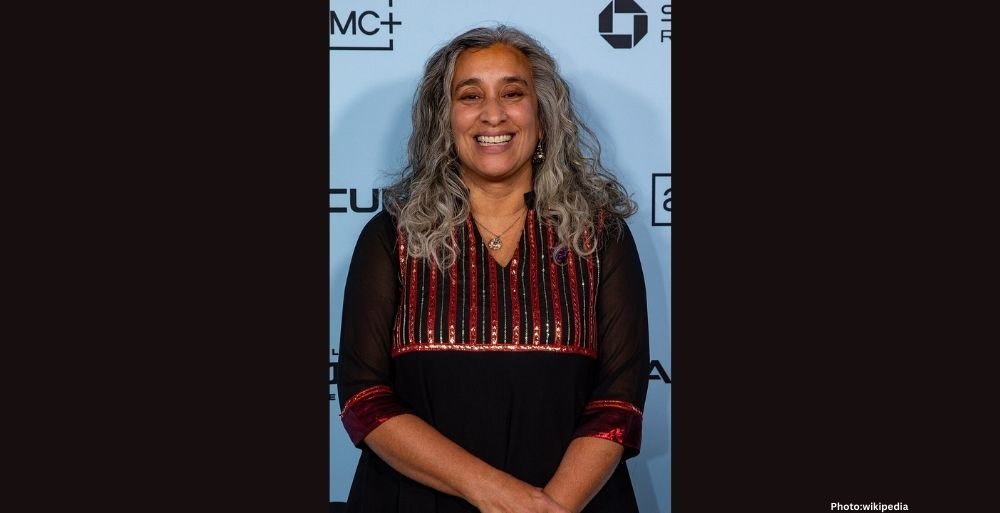








In an unsettling exploration of suburban friction and “stand your ground” culture, filmmaker Geeta Gandbhir’s Oscar-nominated documentary uses raw surveillance and police footage to reconstruct the 2023 killing of Ajike Owens. The film, which has emerged as a frontrunner at the 98th Academy Awards, provides a chilling forensic look at how racial animosity and perceived victimhood can culminate in fatal violence.
The tension in the Florida neighborhood where Ajike Owens lived did not explode in a vacuum; it simmered for over a year, documented in the digital amber of police body cameras and doorbell sensors. This is the central, haunting premise of The Perfect Neighbor, the new documentary from Indian American filmmaker Geeta Gandbhir. As the film heads into the 98th Academy Awards with a nomination for Best Documentary Feature, it serves as more than a true-crime retrospective. It is a searing indictment of the “shoot first” culture and the weaponization of domestic fear.
On June 2, 2023, Susan Lorincz, a white woman living in Ocala, Florida, fired a single bullet through her locked front door. On the other side was Ajike “AJ” Owens, a Black mother of four who had come to confront Lorincz after the latter had allegedly harassed Owens’ children. The bullet ended Owens’ life and ignited a national conversation about Florida’s controversial legal landscape. Gandbhir, who was personally acquainted with the Owens family and was at the scene following the shooting, has crafted a narrative that is almost entirely composed of primary source media: 9-1-1 calls, dispatch recordings, and hours of police footage obtained through the Freedom of Information Act.
The film meticulously charts the escalating hostility from February 2022 through the day of the murder. Viewers are shown a pattern of behavior from Lorincz that neighbors described as a relentless campaign against the neighborhood’s children. The “perfect neighbor” of the title is an ironic nod to the suburban ideal—a woman who claimed to be protecting her peace but who, according to police records, was the sole source of conflict in a vibrant, multi-racial community.
Police recordings included in the documentary reveal a growing frustration among local law enforcement regarding Lorincz’s frequent calls. In one instance, an officer tells his partner that the dispatch history from her number is “non-stop.” In another, an officer attempts to reason with Lorincz, suggesting he would rather see children playing and making noise than engaging in actual crime. These snippets provide a psychological profile of a woman who viewed the presence of Black children on a nearby empty lot as an existential threat.
The documentary reaches its emotional and technical climax on the evening of the shooting. The footage captures the frantic aftermath, including the heartbreaking moment when Owens’ 14-year-old son is seen on a neighbor’s doorbell camera, begging for help. “She shot my mom! With a freaking gun!” he screams into the digital receiver. The raw immediacy of this footage bypasses traditional documentary reenactments, forcing the audience into the role of a witness to a preventable catastrophe.
Beyond the personal tragedy, Gandbhir uses the case to pivot toward a broader analysis of “Stand Your Ground” laws. The film notes the bitter irony that these laws were championed in 2005 by former Florida State Senator Dennis Baxley, who represented the very area where Owens was killed. Since their inception, such laws have spread to 30 states, and the documentary cites data linking them to an 8% to 11% increase in monthly homicide rates nationwide.
The legal fallout of the Owens case, as depicted in the film’s final act, highlights the racial disparities inherent in self-defense claims. Gandbhir integrates research, such as a study from the Urban Institute, which found that the shooting of a Black person by a white person is found justifiable 17% of the time in states with these laws, compared to just over 1% when the roles are reversed. In Lorincz’s case, “Stand Your Ground” initially complicated the arrest process, though she was eventually convicted of manslaughter and sentenced to 25 years in prison.
For Gandbhir, the project is deeply personal. She received approximately 30 hours of body camera footage that allowed her to piece together what she describes as an “outlier weaponizing racism and manufacturing fear.” This focus on the “manufactured fear” is what makes the film an “unsettling watch,” according to early reviews. It challenges the viewer to look at the mundane tools of suburban security—the Ring cameras and the 9-1-1 speed dials—as potential instruments of escalation.
Gandbhir’s recognition at the 98th Academy Awards is a landmark moment in her career, as she holds a double nomination this year. In addition to The Perfect Neighbor, her short film The Devil Is Busy is also up for an Oscar. The dual recognition speaks to her ability to weave complex social issues into deeply human stories.
As the 98th Academy Awards approach on March 15, 2026, at the Dolby Theatre, The Perfect Neighbor stands as a frontrunner, not just for its technical mastery of found footage, but for its role as a cultural mirror. It asks a fundamental question about the modern American landscape: when “standing your ground” becomes a license to kill, who is ever truly safe in their own neighborhood?
Through the Lens of a Body Cam: Geeta Gandbhir’s ‘The Perfect Neighbor’ Traces a Predictable Tragedy