









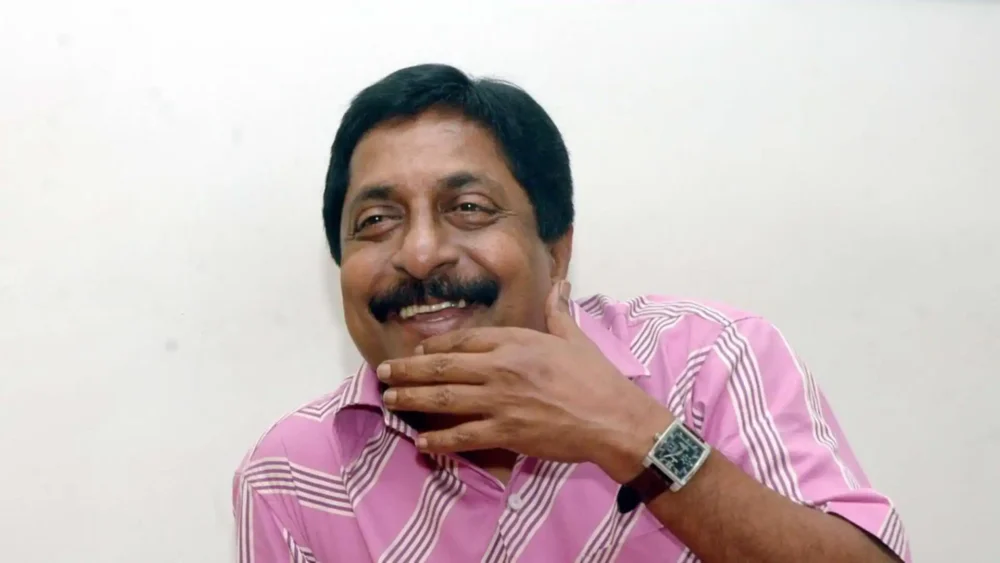
KOCHI — The Malayalam film industry and the people of Kerala are mourning the loss of one of their most influential creative voices with the passing of actor, screenwriter, and filmmaker Sreenivasan, who died in Kochi on Saturday, December 20, 2025. He was 69. A towering presence in Malayalam cinema for nearly five decades, Sreenivasan leaves behind a legacy defined by sharp social satire, emotional depth, and an unmatched understanding of the everyday Malayali experience.
The veteran artiste had been battling cardiac complications and related health issues for some time, family sources said. He is survived by his wife Vimala Sreenivasan, and sons — popular actors Vineeth Sreenivasan and Dhyan Sreenivasan — both of whom have carried forward his creative legacy in contemporary Malayalam cinema.
Final Rites and Public Homage
Sreenivasan’s cremation will be held at 10 a.m. on Sunday, December 21, 2025, at his residence in Kandanadu near Thripunithura. In a gesture reflecting the deep affection he commanded, his family chose to keep his mortal remains at the residence to allow friends, colleagues, and admirers to pay their final respects.
Hundreds of mourners — including actors, directors, writers, politicians, and ordinary citizens — thronged the residence through Saturday, forming long queues in solemn silence. Earlier in the day, his body was also kept at the Town Hall in Kochi for public homage, where emotional scenes unfolded as fans bowed before the man whose words and performances had shaped generations.
Tributes Pour In From Film Fraternity
Leading figures from across the Malayalam film industry paid tribute to the late actor. Actors Parvathy Thiruvothu, Renji Panicker, Sathyan Anthikkad, Jagadish, and Prithviraj Sukumaran were among those who arrived to offer condolences in person.
Actor Surya, who visited the residence early Sunday morning, described the loss as deeply personal. “I have been a big fan of Sreenivasan sir and have closely followed his work. I heard the news while I was in Kochi, and it was deeply saddening. His writings and body of work will remain etched in everyone’s hearts,” he said, adding, “May his soul rest in peace.”
Condolences also poured in on social media, with filmmakers, writers, and cultural figures calling him the “conscience keeper” of Malayalam cinema — a storyteller who never hesitated to question power, hypocrisy, or social injustice through humor and realism.
A Life Rooted in Stories of the Common Man
Born on April 6, 1956, in Pattiam near Thalassery in Kannur district, Sreenivasan’s journey into cinema was anything but conventional. Armed with keen observation and a deep empathy for ordinary lives, he went on to act in more than 225 films, carving out a niche as an actor whose understated performances carried extraordinary emotional weight.
As a screenwriter, his contribution was even more transformative. Films such as Sandesham, Varavelpu, Nadodikattu, Thalayanamanthram, and Azhakiya Ravanan are today considered classics — not merely for their entertainment value, but for their biting political satire, social commentary, and humane humor. His scripts often held up a mirror to society, questioning blind political allegiance, material greed, and moral compromises.
Film critics have long noted that Sreenivasan’s genius lay in making complex social critiques accessible to mass audiences. “He could make you laugh at yourself,” a senior filmmaker once remarked, “and that is the hardest thing to achieve in cinema.”
An Enduring Legacy
Beyond awards and box-office success, Sreenivasan’s enduring legacy lies in how deeply his work resonated with people. His characters were flawed, familiar, and profoundly human — reflecting lives lived in small towns, cramped homes, and morally ambiguous spaces.
As Kerala bids farewell, the sense of loss is not confined to the film industry alone. For many, Sreenivasan was a voice of reason, irony, and courage — someone who believed cinema could entertain while still speaking uncomfortable truths.
“He redefined what it meant to be a thinking actor and writer in popular cinema,” a close associate said. “Even in death, his work continues to speak for him.”