






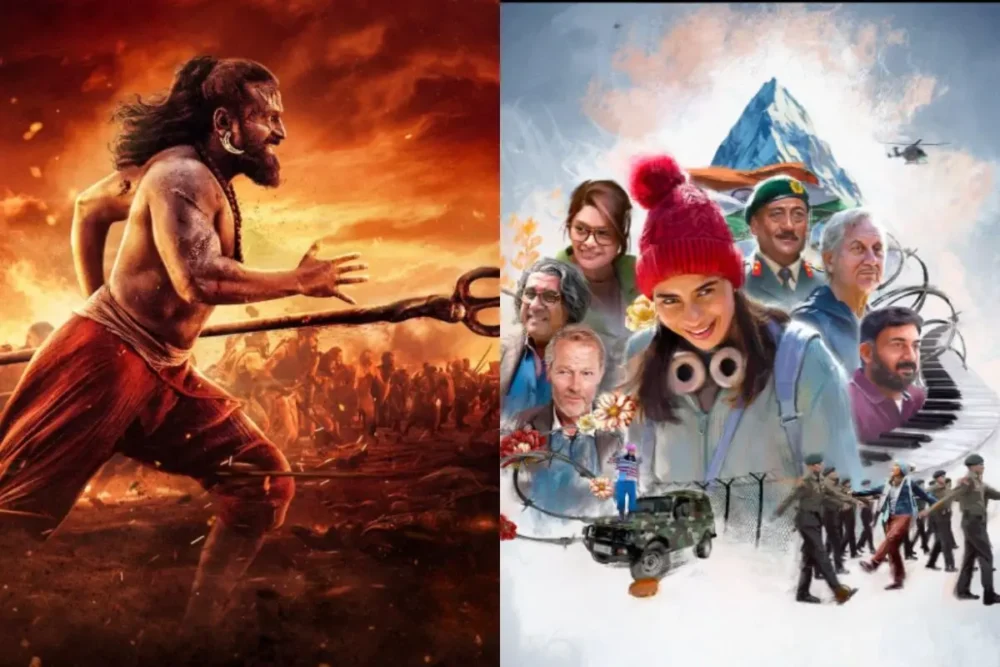
Indian cinema has achieved a significant milestone on the global stage as two Indian films — Kantara: A Legend – Chapter 1 and Tanvi The Great — have officially qualified for consideration in the Best Picture category at the 98th Academy Awards, scheduled to take place in 2026. The development marks a proud moment for the Indian film industry, reinforcing its growing influence and recognition in international cinema circles.
Both films have met the stringent eligibility requirements laid down by the Academy of Motion Picture Arts and Sciences, placing them among a select group of feature films from around the world that are eligible to compete for cinema’s most prestigious honour. While qualification does not guarantee a nomination, it is a crucial first step that places the films firmly on the Academy’s radar.
A Cultural Epic with Global Resonance
Kantara: A Legend – Chapter 1, directed by and starring Rishab Shetty, serves as a prequel to the blockbuster Kantara and delves deep into the mythological and cultural roots of the Tulunadu region. The film blends folklore, spirituality, and human conflict into a visually arresting narrative that celebrates indigenous traditions rarely explored in mainstream cinema.
Industry voices have lauded the film’s global recognition as a validation of culturally rooted storytelling. Actor and producer Vivek Oberoi, reacting to the film’s Oscar qualification, described it as “a roar from our ancient past that the world is finally listening to.” The film’s inclusion in the Best Picture eligibility list underscores how local stories, when told authentically, can transcend borders and connect with global audiences.
A Story of Inclusion and Emotional Strength
Joining Kantara in the Oscar race is Tanvi The Great, a deeply emotional drama directed by Anupam Kher. The film tells the inspiring story of a young woman on the autism spectrum who dreams of joining the Indian Army to honour her late father’s legacy. Through its sensitive portrayal of disability, ambition, and resilience, the film has resonated strongly with audiences and critics alike.
Speaking about the film’s qualification, Anupam Kher said, “This recognition is not about awards alone. It is about the world acknowledging stories that come from honesty, empathy, and belief in the human spirit.” The film recently completed a successful 100-day theatrical run, further highlighting its strong audience connection.
A Strong Year for Indian Films at the Oscars
The qualification of Kantara: Chapter 1 and Tanvi The Great reflects a broader trend of increasing Indian participation in the Oscars ecosystem. Over the past few years, Indian films have steadily gained visibility across categories — from feature films and documentaries to animation and technical achievements.
Film analysts believe this momentum signals a shift in how Indian cinema is perceived globally. Rather than being viewed solely through the lens of spectacle or song-and-dance formats, Indian films are now being recognised for their narrative depth, thematic diversity, and artistic ambition.
“Indian cinema is no longer asking for global attention — it is earning it,” said a senior film critic, noting that the diversity of stories emerging from India is aligning well with the Academy’s evolving global outlook.
What Qualification Means — and What Comes Next
Being eligible for Best Picture means the films have satisfied key criteria such as theatrical release norms, screening timelines, and inclusion standards. The next stage in the Oscar journey involves voting by Academy members, culminating in the official nomination announcements early next year.
Even at this stage, industry insiders say the qualification itself is a powerful endorsement. It enhances international visibility, opens doors for global distribution, and positions Indian filmmakers for deeper engagement with international collaborators and audiences.
A Moment of Pride for Indian Storytelling
Whether or not the films ultimately secure nominations, their presence in the Oscars 2026 Best Picture race is a testament to the creative confidence of Indian cinema. From folklore-driven epics to intimate human dramas, the range represented by Kantara: Chapter 1 and Tanvi The Great reflects an industry unafraid to explore new narratives while staying rooted in authenticity.
As anticipation builds toward the final nominations, one thing is clear — Indian cinema is no longer on the periphery of global filmmaking conversations. It is firmly at the centre, telling stories that resonate far beyond its borders.