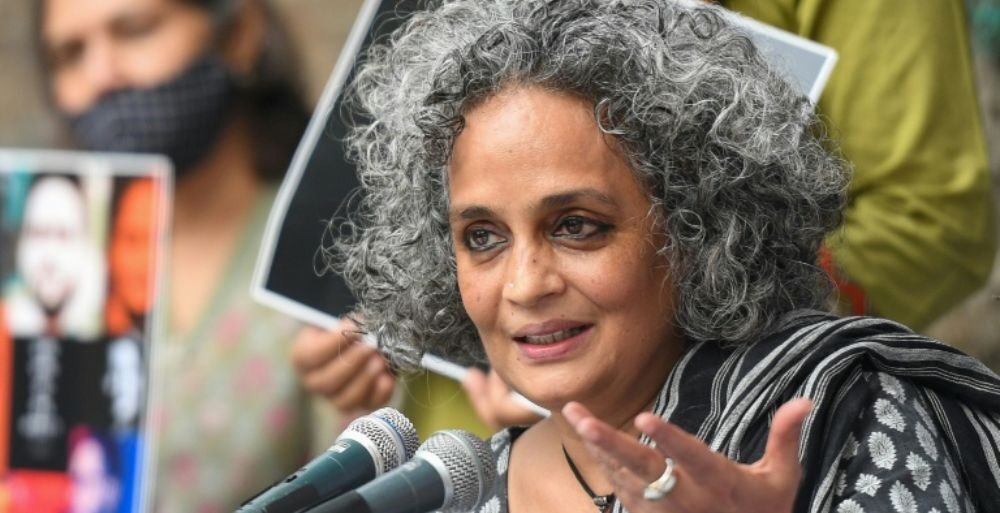







The Booker Prize-winning novelist and political essayist Arundhati Roy has officially withdrawn from the Berlin International Film Festival, citing profound disagreement with comments made by members of the festival jury regarding the intersection of cinema and political activism. Roy announced her decision on Friday, stating she was deeply troubled by the suggestion that filmmakers should remain outside the realm of politics, particularly during the ongoing conflict in the Gaza Strip. The move transforms what was intended to be a celebratory archival showcase for the author into a significant flashpoint in the broadening cultural debate over how major European artistic institutions address and respond to international humanitarian crises.
Roy had been scheduled to attend a special screening of the 1989 film In Which Annie Gives It Those Ones. She wrote the screenplay for the feature nearly four decades ago, and its selection for this year’s festival Classics section was an invitation she originally described as carrying unexpected emotional weight. Reflecting on the film’s return to the international stage, Roy had previously noted that there was something sweet and wonderful about revisiting the work at this stage in her career. However, the author indicated that her personal connection to the project could not outweigh her professional and moral objections to the rhetoric emerging from the festival leadership in Germany.
The controversy stems from a written statement Roy provided to the news outlet The Wire, in which she argued that calls for artistic neutrality in the face of mass violence serve as a mechanism for shutting down necessary conversations about crimes against humanity as they unfold in real time. Roy contended that the current global climate is precisely the moment when artists, writers, and filmmakers should be utilizing every tool at their disposal to intervene or influence the course of events. Her withdrawal highlights a growing rift between creators who view art as an inherently political act and institutional figures who advocate for a separation between creative expression and policy-driven discourse.
The catalyst for Roy’s decision appeared to be a press conference held on Thursday featuring the festival jury, led by the acclaimed German director Wim Wenders. When questioned about whether cinema possesses the power to influence political outcomes, Wenders suggested that while films might have the capacity to change individuals on a personal level, they are largely unable to alter political decisions. He further stated that filmmakers should stay out of politics, characterizing artists more as a counterweight to political life rather than active participants within it. This perspective was echoed by fellow juror and Polish producer Ewa Puszczyńska, who described questions linking the festival to the German government’s support for Israel as unfair, asserting that artists cannot be held responsible for the political choices of their audiences.
In her response, Roy was unequivocal regarding her stance on the situation in Gaza. She stated clearly that the ongoing events represent a genocide of the Palestinian people, specifically naming the State of Israel as the perpetrator. Furthermore, she alleged that the violence is supported and funded by the governments of the United States and Germany, along with several other European nations. Roy argued that such financial and diplomatic backing makes these countries complicit in the acts being committed. For Roy, the neutral stance adopted by the festival jury was not merely a difference in artistic philosophy but a refusal to acknowledge the gravity of a historical moment.
The author described the jury’s remarks as jaw-dropping, noting that they were significant both for what they explicitly stated about the nature of art and for what they pointedly declined to name. While Roy admitted she has long been profoundly disturbed by the official diplomatic position of the German government regarding Palestine, she had initially considered attending the Berlinale because of the political solidarity she has traditionally received from German audiences. However, the recent statements from the festival’s intellectual leadership proved to be a bridge too far, leading her to conclude that she could no longer participate in the event in good faith.
The withdrawal of such a high-profile figure as Roy puts additional pressure on the Berlin International Film Festival, which has faced increasing scrutiny over its handling of political topics. As one of the premier \”Big Three\” European film festivals, the Berlinale has historically branded itself as the most politically engaged of the major circuits. The friction between its reputation for activism and the recent calls for neutrality by its jury members suggests a shifting internal dynamic that many critics find at odds with the festival’s heritage. Roy’s exit underscores the difficulty institutions face when trying to maintain a middle ground in a highly polarized global environment.
Roy emphasized that the core issue for her was not the autonomy of art, but rather its moral horizon. She expressed the belief that if the most prominent filmmakers and artists of the contemporary era cannot stand up and address systemic violence, they must accept that history will judge them for their silence. By removing herself from the program, Roy aimed to signal that the prestige of an international film festival does not exempt it from the ethical demands placed upon other sectors of society. Her statement concluded with a message of deep regret, officially confirming that she would not be attending the Berlinale or the screening of her archival work.
The impact of Roy\’s absence will likely be felt throughout the remainder of the festival, as her screenplay was a centerpiece of the Classics program. In Which Annie Gives It Those Ones is a seminal piece of Indian independent cinema, and its inclusion was meant to highlight the long-standing contributions of Indian-American and South Asian voices to the global cinematic canon. Without Roy present to provide context and engage with the audience, the screening becomes a quieter affair, overshadowed by the very political tensions the jury sought to avoid. The vacuum left by her departure serves as a silent protest against the festival’s current direction.
This incident is part of a larger trend of withdrawals and protests across the European cultural sector. From book fairs to art biennials, creators are increasingly demanding that the institutions that host them take definitive stands on human rights issues. The German cultural landscape, in particular, has become a central site of these tensions due to the country’s specific historical sensitivities and its current foreign policy. Roy’s decision to skip the festival is a high-profile rejection of the status quo, suggesting that the era of \”art for art\’s sake\” is being aggressively challenged by those who believe the stakes of the real world are too high to ignore.
As the festival continues, the conversation Roy started is expected to persist among the remaining attendees and participants. Her critique challenges the idea that a cultural event can function as a neutral space when the world outside is in a state of upheaval. By prioritizing her political convictions over the promotion of her historic work, Roy has reaffirmed her status as a figure for whom the written word and the filmed image are inseparable from the struggle for justice. The Berlinale now faces the challenge of navigating the remainder of its schedule under the shadow of this high-profile exit and the difficult questions it has raised regarding the responsibility of the artist in the twenty-first century.
Arundhati Roy Withdraws From Berlin Festival Over Comments Regarding Film Politics