Skip to content
December 27, 2025
  • Indian American Diaspora Unites in Winchester to Support Raja Krishnamoorthi’s Historic U.S. Senate Bid; $50,000 Raised
  • Global Online News Writing Contest 2026 Announced by Global Indian Council and Indo American Press Club
  • 24 December, 2025: What is Christmas for Palestinians?
  • From Ancient Traditions to a Troubled World: How Christmas 2025 Was Celebrated Across the Globe

Global Net News

Truth That Shapes Tomorrow: Accurate and Objective

  • Art
  • Bollywood
  • Business
  • Cinema
  • Community
  • Cover
  • Cricket
  • Culture
  • Diaspora
  • Diplomacy
  • Disaster
  • Editorial/Opinion
  • Education
  • Entertainment
  • Environment
  • Family
  • Fashion
  • Finance/Economy
  • Food
  • Girar
  • Health
  • Immigration
  • India
  • Law/Legal
  • Lifestyle
  • Market
  • Media
  • Medicine
  • Money
  • Politics
  • Privacy Policy
  • Profiles
  • Relationship
  • Religion
  • Science
  • Social Media
  • Spirituality
  • Sports
  • Technology
  • To Advertise With US
  • To Reach Us
  • Tourism
  • Travel
  • Uncategorized
  • USA
  • Video
  • Women
  • World
  • Your Comments
  • Youth
  • Home
  • More
  • Social Media
    • Facebook
    • Instagram
    • Youtube
  • About Us
Subscribe
Random News
Headlines
  • Indian American Diaspora Unites in Winchester to Support Raja Krishnamoorthi’s Historic U.S. Senate Bid; $50,000 Raised

    December 27, 2025December 27, 2025
  • Global Online News Writing Contest 2026 Announced by Global Indian Council and Indo American Press Club

    December 27, 2025December 27, 2025
  • 24 December, 2025: What is Christmas for Palestinians?

    December 27, 2025December 27, 2025
  • From Ancient Traditions to a Troubled World: How Christmas 2025 Was Celebrated Across the Globe

    December 27, 2025December 27, 2025
  • The Art of Being Unbothered: Five Simple Ways to Stay Happy and Grounded This Holiday Season

    December 27, 2025December 27, 2025
  • Goodbye Earth? NASA Eyes the Moon’s 3 Million Tons of Helium-3 as a Possible Future Energy Source for Humanity

    December 27, 2025December 27, 2025
  • 20 Tiny, Meaningful Ways to Feel Happier Next Year, According to Experts

    December 27, 2025December 27, 2025
  • Goodbye to the 24-Hour Day? Why Earth Will One Day Have 25-Hour Days—But Not Anytime Soon

    December 27, 2025December 27, 2025
  • Ray Dalio: Why India Is at a ‘Wonderful Arc’ in History — And the Five Forces Redefining Global Power

    December 27, 2025December 27, 2025
  • Kennedy Center Christmas Eve Jazz Concert Canceled After Trump’s Name Added to Landmark

    December 27, 2025December 27, 2025
  • Home
  • Editorial/Opinion

Cinema

Cinema
2025 Box Office Report Card: Content Rules, Big Surprises and What Lies Ahead for Indian Cinema
Cinema
Profiles
Who Is Sreenivasan? A Voice of the Common People Who Shaped Five Decades of Malayalam Cinema
Cinema
Bha Bha Bha Records Strong Worldwide Opening, Collects ₹35 Crore in Extended 4-Day Weekend
Cinema
Mohanlal–Priyadarshan’s Costliest Collaboration Won 3 National Awards Before Release — But Became a Box Office Debacle

Editorial/Opinion

Editorial/Opinion

  • Editorial/Opinion

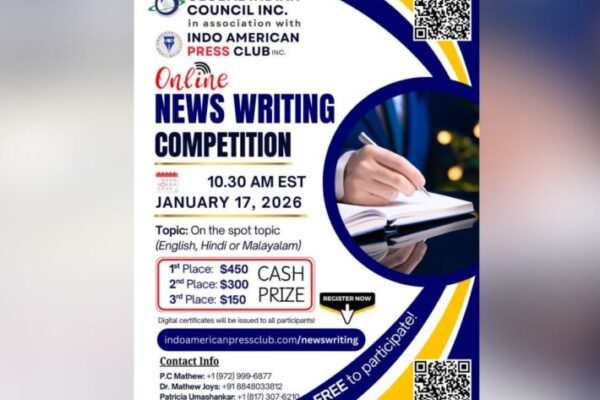
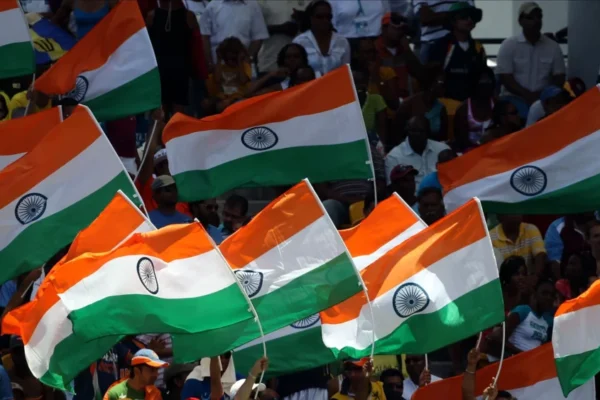
Global Online News Writing Contest 2026 Announced by Global Indian Council and Indo American Press Club

Staff ReporterDecember 27, 2025December 27, 20257 mins

The Global Indian Council (GIC), a United States–based non-profit organization representing the global Indian diaspora, in collaboration with the Indo…
Read More
  • Editorial/Opinion

Non-Resident Indians Reflect On India At 75

Staff ReporterDecember 25, 2025December 25, 202526 mins

Among the Sliver Lining, There Are Dark Clouds Hovering Over The Very Idea Of India And The Constitution Embodies India…

Read More
The American Association of Physicians of Indian Origin (AAPI) is proud to announce that the AAPI Global Health Summit (GHS) 2026 will be held from January 9–11, 2026, in Bhubaneswar, Odisha, in collaboration with the Kalinga Institute of Medical Sciences (KIMS), KIIT University, and leading healthcare institutions across the nation. Bringing together hundreds of physicians, medical educators, researchers, and public health leaders from the United States and India, GHS 2026 will serve as a premier platform for advancing clinical excellence, strengthening global health partnerships, and expanding community‑focused initiatives across India. AAPI President Dr. Amit Chakrabarty emphasized the significance of the upcoming summit, stating, “GHS 2026 will showcase the very best of Indo‑U.S. medical collaboration. Our goal is to share knowledge, build capacity, and create sustainable health solutions that benefit communities across India.” A Transformative Three‑Day Summit The 2026 Summit will feature a robust lineup of CME sessions, hands‑on workshops, global health panels, surgical demonstrations, community outreach programs, and youth engagement activities. Events will be hosted across KIMS, Mayfair Lagoon, and Swosti Premium, offering participants a dynamic and immersive learning environment. Key Highlights Include: ✅ Scientific CME Sessions Covering critical topics such as metabolic syndrome, hemoglobinopathies, cervical cancer, mental health, and healthcare advocacy. ✅ AI in Global Medical Practices Forum A full‑day program dedicated to artificial intelligence in healthcare, featuring global experts discussing medical superintelligence, AI‑driven diagnostics, radiology innovation, and ethical considerations. ✅ Emergency Medicine & Resuscitation Workshops Hands‑on training in AHA 2025 guidelines, NELS protocols, cardiac arrest management, and advanced simulation using SimMan3G Plus. ✅ Specialized Tracks Including TB elimination strategies, diabetes and obesity management, Ayurveda CME, IMG professional development, and ER‑to‑ICU rapid‑response training. ✅ Women in Healthcare Leadership Forum A dedicated platform highlighting the contributions and leadership pathways of women physicians in India and the U.S. ✅ Youth & Community Programs Mass CPR training, HPV vaccination drives, stem cell donor registration, and child welfare initiatives. Dr Rabi Samanta noted, “The Global Health Summit is not just a conference—it is a mission. GHS 2026 will empower clinicians with the tools, technology, and global perspectives needed to transform patient care.” Strengthening Indo‑U.S. Healthcare Collaboration For nearly two decades, AAPI’s Global Health Summits have played a pivotal role in advancing medical education, fostering research partnerships, and supporting public health initiatives across India. Dr Sita Kanta Dash, while describing the GHS 2026 initiatives said, “GHS 2026 will continue this legacy with an expanded focus on the following: Technology‑driven healthcare innovation Capacity building for medical students and residents Community‑centered preventive health programs Collaborative research between U.S. and Indian institutions.” AAPI Vice President Dr. Meher Medavaram highlighted the summit’s broader impact, saying, “Our work extends far beyond CMEs. GHS 2026 will strengthen communities, support youth, and build bridges between healthcare systems that share a common purpose.” Leadership at the Helm GHS 2026 is guided by a distinguished group of leaders from AAPI and partner institutions in India: AAPI National Leadership Dr. Amit Chakrabarty, President, AAPI & Chairman, GHS Dr. Meher Medavaram, President‑Elect Dr. Krishna Kumar, Vice President Dr. Satheesh Kathula, Immediate Past President Dr. Mukesh Lathia, Souvenir Chair Dr. Tarak Vasavada, CME Chair Dr. Kalpalatha Guntupalli, Women’s Forum Coordinator Dr. Atasu Nayak, President, Odisha Physicians of America Dr. Vemuri S. Murthy, CME Coordinator Kalinga & KIMS Leadership (India) Dr. Achyuta Samanta, Hon. Founder, KIIT, KISS & KIMS – Chief Patron Dr. Sita Kantha Dash, Chairman, Kalinga Hospital Ltd Dr. S. Santosh Kumar Dora, CEO, Kalinga Hospital Ltd Dr. Rabi N. Samanta, Advisor to Hon’ble Founder, KIIT, KISS & KIMS Dr. Ajit K. Mohanty, Director General, KIMS AAPI Liaisons – India Prof. Suchitra Dash, Principal & Dean, MKCG Medical College Dr. Uma Mishra, Advisor Dr. Bharati Mishra, Retd. Prof & HOD, ObGyn Dr. Abhishek Kashyap, Founder, GAIMS Er. Prafulla Kumar Nanda, Coordinator Mrs. Nandita Bandyopadhyaya, Hospitality Mr. Nishant Koli, Promotions Mr. Dilip Panda, Promotions AAPI Event Coordinators Dr. Anjali Gulati Mrs. Vijaya Mulpur Mrs. Sonchita Chakrabarty Dr. Tapti Panda Dr. Chakrabarty praised the collaborative leadership, noting, “The strength of GHS lies in the collective expertise of our leaders across the U.S. and India. Their commitment ensures that this summit will deliver meaningful, lasting impact.” AAPI’s Vision for 2026 and Beyond As AAPI prepares to welcome delegates to Odisha, the organization reaffirms its commitment to improving healthcare delivery, expanding access to quality care, and nurturing the next generation of medical leaders. Dr. Chakrabarty added, “GHS 2026 is an invitation—to learn, to collaborate, and to lead. Together, we will shape a healthier future for India and the world. We will ensure that GHS 2026 is one of the best events in the recent history of AAPI. We are collaborating with all possible channels of communication to ensure maximum participation from all the physicians of Odisha. I assure you that this is going to be a grand project.” Please watch the Interview by Dr. Amit Chakrabarty on GHS 2026 at: https://youtu.be/wG6WZbyw-zE?si=Nz_l45qplMpYp5le For more details, please visit: www.aapiusa.org
  • Editorial/Opinion

AAPI Global Health Summit 2026 Advances Medical Innovation, Global Partnerships, and Community Impact in Odisha

Ajay GhoshDecember 21, 2025December 21, 20258 mins

The American Association of Physicians of Indian Origin (AAPI) is proud to announce that the AAPI Global Health Summit (GHS)…
Read More
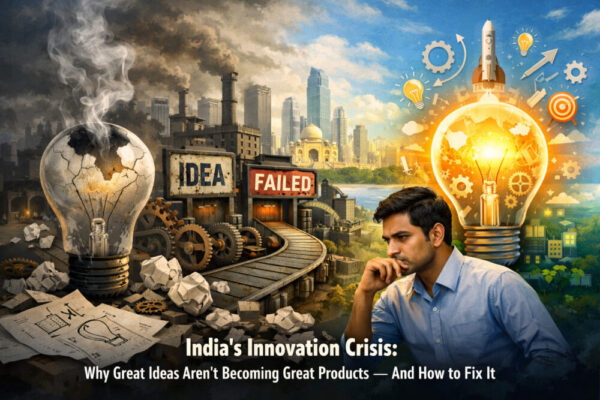
Editorial/Opinion India today stands at a crossroads. The country has world‑class scientific talent, globally respected institutions, and a thriving startup ecosystem. Yet, despite this abundance of intellectual capital, India struggles to convert research into real‑world products at scale. The gap between laboratory breakthroughs and market‑ready technologies—often described as the “valley of death”—remains one of the most persistent structural failures in the nation’s innovation landscape. This challenge is not new, but it has become more urgent as India positions itself as a global manufacturing and technology hub. The problem, as highlighted in a recent analysis, is not a lack of ideas but a lack of alignment. India’s academia is designed to publish, not build. Industry wants ready‑to‑deploy solutions, not prototypes. And investors prefer proven traction over early‑stage risk. The result is a system where promising innovations routinely stall before reaching the market. A System at War With Itself The friction between academia and industry is widely acknowledged. As one founder of a high‑technology Indian company told Swarajya, “We have tried to work with lots of different IITs, and in most cases, there is no strong output that comes from these colleges”. This frustration is echoed across sectors that rely on deep‑tech innovation. The incentives are misaligned at every level. Professors are rewarded for publishing papers, not building products. Startups need rapid, iterative development, not multi‑year research cycles. Government funding often stops at the prototype stage, while private capital enters only after commercial viability is proven. This leaves a dangerous gap—the “valley of death”—where most innovations fail. Dr. Anurag Agrawal of Ashoka University describes this gap bluntly: “India has no dearth of bioscience talent, but translating research into real‑world health solutions remains a major challenge.” He argues that India must “back people, not just projects” and build systems that reward real‑world outcomes, not academic prestige. The TRL 3 → TRL 4 Bottleneck Innovation experts often describe India’s biggest hurdle as the transition from Technology Readiness Level (TRL) 3 to TRL 4—the point where a lab‑tested prototype must be validated in real‑world conditions. According to innovation strategist Babu Mohanan, “India doesn’t suffer from a shortage of ideas — we suffer from a shortage of products.” He adds that most innovations “never make it beyond the lab door” because the ecosystem is not designed to support the messy, expensive, iterative process of commercialization. This is the stage where engineering talent, manufacturing partners, regulatory clarity, and patient capital must converge. In India, they rarely do. When Alignment Happens, India Delivers Despite these structural challenges, India has produced remarkable success stories—proof that the problem is not capability but coordination. One of the most celebrated examples is the work of Prof. Ashok Jhunjhunwala, whose team helped reduce telephone costs from ₹40,000 to ₹10,000 by prioritizing economic feasibility alongside technological innovation. His approach—“put economics before technology”—became a model for frugal innovation and helped accelerate India’s telecom revolution. Another example is the IIT Kanpur ventilator project. At the height of the COVID‑19 crisis, a team of researchers and engineers built a life‑saving ventilator in just 90 days. Their success demonstrated what is possible when urgency, collaboration, and institutional support align. The IIT Madras Research Park stands as a structural example of what India needs more of. With over 900 joint industry‑academia projects completed, it has become a national benchmark for how universities can drive innovation when incentives are aligned and partnerships are intentional. A Broader National Challenge India’s innovation gap is not limited to academia. It is part of a larger structural issue: the country spends just 0.7% of its GDP on research and development, far below global leaders like South Korea (5.2%) and the United States (3.5%). This underinvestment has consequences. Without sustained funding, India cannot build the deep‑tech infrastructure required to compete globally. Amitabh Kant, former CEO of NITI Aayog, argues that India must treat innovation as an endogenous driver of growth—not an afterthought. “We have not yet fully leveraged our innovation potential,” he writes, emphasizing the need for stronger industry‑academia linkages and catalytic public procurement to drive demand for homegrown technologies. The Manufacturing Paradox India’s manufacturing sector illustrates the paradox vividly. Walking through industrial clusters in Tamil Nadu and Karnataka, innovation expert Yogesh Pandit observes a “dichotomy” in Indian industry: entrepreneurs are hardworking, adaptive, and resilient, yet most remain stuck in the “low‑value trap,” competing on cost rather than innovation. This is not due to lack of ambition. It is due to lack of structured pathways that help manufacturers adopt, co‑develop, or scale new technologies emerging from Indian labs. A Civilizational Perspective The report on your page makes a compelling historical point: India was once a civilization of creators. From the Sindhu‑Saraswati era to the Chola empire, India produced goods, technologies, and industries that shaped global trade. The challenge today is not to rediscover talent—it is to rebuild systems that allow talent to flourish. India’s renaissance will not come from isolated breakthroughs. It will come from aligning incentives across academia, industry, and government; from funding the full lifecycle of innovation; and from building institutions that reward product creation, not just publication. The Path Forward Experts across the ecosystem converge on a few key solutions: ✅ 1. Reform academic incentives Reward patents, prototypes, and industry partnerships—not just publications. ✅ 2. Strengthen industry‑academia collaboration Create more research parks, co‑development labs, and shared infrastructure. ✅ 3. Bridge the “valley of death” Establish dedicated TRL 3–7 funding mechanisms and product‑acceleration programs. ✅ 4. Increase national R&D spending Move toward 2% of GDP with a focus on deep‑tech and strategic sectors. ✅ 5. Build a culture of product‑driven innovation Encourage risk‑taking, celebrate product builders, and support long‑term innovation cycles. Conclusion India’s innovation story is not one of failure—it is one of untapped potential. The country has the talent, the ideas, and the ambition. What it needs now is alignment. The sparks are already visible across IITs, research parks, startups, and manufacturing clusters. With the right incentives and sustained support, India can once again become a nation that not only imagines the future but builds it.
  • Editorial/Opinion

India’s Innovation Crisis: Why Great Ideas Aren’t Becoming Great Products — And How to Fix It

Ajay GhoshDecember 21, 2025December 21, 202510 mins

Editorial/Opinion India today stands at a crossroads. The country has world‑class scientific talent, globally respected institutions, and a thriving startup…

Read More
  • Cover
  • Editorial/Opinion

Trump’s Grip On GOP Fades As Party Tests Independence

Staff ReporterNovember 19, 2025November 19, 20256 mins

President Donald Trump’s once unshakable grip on the Republican Party is showing signs of strain, as a series of electoral…

Read More

Recent Post

Indian American Diaspora Unites in Winchester to Support Raja Krishnamoorthi’s Historic U.S. Senate Bid; $50,000 Raised
Global Online News Writing Contest 2026 Announced by Global Indian Council and Indo American Press Club
24 December, 2025: What is Christmas for Palestinians?
From Ancient Traditions to a Troubled World: How Christmas 2025 Was Celebrated Across the Globe
Global Net News. Developed by. Mariam Info Tech
  • About
  • Contact
  • Privacy
  • Subscribe to Newsletter