







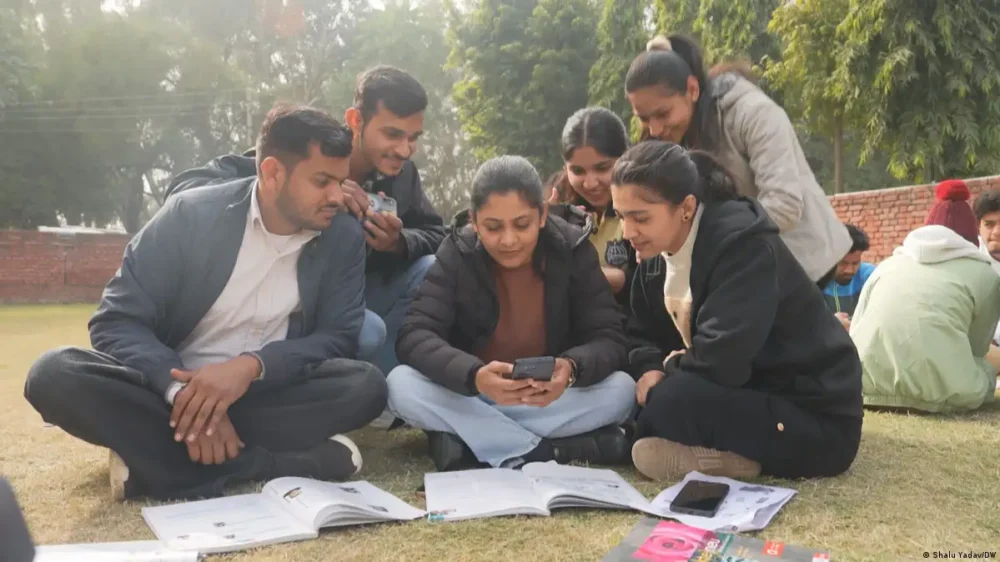
Facing a deepening labor shortage driven by demographic decline, war-related disruptions, and tightening migration policies, Russia is increasingly turning to India as a key source of foreign workers, signaling a major shift in its labor strategy and bilateral engagement with New Delhi.
The move follows a labor mobility agreement signed in December 2025 between Indian Prime Minister Narendra Modi and Russian President Vladimir Putin, which formalized large-scale Indian migration to Russia and established a quota of more than 70,000 Indian workers for 2026.
Russian officials and Indian diplomats say the agreement is designed to address workforce shortages in Russia while simultaneously providing employment opportunities for India’s surplus labor.
“Russia needs workers, India needs to export unemployment,” an Indian diplomat told DW, speaking on condition of anonymity due to the sensitivity of bilateral relations.
Thousands of Indians Already Working in Russia
According to Vinay Kumar, India’s Ambassador to Russia, between 70,000 and 80,000 Indian citizens were already working in Russia by the end of 2025.
Russian Presidential Special Representative Boris Titov confirmed that India is expected to play a growing role in Russia’s labor ecosystem as the country attempts to stabilize its economy and maintain productivity.
Border data cited in DW research shows a sharp rise in Indian arrivals:
- 32,000 Indian citizens entered Russia in Q1 2025
- 36,000 in Q2 2025
- 63,000 in Q3 2025
The surge highlights accelerating labor migration flows, driven by economic incentives and Russia’s urgent demand for manpower.
Wages, Incentives, and Job Opportunities
Indian workers are being recruited through a mix of official government channels and private recruitment agencies, although concerns remain about oversight and worker protections.
For low-skilled labor, monthly wages range between €475 and €950 ($555–$1,111) — significantly higher than what many workers could earn in India.
A report by Fontanka, a Russian news outlet, described Indian workers cleaning streets in St. Petersburg, earning around 100,000 rubles per month (€1,125/$1,316), along with:
- Free accommodation
- Free meals
- Russian language courses
St. Petersburg authorities estimate that around 3,000 Indian job-seekers have already arrived in the city.
From Informal Migration to Legal Framework
For years, Indian migration to Russia occurred informally and without structured legal protections, often exposing workers to fraud, exploitation, and unsafe employment conditions.
The new bilateral labor agreement aims to formalize migration channels, regulate recruitment agencies, and ensure better legal safeguards.
“A formal agreement was necessary to legalize Indian migration that had been happening informally and chaotically,” the Indian diplomat noted.
However, officials acknowledge that stronger monitoring mechanisms are still needed to prevent abuse.
Risks: Indians Recruited into the Russian Military
One of the most serious concerns linked to past informal migration involves Indian citizens allegedly recruited into the Russian military under false pretenses.
Since Russia launched its full-scale invasion of Ukraine in February 2022, official figures indicate:
- 126 Indians signed contracts with the Russian army
- At least 12 were killed
- 96 have since returned to India
Prime Minister Modi raised the issue during his 2024 visit to Moscow, urging Russian authorities to facilitate repatriation and prevent further recruitment of Indians into military roles.
“The need to protect Indian citizens abroad remains a priority,” Indian officials have reiterated.
Language and Cultural Barriers Remain Key Challenges
Experts warn that language barriers and cultural differences could significantly limit Indian workers’ integration into Russian society.
“You bring people into the country with whom you cannot communicate. This means they can only be employed for the simplest jobs such as hauling, cleaning, and manual labor,” said Igor Lipsits, a Russian economist.
Since most Indian migrants do not speak Russian, and many Russians do not speak English, communication remains a major obstacle — particularly in rural areas.
Cultural factors may also limit integration, according to Andrei Yakovlev, another Russian economist.
“They are focusing on India partly to minimize Muslim migration, assuming most Indian migrants will be Hindu,” Yakovlev said, highlighting geopolitical and demographic motivations.
Are Indian Workers a Real Solution to Russia’s Labor Crisis?
While the initiative marks a major policy shift, experts remain skeptical about whether Indian migration alone can resolve Russia’s workforce challenges.
“It’s not street cleaners and unskilled workers that Russia lacks — it’s skilled professionals,” Lipsits argued.
“At the moment, this is essentially a test run.”
Russia’s labor deficit is estimated at:
- 2.2 million workers in 2024 (Federal State Statistics Service)
- Up to 4.8 million workers in 2023 (Russian Academy of Sciences)
Shortages affect multiple sectors, including:
- Industry
- Construction
- Logistics
- Healthcare
- Trade
- IT
Experts caution that importing low-skilled labor will not solve gaps in technical and professional fields.
Why Russia Is Prioritizing India Over Central Asia
Russia’s pivot toward India comes as it tightens immigration policies for Central Asian migrants, following the March 2024 Crocus City Hall terror attack in Moscow.
Authorities have since:
- Increased restrictions on Central Asian immigration
- Hardened public rhetoric against migrant groups
- Faced rising wage demands from Central Asian workers
“Central Asian migrants are being poached by labor markets in the UK and Southern Europe, pushing wages higher and reducing Russia’s appeal,” Lipsits explained.
India, by contrast, offers a large labor pool, competitive wage expectations, and strategic political alignment with Moscow.
Rupee Payments and Oil Trade: A Strategic Economic Link
Russia’s interest in Indian workers may also be tied to currency and trade dynamics.
Trade turnover between India and Russia stands at approximately $70 billion, but Russia imports only about $5 billion worth of Indian goods — resulting in large rupee reserves accumulating in Russia.
“Russia may pay migrant workers in Indian rupees earned through oil trade,” suggested Rajan Kumar, a Russia expert at Jawaharlal Nehru University.
This approach could help Russia utilize trapped rupee reserves, while strengthening financial ties with India.
Demographic Decline and War Intensify Russia’s Labor Crisis
Beyond migration and war, experts say Russia’s workforce challenges stem from long-term population decline.
“War, emigration, and mobilization worsen an already deep demographic crisis,” Lipsits said.
Russia’s shrinking population, combined with:
- Military mobilization
- Skilled emigration
- Economic slowdown
has created structural labor shortages that cannot be easily reversed.
Yakovlev notes that Indian recruitment reflects a broader demographic emergency, not just a wartime stopgap.
Indian Experts Warn of Economic and Safety Risks
Indian policy analysts caution that Russia’s demand for workers may be unstable and influenced by war-related economic fluctuations.
“Post-conflict normalization — or escalation — could compress wages, trigger layoffs, and strand migrants amid repatriation hurdles,” warned Lekha Chakraborty, professor at the National Institute of Public Finance and Policy.
She emphasized the need for:
- Stronger worker protection frameworks
- Clear repatriation protocols
- Monitoring of recruitment agencies
A Strategic but Risk-Laden Labor Experiment
Russia’s outreach to India marks a historic expansion of labor cooperation, reflecting shared economic interests, geopolitical pragmatism, and workforce necessity.
However, experts say the initiative remains a high-risk experiment, shaped by:
- Russia’s war-driven economy
- Long-term demographic decline
- Worker safety concerns
- Language and cultural integration barriers
- Uncertain post-war economic stability
Whether this partnership evolves into a sustainable labor corridor or becomes a temporary geopolitical workaround will depend on policy enforcement, worker protections, and economic conditions on both sides.