






Energy markets face a renewed era of volatility as crude prices spiked more than 5% following a breakdown in diplomatic efforts to secure the Strait of Hormuz. While the tech sector provided a temporary cushion for global equities, the specter of a prolonged energy blockade has central banks reconsidering interest rate hikes to combat a potential inflationary spiral.
The global energy landscape shifted violently on Tuesday as the Strait of Hormuz—the world’s most vital maritime artery for petroleum—became the center of a deepening geopolitical fracture. Crude oil prices surged by more than 5%, reclaiming territory lost during the previous session, as international resistance mounted against President Donald Trump’s demand for a multi-national coalition to secure the waterway. The standoff has effectively shuttered the transit point for roughly a fifth of the world’s oil consumption, leaving investors to grapple with the reality of a “war premium” that shows no signs of dissipating.
The market’s aggressive reversal followed a temporary reprieve on Monday, triggered by Fatih Birol, head of the International Energy Agency (IEA), who suggested that member nations could tap into further strategic petroleum reserves. This comes on the heels of a record-shattering agreement to release 400 million barrels last week. However, the optimism surrounding these emergency stockpiles proved short-lived. Analysts argue that while reserves can mitigate immediate supply gaps, they cannot compensate for the structural loss of a primary transit route indefinitely.
The geopolitical tension reached a fever pitch as the Trump administration faced a lukewarm reception from traditionally staunch allies. President Trump, who recently characterized the security of the Strait as a “team effort,” warned that a refusal to participate would be “very bad for the future of NATO.” The rhetoric has created a visible rift in the Western alliance. German Chancellor Friedrich Merz explicitly distanced Berlin from the escalating conflict, stating that the hostilities resulting from U.S. and Israeli strikes on Iran were not a matter for the North Atlantic Treaty Organization. This sentiment was echoed across the continent, with Britain, Spain, Poland, Greece, and Sweden all signaling their intent to remain outside the proposed coalition. Even Pacific partners, including Australia and Japan, have opted to bypass the call for a military presence in the Gulf.
The friction is not limited to the West. In a move that underscores the gravity of the situation, President Trump announced he has requested a delay of approximately a month for his scheduled summit with Chinese leader Xi Jinping. The postponement suggests that the administration is pivoting its entire diplomatic and intelligence apparatus toward the Middle East, leaving other critical trade and security negotiations on the backburner.
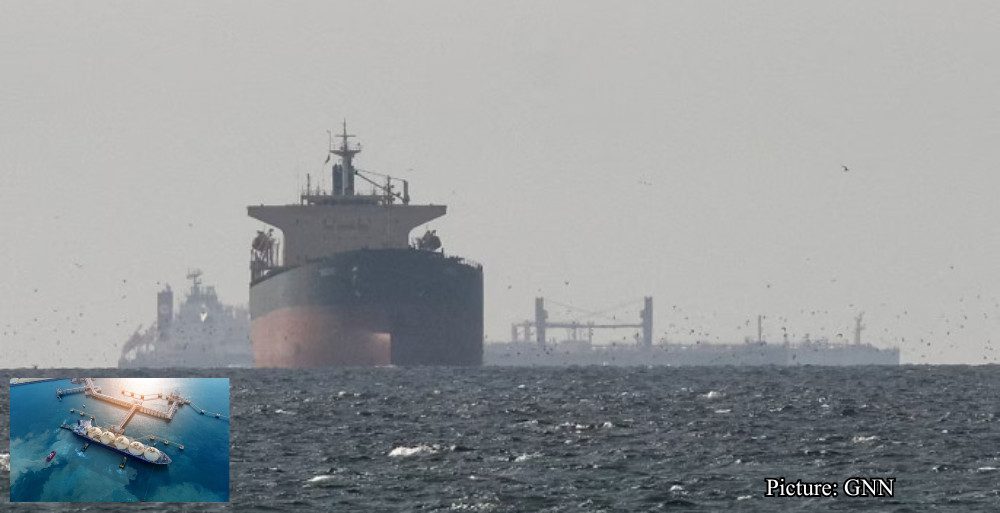
On the ground—and in the water—the situation remains perilously kinetic. While a Pakistani oil tanker became the first non-Iranian vessel to transit the Strait with its automatic transponder system activated, the “success” was overshadowed by continued violence. Reports of explosions in Doha and a projectile strike on a tanker off the coast of Oman have kept insurance premiums for maritime transit at prohibitive levels. Simultaneously, Israel confirmed a “wide-scale wave of strikes” targeting Tehran and Hezbollah positions in Beirut, further broadening the theater of conflict. The regional instability was punctuated by drone attacks on major oil fields in the United Arab Emirates and Iraq, as well as a rocket attack on the U.S. embassy in Baghdad.
This volatility has forced central banks into a defensive crouch. Australia led the charge on Tuesday, raising borrowing costs and citing “sharply higher fuel prices” as a primary driver. Market participants are now bracing for a series of central bank decisions this week, with many analysts predicting a resumption of aggressive interest rate hikes. The fear is that the “energy tax” imposed by $100-per-barrel oil will bleed into broader consumer prices, undoing months of progress in cooling global inflation.
Despite the carnage in the energy sector, the broader equity markets showed a surprising degree of resilience, buoyed by the insatiable appetite for artificial intelligence infrastructure. Nvidia provided a massive psychological lift to the tech sector after forecasting revenues of at least $1 trillion through the end of 2027. This projection acted as a vital counterweight to the geopolitical gloom, leading to gains in Seoul—which has risen nearly 50% since the start of the year—and Taipei, home to the semiconductor giant TSMC.
However, market veterans remain wary. Chris Weston, head of research at Pepperstone, noted that while the tech-led rally is welcome, “conviction behind a sustained rally in risk assets remains relatively low.” He cautioned that neither the IEA’s reserve releases nor the isolated passage of a single tanker constitutes a definitive “circuit breaker” for the current crisis.
As the trading day progressed, West Texas Intermediate (WTI) and Brent North Sea Crude both hovered significantly above their opening marks, with Brent trading near $104 a barrel. The divergence between a booming tech sector and a crumbling energy security framework has created a bifurcated market environment, where the promise of future innovation is battling the immediate reality of a world at war over its most essential commodity.