









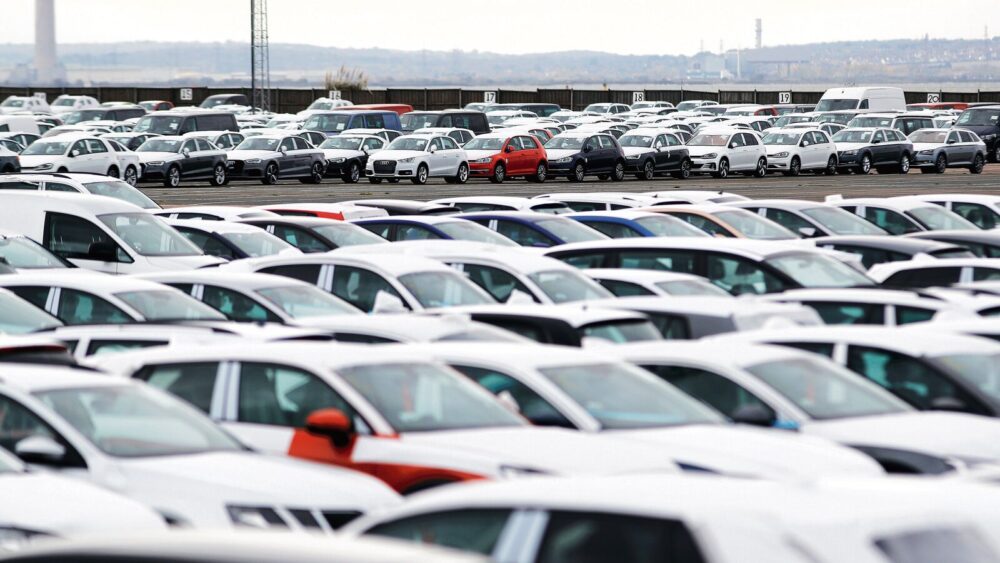
India is preparing to slash import tariffs on European cars to 40% from as high as 110%, marking the country’s most significant opening of its highly protected auto market to date, according to sources familiar with ongoing trade negotiations between India and the European Union (EU).
The move is expected to form a key pillar of the long-awaited India–EU Free Trade Agreement (FTA) — widely dubbed the “mother of all trade deals” — which could be officially announced as early as Tuesday, pending final approvals and ratification.
If implemented, the agreement would represent a major shift in India’s trade and industrial policy, easing access for European automakers such as Volkswagen, Mercedes-Benz, BMW, Renault, and Stellantis, while also boosting India’s broader export strategy amid rising global trade pressures.
India’s Biggest Auto Market Liberalization Yet
According to two sources briefed on the confidential negotiations, the Indian government has agreed to immediately lower import duties to 40% on a limited quota of European cars priced above €15,000 ($17,739).
“This is India’s most aggressive move yet to open up its automobile sector,” one source said.
Under the proposal, tariffs could gradually fall further to 10% over time, allowing European brands to expand their footprint in India — the world’s third-largest car market, after the United States and China.
Currently, India imposes import duties of 70% to 110% on foreign-built vehicles — a long-standing protectionist policy that has drawn criticism from global automakers, including Tesla CEO Elon Musk.
‘Mother of All Deals’: India–EU Trade Pact Nears Completion
Negotiators on both sides expect to announce the conclusion of long-running trade talks this week, ending nearly two decades of intermittent negotiations.
“The India–EU FTA could significantly expand bilateral trade and create new export opportunities for Indian industries,” a trade official familiar with the talks said.
The pact is expected to support Indian exports in sectors such as textiles, jewellery, pharmaceuticals, and manufacturing, particularly as Indian businesses grapple with steep U.S. tariffs imposed since August.
Neither India’s Commerce Ministry nor the European Commission has officially commented, citing the sensitive nature of the negotiations.
Quota-Based Market Entry: Limited Imports, Strategic Opening
India’s proposal reportedly includes a quota of approximately 200,000 combustion-engine cars per year eligible for reduced duties, though the final number remains subject to change.
“Lower tariffs will allow European manufacturers to test the Indian market with a wider portfolio before committing to larger-scale local production,” a source explained.
The quota model gives European brands greater flexibility to introduce premium and mid-range imported models, potentially increasing competition in a market dominated by domestic and Japanese manufacturers.
Electric Vehicles Excluded — For Now
Notably, battery electric vehicles (EVs) will not receive immediate tariff reductions under the initial phase of the agreement.
“EVs will remain protected for at least five years to safeguard investments by Indian companies such as Tata Motors and Mahindra & Mahindra,” the sources said.
After this five-year window, EV import duties are expected to follow a similar reduction trajectory, allowing domestic manufacturers time to strengthen their position in India’s rapidly evolving electric mobility sector.
A Boost for European Automakers Struggling in India
Despite their global stature, European carmakers currently hold less than 4% of India’s 4.4 million-unit annual car market, which is largely controlled by:
- Suzuki Motor (market leader)
- Tata Motors
- Mahindra & Mahindra
Together, domestic and Japanese brands account for nearly two-thirds of total car sales in India.
Lower import taxes could help European manufacturers price imported vehicles more competitively, expand their model range, and evaluate demand before scaling up local manufacturing operations.
“This policy shift gives global automakers room to experiment in India without immediately committing billions in manufacturing investment,” an auto industry analyst noted.
Luxury brands like Mercedes-Benz and BMW, which already assemble some vehicles locally, are expected to benefit significantly from the tariff cuts, especially in the premium and high-end segments.
India’s Auto Market: A Growth Opportunity Too Big to Ignore
India’s car market is projected to grow from 4.4 million units annually to nearly 6 million units by 2030, making it one of the fastest-growing automotive markets globally.
Several automakers are already preparing to expand:
- Renault is revamping its India strategy to offset slowing European sales
- Volkswagen Group is finalizing new investment plans via its Skoda brand
- European brands are exploring hybrid and premium vehicle segments as growth drivers
“India represents a massive long-term opportunity — but until now, tariffs made large-scale imports commercially unviable,” said an industry executive.
Balancing Market Liberalization with Domestic Protection
India’s cautious approach reflects a broader effort to balance foreign competition with domestic industrial growth.
While tariff cuts signal greater openness, the government continues to shield key domestic players in:
- Electric vehicles
- Entry-level passenger cars
- Core manufacturing supply chains
“The strategy is gradual opening — inviting global players in without undermining India’s domestic auto ecosystem,” a policy expert explained.
Strategic and Geopolitical Implications
Beyond automobiles, the proposed trade pact signals a broader strategic realignment between India and Europe, as both sides seek to reduce dependence on unpredictable global trade partners.
With rising geopolitical uncertainty and shifting supply chains, analysts say the agreement could:
- Strengthen India–EU economic integration
- Reduce reliance on China and volatile U.S. trade policy
- Encourage technology transfer and advanced manufacturing investment
“This could be a transformative moment for India–EU economic relations,” said a Brussels-based trade analyst.
“It blends geopolitics with market reform.”
A Turning Point for India’s Auto and Trade Policy
If finalized, the tariff reduction would mark India’s boldest auto-sector liberalization in decades, reshaping competition, pricing, and consumer choice in the country’s fast-growing car market.
While domestic automakers may face heightened competition, consumers stand to benefit from:
- Lower prices on imported vehicles
- Greater model variety
- Improved technology and safety standards
“This could redefine how global automakers view India — not just as a manufacturing base, but as a premium growth market,” said an automotive policy analyst.
As final negotiations unfold, the proposed tariff cuts signal a historic shift in India’s economic strategy — from protectionism toward calibrated global integration.