








As climate change accelerates the melting of polar ice, a new generation of divers is being trained in Finland to study the unique ecosystems beneath the Arctic and Antarctic ice.
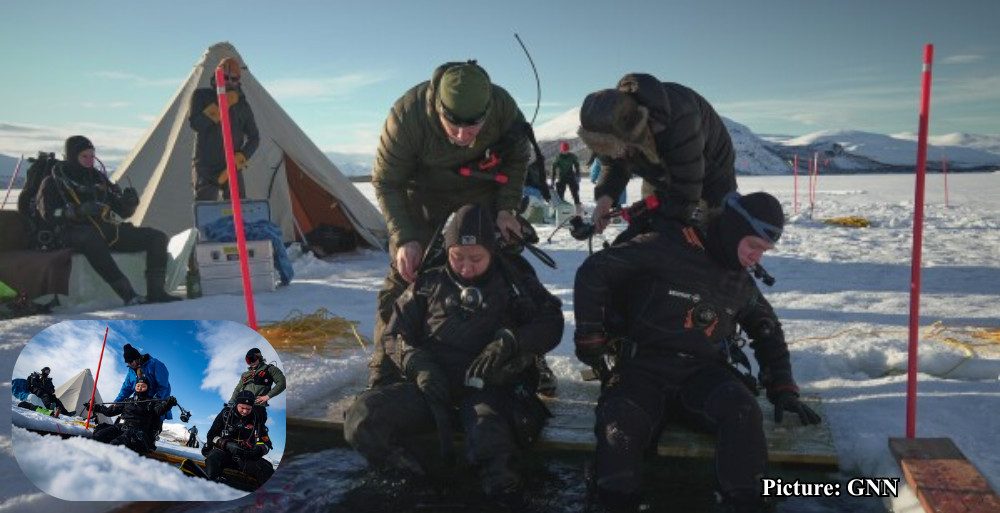
KILPISJÄRVI, Finland (AP) — In a remote corner of northern Finland, diver Daan Jacobs resurfaced from a 45-minute descent beneath the icy waters of Lake Kilpisjärvi, where he explored an underwater world rarely seen by human eyes. As he emerged from a hole carved through nearly a meter of ice, Jacobs expressed awe at the beauty of the Arctic environment, a sentiment echoed by many participants in the Polar Scientific Diving class held earlier this month.
This program, organized by the Finnish Scientific Diving Academy, aims to equip a new wave of scientists and researchers with the necessary skills to conduct critical studies under the polar ice. Given that the Arctic is warming at an alarming rate—approximately four times faster than the global average—the need for such research has never been more pressing. The implications of this rapid warming extend beyond the polar regions, influencing global weather patterns and threatening species dependent on sea ice, including polar bears.
The Urgency of Polar Research
With rising temperatures leading to significant ice melt in both the Arctic and Antarctic, scientists face an urgent need to understand the ecological impacts on the flora and fauna inhabiting these regions. As Jacobs noted, “The view is beautiful,” but the reality is sobering for species that have adapted to thrive in extreme conditions for millennia. The changes brought by climate change threaten these delicate ecosystems and, by extension, the global environment.
Marine biologist Erik Wurz, one of the class’s instructors, emphasized the necessity of increasing the number of researchers in polar regions. “Because it is melting so fast, we need to have more people deployed there — more science to be done — to understand better what happens,” he stated. The challenge lies in the fact that only a few hundred individuals globally possess the specialized diving skills and scientific knowledge required for this critical research.
Challenges of Polar Diving
Each session of the 10-day training program immerses participants in the harsh realities of polar diving. Held at the University of Helsinki’s Kilpisjärvi Biological Station, the program has expanded due to increasing demand, allowing for a second session to be added each year. Participants include marine and freshwater biologists, skilled recreational divers, and documentary filmmakers, all seeking to enhance their expertise in a field that is becoming increasingly vital.
Ruari Buijs, a marine biology student from the University of Plymouth, sees this training as a crucial step towards his career goal of researching marine megafauna in Antarctica. “I thought this would be a very good stepping stone toward that goal,” he remarked. Similarly, Caroline Chen, a scientific diver from Germany, expressed her ambition to design future experiments in polar regions, viewing the program as an essential opportunity to gain firsthand experience.
The Unique Experience of Ice Diving
Participants in the course must adapt not only to the freezing waters just above freezing temperature but also to the severe air conditions above the ice. The topside support teams face their own challenges, ensuring the safety of divers while contending with risks such as frostbite. A critical part of the training includes learning emergency procedures, such as how to assist a diver who may struggle to locate the hole in the ice after their dive.
Underwater, the experience is captivating. Many divers reported mesmerizing views, with sunlight streaming through the ice and illuminating the underwater landscape. Chen described the scene, stating, “It looks insane from the bottom up. It changes all the time, like the Northern Lights.”
Despite the frigid conditions, divers manage to adapt. Buijs humorously noted the discomfort of having numb lips after a dive, likening the sensation to “Botox lips.” Such anecdotes highlight the blend of challenges and rewards that come with pursuing this unique form of scientific exploration.
The Future of Polar Research
The training program represents more than just a means to gain diving skills; it is part of a broader effort to address the urgent need for scientific understanding of polar ecosystems. As the impacts of climate change continue to unfold, the insights gained from these divers will be essential in informing conservation efforts and policy decisions aimed at protecting these vulnerable environments.
In a world increasingly reliant on technology, the role of human divers remains irreplaceable. British Antarctic Survey marine biologist Simon Morley emphasized this point, noting that while technology can assist in research, the nuanced understanding and care that human divers bring to the ecosystem cannot be replicated by machines. “A diver can go down and pick up 12 urchins, put them in a bag and not affect the rest of the system,” Morley stated, underscoring the importance of human involvement in these delicate environments.
As the Polar Scientific Diving class continues to train new researchers, the hope is that their work will lead to greater awareness and action regarding the polar ice crisis, ultimately contributing to the preservation of these unique ecosystems for future generations.