






A groundbreaking international study has uncovered a “universal law” of biology that dictates how every living organism—from microscopic bacteria to the largest mammals—responds to temperature. By analyzing over 30,000 performance measurements across 2,700 species, researchers have identified a single mathematical curve, dubbed the Universal Thermal Performance Curve (UTPC). This discovery reveals that life is bound by a rigid thermal blueprint, explaining why global warming can initially boost biological activity but then trigger a sudden, catastrophic collapse once a specific threshold is crossed. The findings, led by experts in Spain, France, and Ireland, suggest that the “shackles” of this evolutionary rule may leave many species with far less room to adapt to a heating planet than previously hoped.
GRANADA, Spain — For decades, biologists have treated the way different species respond to heat as a diverse array of individual stories. A lizard’s sprint speed, a tree’s growth rate, and a bacterium’s division were seen as distinct processes governed by unique evolutionary pressures. However, a massive new meta-analysis has shattered that assumption, revealing that all these traits are bound by a single, inescapable mathematical curve.
The study, published by an international team of ecologists and physiologists, introduces the Universal Thermal Performance Curve (UTPC). This model serves as a “unified theory” for biological heat response, proving that while life is incredibly diverse, the fundamental machinery of metabolism and performance is constrained by the same thermodynamic laws.
The Anatomy of the Universal Curve
To find this “hidden” rule, the research team, led by Ignacio Peralta-Maraver of the University of Granada, compiled an unprecedented database. They analyzed experiments spanning nearly every major branch of the tree of life, including:
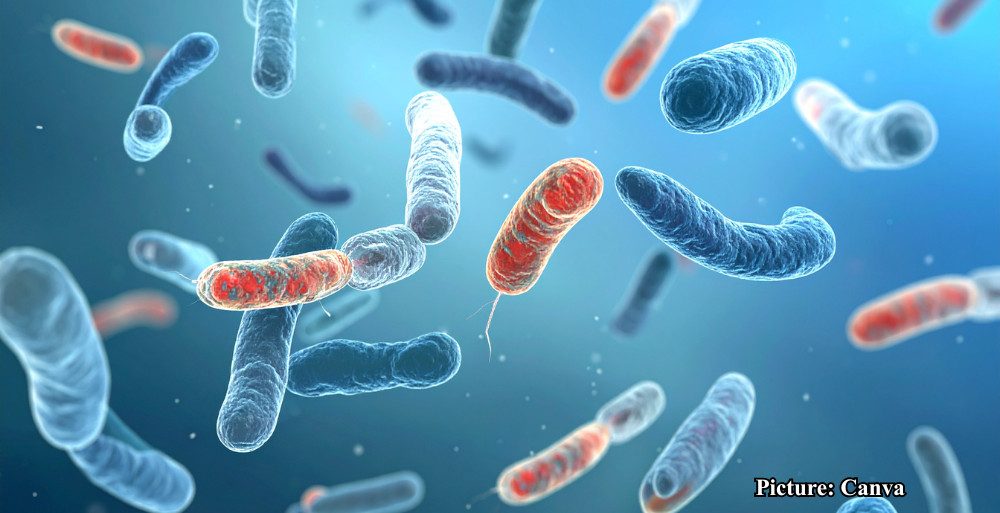
- Microorganisms: Bacteria and various types of plankton.
- Flora: Diverse tree species and aquatic plants.
- Fauna: Insects, fish, reptiles, birds, and mammals.
What they found was a consistent “asymmetric” shape. On a graph, biological performance (such as speed, growth, or reproduction) climbs steadily as temperatures rise. This climb follows a pattern known as exponential scaling, where activity doesn’t just increase—it accelerates.
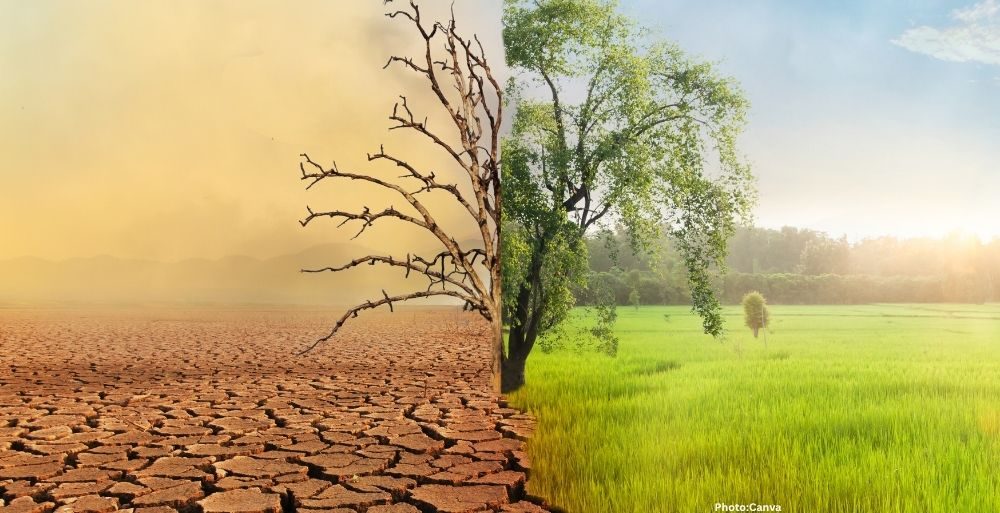
However, once an organism reaches its “optimal temperature,” the curve does not plateau. Instead, it hits a “thermal cliff.” Even a fractional increase in heat beyond this peak causes performance to plummet rapidly, leading to physiological failure, reproductive standstill, or death.
Why Evolution Cannot “Break” the Curve
The most striking aspect of the UTPC is its rigidity. While species can evolve to shift their “peak” slightly to the left (colder) or right (warmer), the fundamental shape of the curve remains unchanged. Scientists refer to this as a “shackle” on evolution because it suggests that organisms cannot easily evolve a way to maintain high performance across a wide range of temperatures.
“This model could become a new standard in the ecology and physiology of global warming,” said Peralta-Maraver. He noted that because so many biological rates—from the firing of neurons to the digestion of food—rely on chemical reactions that are inherently sensitive to heat, the UTPC represents a hard physical limit on what life can do.
The math behind the curve is rooted in the Boltzmann-Arrhenius equation, which describes how the rate of chemical reactions depends on temperature. Because all life relies on these same basic reactions, the “universal” nature of the curve is a reflection of the very chemistry of life itself.
The “Thermal Cliff” and Global Warming
The political and environmental implications of the UTPC are profound. As global temperatures continue to rise toward the 1.5°C and 2.0°C thresholds established by international climate agreements, the “thermal cliff” identified in this study suggests that many ecosystems are closer to collapse than static models predicted.
According to the data, organisms already living in warm environments—such as tropical fish or equatorial insects—are the most vulnerable. These species are often already living at or near their “optimal temperature.” Unlike species in temperate zones that may have a few degrees of “buffer” room, tropical species are standing on the very edge of the curve’s decline.
“We are seeing that the same exponential scaling that allows life to thrive in warmth is exactly what makes heatwaves so deadly,” explained one co-author during a press briefing in Paris. “When you are at the peak of the curve, you don’t have a safety net. A single-degree increase doesn’t just make things ‘a little worse’; it can shut down the system entirely.”
Shifting Baselines and Acclimation
The study also explored how organisms “acclimate”—or temporarily adjust—to changing conditions. While an animal might adjust its enzymes to handle a warmer summer, the UTPC shows that these adjustments are merely “slides” along the universal curve. The organism is still trapped within the same mathematical constraints.
For policymakers, this suggests that relying on “evolutionary rescue”—the hope that species will simply evolve their way out of the climate crisis—may be a dangerous gamble. If the UTPC is truly universal, the biological “operating system” of the planet may be much less flexible than we assumed.
Future Applications of the UTPC
Moving forward, the research team intends to use the UTPC to create more accurate “vulnerability maps” for global biodiversity. By applying this universal math to existing climate models, they can identify exactly which species are nearing their “thermal cliff.”
This shift from “reductionist” biology (looking at one species at a time) to “integrated” modeling (using a universal rule) represents a major leap in ecological forecasting. As Peralta-Maraver concluded, the curve provides a “shared reference point” that allows scientists to speak a common language when assessing the survival of the planet’s diverse inhabitants.
Tags: Universal Thermal Performance Curve, climate change, evolutionary biology, thermal physiology, University of Granada, biodiversity loss, exponential scaling, metabolic rate, ecology, global warming.