







The Indian National Congress has raised significant concerns regarding a recent Supreme Court ruling that restricts Scheduled Caste status to individuals adhering to Hinduism, Buddhism, and Sikhism, questioning the legal and procedural integrity of the decision.
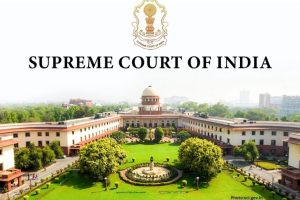
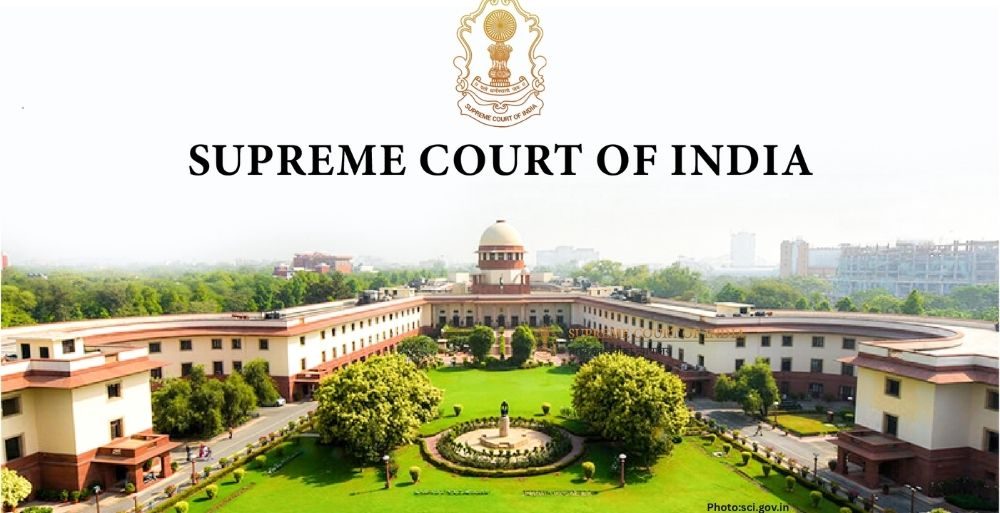
On March 25, 2026, the Indian National Congress publicly criticized a ruling issued by a two-judge bench of the Supreme Court of India, which stated that individuals who convert to religions outside of Hinduism, Buddhism, and Sikhism cannot claim Scheduled Caste status. This decision has drawn considerable attention and concern, particularly from minority communities and advocates for social justice.
The Congress party’s general secretary, Randeep Surjewala, articulated the party’s apprehensions in a statement, emphasizing that the ruling has instigated “deep consternation, disquiet, and fear” among economically weaker sections of minority communities. Surjewala characterized the issue of Scheduled Caste status for converts as a highly sensitive matter, impacting many individuals striving to escape entrenched social prejudices and discrimination.
Legal Context and Ongoing Litigation
The issue of Scheduled Caste status for converts has been a contentious topic within India’s legal framework, with the question pending before a three-judge bench since January 21, 2011, due to a public interest litigation. Surjewala questioned how a two-judge bench could render a decision on a matter that has been awaiting resolution by a larger bench, highlighting a potential procedural oversight. “Why did the Modi government not bring this to the notice of the Supreme Court bench regarding the issue being under adjudication before a three-judge bench? Was it done deliberately by the Government?” he queried, indicating possible governmental intent behind this procedural gap.
This situation raises questions about the Supreme Court’s procedural norms and the responsibilities of the government in such cases. The fact that a significant legal matter, which could affect millions, is being debated without resolution for over a decade underscores the complexities involved in caste and religion in India.
Government Representation and Allegations of Misleading Information
Surjewala further criticized the Central Government for allegedly failing to present essential facts relevant to the case during the Supreme Court’s proceedings. He suggested that this omission could constitute a deliberate attempt to mislead the court. The government has maintained that the case pertains solely to the applicability of the Scheduled Castes and Scheduled Tribes (Prevention of Atrocities) Act of 1989, a stance Surjewala described as untenable.
“Can a person be Scheduled Caste for purposes of ‘reservation’ and a ‘non-Scheduled Caste’ for purposes of the SC Atrocities Act? Will this compartmentalization sustain?” he asked. This highlights the profound legal and social implications of such distinctions, questioning the integrity of a system designed to protect marginalized communities.
Disparities in Caste Recognition for Religious Converts
Another critical aspect raised by Surjewala concerns the inconsistency in recognizing Scheduled Caste status for individuals converting to various religions. He noted that Dalits who convert to Sikhism or Buddhism retain their Scheduled Caste status, while those who convert to Christianity or Islam are denied similar recognition. This disparity raises important questions regarding the determinants of social and cultural backwardness as it relates to constitutional protections.
“Is the ‘determinant’ of ‘social and cultural backwardness’ ‘religion’ or something more in order to qualify for the protection under Articles 15 and 16 of the Constitution? Does ‘conversion’ alone take away all the symptoms of ‘generational social stigma and prejudice’ associated with being a Scheduled Caste?” Surjewala questioned, calling for greater clarity from both the government and the Prime Minister on these pressing issues.
Implications for Minority Rights and Social Justice
The Congress party’s response to the Supreme Court ruling reflects broader societal concerns about the implications for India’s minority communities. The decision has raised fears of further social stratification and discrimination against individuals who choose to convert from Hinduism, Buddhism, or Sikhism to other religions, particularly Christianity and Islam. This issue intertwines with longstanding debates about caste, religion, and social justice in India—a nation still grappling with the legacies of its historical caste system.
As discussions surrounding this ruling continue, the Congress party is expected to remain active in advocating for the rights of these communities. There is a growing call for a comprehensive reassessment of policies regarding caste recognition, especially in the context of religious conversion. The political ramifications of this ruling are likely to resonate through both legislative and electoral arenas, as minority rights remain a critical concern for many constituents across India.
Conclusion
The Supreme Court’s ruling, coupled with the Congress party’s strong response, underscores the ongoing complexities surrounding caste and religion in India. As the legal and social implications of this decision continue to unfold, it remains to be seen how the government will address these contentious issues, and how they will impact the lives of millions of Indians from marginalized communities seeking equality and justice.