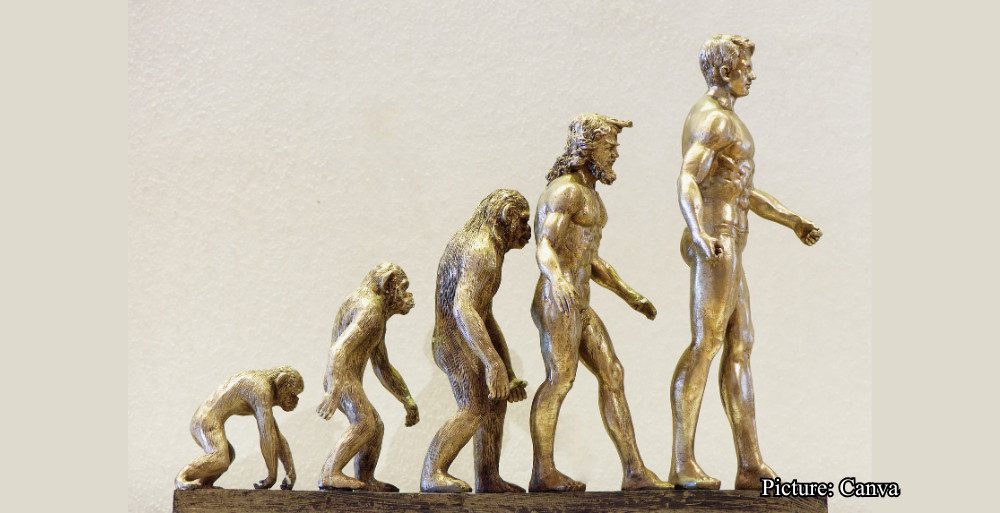










Recent breakthroughs in analyzing ancient DNA from sediment are reshaping our understanding of human evolution, revealing insights into long-extinct species, including Neanderthals and Denisovans.
Researchers are increasingly turning to sedimentary ancient DNA, or sedaDNA, as a pivotal tool in the study of human origins and ancient ecosystems. This shift in methodology, spearheaded by evolutionary geneticist Eske Willerslev and others, has opened new avenues for understanding the complex historical narrative of our species.
Willerslev’s journey began during his doctoral studies at the University of Copenhagen, where he faced challenges in accessing rare fossils that might contain ancient DNA. Frustrated but inspired by an encounter with a dog’s droppings, he theorized that DNA could persist in the environment long after the original source had disappeared. Despite initial skepticism from his professors, his hypothesis proved fruitful. In a landmark 2003 paper published in Science, Willerslev demonstrated that DNA from ancient plants and animals could be extracted from a permafrost core in Siberia, dating back 400,000 years.
Over the past two decades, the field of ancient DNA research has matured significantly. Interest surged around 2013 when scientists successfully isolated human DNA from sediment, marking a transformative moment for archaeology and evolutionary biology. Laboratories previously dedicated to extracting DNA from fossils began to explore soil samples, and archaeologists revisited collections of soil gathered decades earlier, eager to apply new techniques to previously analyzed sites.
Significant Discoveries and Methodological Innovations
In 2022, Willerslev’s team achieved a groundbreaking milestone by recovering DNA from sediments that were two million years old, the oldest genetic material ever extracted. “It is a huge new blue ocean of possibilities,” Willerslev stated, emphasizing the myriad of organisms whose genetic information could be gleaned from sediments.
Experts in the field, such as Matthias Meyer from the Max Planck Institute for Evolutionary Anthropology, have echoed Willerslev’s sentiments, noting the vast molecular information present in sediment samples. “I think we’re really just sort of scratching the tip of the iceberg in terms of what’s possible,” Meyer remarked.
As researchers delve deeper into sedimentary DNA, the relevance of fossil remains may diminish. Willerslev has suggested that the future of human evolutionary studies could rely more heavily on soil samples than on fossilized bones. “My expectation would be, we can almost drop the bones,” he said, “and just go to the dirt.”
Insights into Ancient Humans
SedaDNA has played a crucial role in elucidating the histories of early human species, including Neanderthals and the enigmatic Denisovans. Without the ability to analyze sedimentary DNA, many significant findings would remain undiscovered, according to Pere Gelabert, a population geneticist at the University of Vienna. “Without sediment DNA, discovering those clues would be impossible,” he explained.
A pivotal moment for the field occurred in 2017 when researchers successfully identified ancient human DNA from ice age soils. This discovery reignited interest in sediment analysis, as Diyendo Massilani, a palaeogeneticist at Yale School of Medicine, noted, “When you have a story about humans, this is where you get people [interested].” As a result, researchers began to apply sedimentary DNA analysis more broadly to various archaeological contexts.
Despite the excitement surrounding these discoveries, experts caution against overestimating the reliability of the results. The extraction of ancient human DNA from soil is comparatively rare; thus, researchers at the Max Planck Institute, including Nobel laureate Svante Pääbo, have developed targeted probes to increase the likelihood of capturing human sequences.
Linking DNA to Archaeological Evidence
These innovative techniques have yielded significant findings. For instance, DNA analysis at the Trou Al’Wesse cave in Belgium confirmed Neanderthal occupation based on previously identified stone tools. At Denisova Cave, DNA analysis has revealed a complex intertwinement of Neanderthal and Denisovan lineages, with evidence suggesting that Neanderthals arrived at the site 170,000 years ago—30,000 years earlier than previously thought.
In another example, the Baishiya Karst Cave in Tibet has provided compelling evidence of Denisovan habitation outside Siberia. Following the discovery of a jawbone in 1980, researchers confirmed the presence of Denisovans in the cave sediments, marking a significant expansion of their known habitat.
Advancements in Genomic Techniques
Researchers are also exploring the potential of nuclear DNA extracted from sediments, which offers a more comprehensive view of ancient human populations compared to mitochondrial DNA. Benjamin Vernot, a population geneticist at the Max Planck Institute, has designed probes specifically targeting sequences across the human genome to capture nuclear DNA from sediment samples.
While the extraction of nuclear DNA presents challenges, including the need for advanced computational methods to interpret sparse data, the potential benefits for understanding human ancestry and migration patterns are substantial. Vernot’s research has indicated distinct Neanderthal populations and intermingling events, shedding light on the evolutionary pathways of ancient humans.
Despite the challenges, the field of sedimentary ancient DNA research is poised for further breakthroughs, promising to unveil previously hidden narratives of our species’ history. As researchers continue to refine their techniques and expand their investigations, the implications for understanding human origins and migrations remain profound.