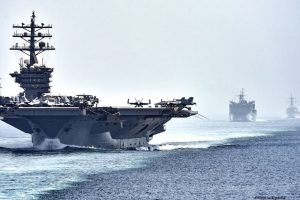
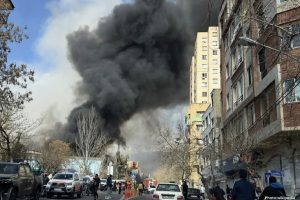






The escalating war in the Middle East has sent crude oil prices surging to their highest levels in nearly four years, forcing airlines to confront a massive spike in operating costs. Industry leaders warn that a combination of fuel volatility and massive operational disruptions may soon lead to a proportional rise in ticket prices for travelers worldwide.
As the conflict between the United States, Israel, and Iran intensifies, the global aviation industry is sounding an alarm that the cost of the war will soon be felt at the boarding gate. For the first time in nearly four years, crude oil prices surged past the $100 a barrel threshold this week, a psychological and economic breaking point that historically precedes a sharp rise in airfares.
The impact is already visible on the tarmac. Since the end of February, nearly 50,000 flights have been canceled across the region, according to data from the aviation analytics firm Cirium. While the immediate grounding of flights is a response to safety concerns, the long-term threat to the industry is the relentless climb of jet fuel costs—the second-largest expense for any carrier after labor.
The Mathematics of the Fare Spike
The relationship between oil and air travel is direct and unforgiving. According to Rob Britton, an adjunct professor at Georgetown’s McDonough School of Business and a retired American Airlines executive, jet fuel typically accounts for 20% to 30% of an airline’s total expenses. “If fuel prices remain high, fares will rise,” Britton noted. “There’s no mystery there. One might expect ticket prices to rise almost proportionately.”
United Airlines CEO Scott Kirby echoed this sentiment, warning that the financial impact will be “meaningful” and will likely hit the carrier’s Q2 financial results. While some international carriers—including Qantas Airways, SAS, and Air New Zealand—have already begun hiking fares and citing fuel surcharges, U.S. carriers have been more cautious. However, industry analysts suggest that “excuseflation” may soon take hold, where carriers begin to use the war as a standardized justification for broad price increases.
Operational Pruning and the Death of the ‘Marginal’ Flight
Beyond the ticket price itself, the war is forcing a radical re-evaluation of airline networks. Higher fuel costs mean that flights which were profitable at $70 a barrel are suddenly “in the red” at $100. Zach Griff, author of the industry newsletter From the Tray Table, warns that “marginal flights are absolutely on the chopping block.”
This reduction in supply could create a secondary price spike. As airlines cut underperforming routes to save fuel, the remaining seats become more expensive due to decreased competition and limited availability. This is particularly perilous for the future of Spirit Airlines. Having recently emerged from its second bankruptcy, the low-cost carrier now faces a fuel environment that could jeopardize its restructuring. If Spirit or other budget carriers are forced to retrench, the loss of low-fare competition would give legacy carriers even more leverage to raise prices.
Hedging vs. Modernization: A Divided Strategy
The crisis has exposed a major strategic rift in how airlines manage energy volatility. Historically, airlines used fuel hedging—financial contracts to lock in prices—to insulate themselves from market shocks. While European carriers like Lufthansa and Ryanair continue this practice, most U.S. airlines, including Southwest, have abandoned it as too costly.
Instead, U.S. majors are pivoting toward fleet modernization and Sustainable Aviation Fuel (SAF). American Airlines recently took delivery of several A321XLR aircraft, which are estimated to use 10% less fuel per seat than older widebody models. Meanwhile, Delta Air Lines remains the only carrier with its own oil refinery in Pennsylvania, a unique asset that provides a buffer against refining margins, though it remains exposed to the price of raw crude.
The Secretary’s Optimism vs. Market Reality
Despite the grim outlook from CEOs, government officials are attempting to project stability. Secretary of Transportation Sean Duffy recently expressed optimism regarding a “recovery in energy markets,” praising the administration’s engagement in the conflict. However, market analysts remain skeptical. If the Strait of Hormuz remains effectively closed or if Iranian infrastructure continues to face strikes, the $100 barrel may only be the beginning.
For the average traveler, the window for “affordable” summer travel is rapidly closing. As airlines prepare to report their outlooks at the upcoming JP Morgan Industrials Conference, the consensus is clear: the era of post-pandemic “revenge travel” is colliding with the harsh realities of wartime economics.