





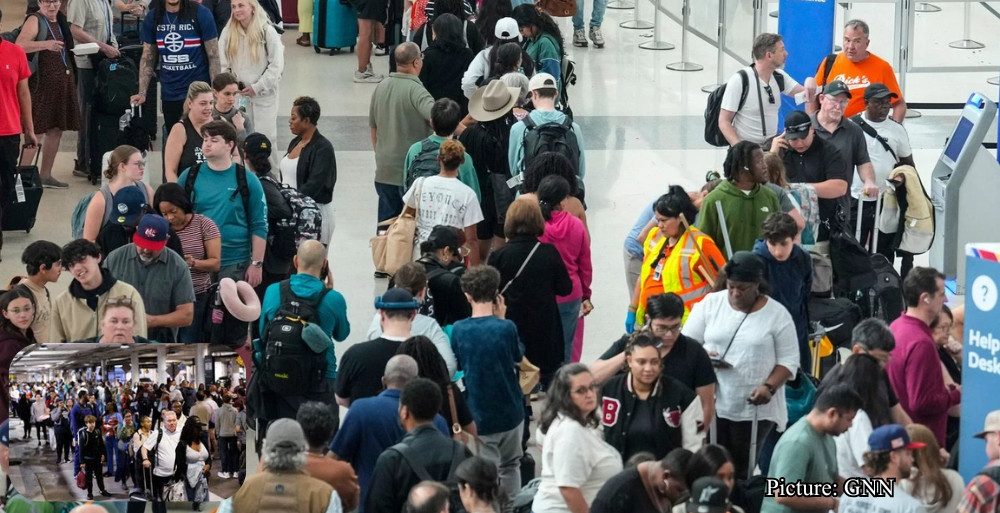
A prolonged partial government shutdown is intersecting with a record-breaking spring break travel season, leaving major U.S. airports grappling with historic delays and a rapidly depleting security workforce. As thousands of TSA officers work without pay for a fourth consecutive week, industry leaders warn that the domestic aviation infrastructure is nearing a state of unsustainability that threatens both national security and the broader economy.
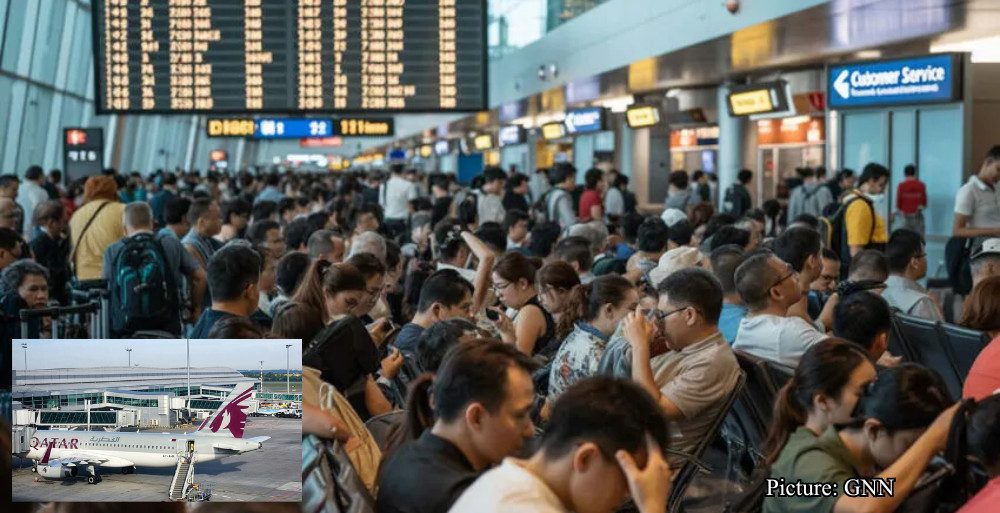
The American aviation system is currently facing a perfect storm of fiscal paralysis and unprecedented passenger volume. As the partial government shutdown enters its fourth week, the Transportation Security Administration (TSA) is being pushed to its absolute limit, just as the busy spring break season begins to flood terminals with millions of travelers. The convergence of these two forces has created a logistical nightmare, with hours-long security queues and a workforce that is beginning to fracture under the weight of financial instability.
According to the latest forecast from Airlines for America (A4A), an estimated 171 million passengers are expected to take to the skies during March and April. This represents a 4% increase from last year’s record-setting figures. While airlines have attempted to bolster capacity by adding roughly 2% more flights and seats, the infrastructure required to process these travelers is crumbling. The Department of Homeland Security (DHS), which oversees the TSA, remains unfunded, leaving the men and women on the front lines of aviation security to perform high-stakes duties without a paycheck.
The human cost of this political stalemate is becoming increasingly visible at checkpoints across the country. Cameron Cochems, vice president of the American Federation of Government Employees (AFGE) Local 1127 and a lead TSA officer, describes a workforce that is mentally and physically exhausted. “It’s not sustainable,” Cochems warned. “What’s going to happen is lines are just going to continue to get longer and longer as spring break goes on.”
The strain is not merely a matter of convenience; it is a burgeoning crisis of personnel retention. Internal TSA data reveals a staggering trend: more than 300 officers have resigned since the shutdown began on February 14. Even more concerning is the “call-out” rate, which has more than doubled as officers—many of whom live paycheck to paycheck—are forced to choose between reporting for unpaid duty or seeking temporary, paying work to cover basic living expenses.
Todd Hauptli, President and CEO of the American Association of Airport Executives (AAAE), noted that the normal attrition rate for the agency usually hovers between 2% and 3%. That figure has now spiked to 7%. “I think it will be potentially double that in two weeks,” Hauptli said, as screeners “scramble to try and find a job where they can actually get paid on a regular basis.”
In an effort to stave off total systemic collapse, the TSA has deployed its National Deployment Force (NDF). Described by Hauptli as a “SWAT team of screeners,” this surge force is being moved around the country like “chess pieces on a chessboard” to plug gaps at the hardest-hit hubs. However, even these elite units are struggling to keep pace. Last weekend, Hobby Airport in Houston was so overwhelmed that officials advised travelers to arrive five hours before their scheduled departure. Similar warnings have been issued in New Orleans and Atlanta, where two- to three-hour security delays are becoming the new baseline.
The crisis extends beyond the physical length of the lines. There is a growing concern regarding the mental acuity of security personnel. When an officer is responsible for identifying prohibited items and potential threats, focus is paramount. Yet, as Cochems points out, it is difficult to maintain that focus when the bank is calling. “You might be on the X-ray or you might be patting someone down, but where’s your mind at? You’re thinking about your phone vibrating because the bank keeps calling you… I can’t pay my utilities,” he said. This “mental absenteeism” represents a secondary, silent risk to the integrity of the sterile areas of the nation’s airports.
Economically, the impact of the shutdown on the travel sector could be profound. Erik Hansen, head of government relations at the U.S. Travel Association, expressed deep concern that the perceived “hassle factor” will deter discretionary travel. If families opt to stay home rather than face the uncertainty of the airport experience, the loss of consumer spending at destinations, hotels, and restaurants could ripple through the national economy. “That’s when we’re going to see the economic impacts,” Hansen noted, highlighting that the travel industry is a vital engine for domestic growth.
Despite the mounting tension, there have been sporadic flashes of public solidarity. Some travelers, recognizing that the officers are victims of a legislative impasse, have begun bringing gift cards or food to checkpoints. While these gestures of appreciation are welcomed by the workforce, they do little to solve the underlying funding vacuum. As the political deadlock in Washington continues, the aviation industry remains the most visible casualty, with the “front edge” of the spring break surge only just beginning to wash over the nation’s terminals. Without a swift resolution to the funding crisis, the “chess pieces” of the NDF may soon find they have no moves left to make.