





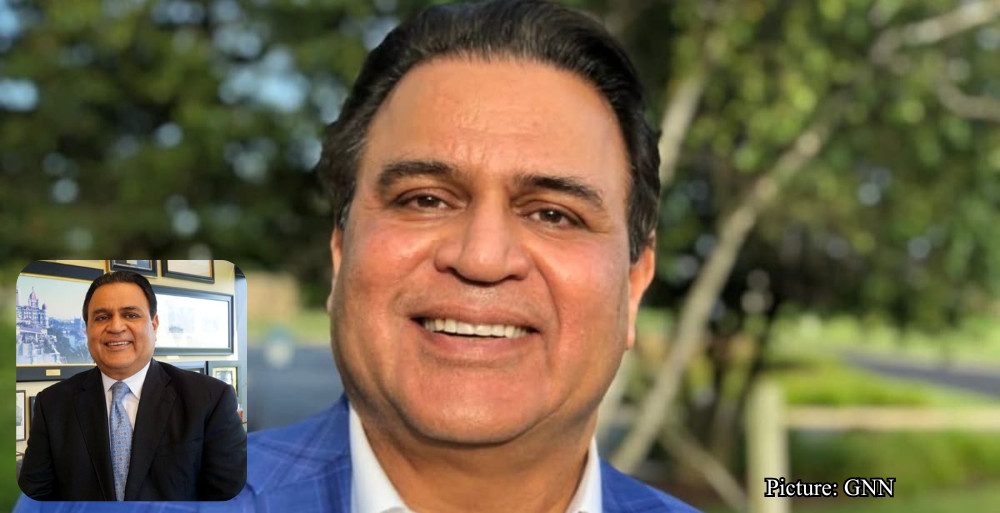
The United States Senate transitioned from legislative debate to a poignant tribute this week as lawmakers recognized the life and economic impact of Sunil Puri, a foundational figure in the development of Rockford, Illinois. Senator Dick Durbin detailed Puri’s evolution from a nearly penniless immigrant to a real estate titan and philanthropist, framing his story as a definitive testament to the enduring power of the American dream.
The floor of the United States Senate often serves as a theater for partisan gridlock, but a rare moment of unified reflection occurred as Senator Dick Durbin rose to commemorate the life of Sunil Puri. In a formal address, Durbin chronicled the narrative arc of an Indian-American leader whose influence stretched from the boardrooms of the First Midwest Group to the diplomatic corridors of New Delhi. Puri, who passed away recently, was remembered not merely as a successful businessman, but as a civic architect who fundamentally reshaped the socioeconomic landscape of Northern Illinois.
The story began in 1979, when an 18-year-old Puri arrived in the United States from Mumbai. According to Durbin, Puri landed in Rockford with a degree of uncertainty that many immigrants share, carrying little more than hope, tenacity, and $150 in his pocket. This meager starting capital would eventually become the seed for a real estate empire, but the interim years were defined by the grueling manual labor that often underpins the immigrant experience. To finance his education at Rockford College (now Rockford University), Puri took on a variety of roles that Durbin noted with specific reverence, including cleaning bedpans and laying concrete.
These formative struggles in the late 1970s and early 1980s did more than just pay for an accounting degree; they forged a deep, symbiotic bond between the young immigrant and the city of Rockford. Durbin emphasized that the local community “opened their arms” to Puri during his early years, a gesture of midwestern hospitality that Puri would spend the subsequent four decades repaying with compound interest.
Upon graduating, Puri transitioned from the classroom to the commercial sector, founding the First Rockford Group, which later rebranded as the First Midwest Group. Under his leadership, the firm became a dominant force in regional real estate development. However, Puri’s business philosophy was notably distinct from traditional speculative development. He focused heavily on urban revitalization and adaptive reuse, targeting properties that the broader market had written off as liabilities.
“They have turned abandoned and forgotten buildings into thriving restaurants, offices, and warehouses,” Durbin told the Senate. This strategy did more than just balance the company’s books; it acted as a catalyst for regional economic growth. By transforming neglected urban cores into productive commercial hubs, First Midwest Group’s investments reportedly created jobs for thousands of Illinoisans, providing a much-needed lift to a region that has faced significant manufacturing headwinds over the last thirty years.
The economic impact of Puri’s work was matched, if not exceeded, by his commitment to philanthropy and civic infrastructure. He operated under a personal mantra inherited from his parents: “Water the flowers where you smell the roses.” This philosophy manifested in multi-million dollar contributions to local institutions that serve as the backbone of Rockford’s social fabric. Among his most visible contributions are the Keeling-Puri Peace Plaza, a space dedicated to cultural harmony, and the southeast Rockford YMCA branch, which provides critical services to the city’s youth and families.
Furthermore, his dedication to emergency response and social welfare led to the establishment of the Salvation Army Puri Family Disaster Services Center. These projects were not merely financial transactions for Puri; they were strategic investments in the human capital of his adopted hometown. His colleagues and friends often noted that he viewed the success of his business and the health of the community as inextricably linked.
Beyond the borders of Illinois, Puri emerged as a sophisticated bridge-builder in the realm of international relations. He was a passionate advocate for improved U.S.-Indian relations, recognizing early on that the diaspora could play a pivotal role in strengthening the strategic partnership between the world’s two largest democracies. His stature was such that he was invited to travel to India with both President Bill Clinton and President Barack Obama, serving as a cultural and commercial envoy during high-stakes diplomatic missions.
His ability to navigate the complexities of international trade while remaining deeply rooted in the local politics of a Midwestern city made him a unique figure in American public life. Senator Durbin’s tribute underscored that Puri’s life was a rebuttal to the cynicism that often surrounds the concept of the American dream. By the time of his passing, the $150 he arrived with had been leveraged into a legacy of concrete, community, and cooperation.
As the Senate record now reflects, Sunil Puri’s journey from a Mumbai teenager to a Pillar of the Midwest serves as a reminder of the vital contributions immigrants continue to make to the American economy and spirit. For the citizens of Rockford, the buildings he restored and the parks he funded will stand as permanent markers of a man who arrived with nothing and left behind a transformed city.