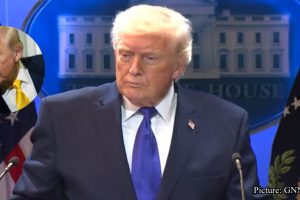



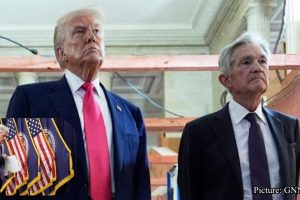
The World Anti-Doping Agency is considering a high-stakes rule change that could bar President Donald Trump and other U.S. government officials from attending the 2028 Los Angeles Olympics and the upcoming World Cup. This move marks a dramatic escalation in a long-running financial and diplomatic feud over unpaid dues and allegations of systemic transparency failures within the global drug-fighting watchdog.
The simmering tension between the United States government and the World Anti-Doping Agency (WADA) has reached a boiling point, shifting from a technical dispute over membership dues into a full-scale diplomatic confrontation. Internal documents obtained by the media reveal that WADA’s executive committee is set to debate a proposal that would effectively blackball President Donald Trump, Vice President J.D. Vance, and members of Congress from the very global sporting events the U.S. is currently spending billions to host.
At the heart of the conflict is a bipartisan refusal by Washington to pay its annual contributions to the Montreal-based agency. The U.S. has withheld approximately $7.3 million in dues since 2023—a sum that represents a significant portion of WADA’s $57.5 million budget. However, for the U.S. Office of National Drug Control Policy (ONDCP), the money is secondary to a fundamental demand for accountability and structural reform following a series of scandals that have shaken confidence in the integrity of international athletics.
The proposed sanctions, which could be finalized as early as next Tuesday’s executive committee meeting, outline a three-tiered punitive system for “non-compliant” governments. The most severe tier would exclude government representatives from participating in or attending major events, including the Olympic and Paralympic Games and World Championships.
“In spite of WADA’s increasing threats, we continue to stand firm in our demand for accountability and transparency from WADA to ensure fair competition in sport,” said Sara Carter, director of the ONDCP. Carter’s stance reflects a rare moment of political unity in Washington, where both the Trump and Biden administrations have historically viewed WADA’s oversight as insufficient, particularly regarding the handling of elite athletes from geopolitical rivals.
The timing of this proposal is particularly pointed. The United States is preparing to host the FIFA World Cup this summer, followed by the 2028 Summer Olympics in Los Angeles and the 2034 Winter Games in Salt Lake City. The U.S. government has already greenlit hundreds of millions of dollars in taxpayer funding for security, infrastructure, and logistics for these events. The prospect of a Swiss-based foundation attempting to bar a sitting U.S. President from a stadium on American soil has been met with a mixture of derision and defiance in Washington.
Rahul Gupta, Carter’s predecessor at the ONDCP and a former WADA executive committee member, dismissed the proposal as a desperate overreach. “I have never heard of a $50-million-budget Swiss foundation being able to enforce a rule to, for example, prevent the United States president from going anywhere,” Gupta said. He questioned the logistics of such a ban, asking rhetorically if the agency intended to involve Interpol to enforce stadium access. “It’s ludicrous. It’s clear they have not thought this through.”
WADA, for its part, has attempted to downplay the specificity of the measure. Spokesman James Fitzgerald argued that the discussions are not “directly related to the U.S.” and have been ongoing since 2020. He further suggested that because the rules would likely not be applied retroactively, the upcoming World Cup and the LA Games might not be affected. However, correspondence between WADA and European officials suggests the agency is looking for a way to implement the rule “without undue delay,” potentially through an extraordinary meeting of its Foundation Board before the year’s end.
The rift is rooted in a decade of grievances. The U.S. has long been a vocal critic of WADA’s perceived leniency toward state-sponsored doping programs, most notably in Russia. More recently, the relationship fractured further over the “contamination” case involving 23 Chinese swimmers. Despite testing positive for a banned heart medication ahead of the Tokyo and Paris Games, the athletes were cleared to compete after WADA accepted the Chinese anti-doping agency’s explanation that the results were caused by a tainted hotel kitchen.
U.S. lawmakers have demanded an independent audit of WADA’s operations as a condition for releasing the withheld funds. WADA has resisted, maintaining that its existing auditing processes are sufficient. “This initiative is aimed at better protecting WADA’s funding so that it can deliver on its mission to protect clean sport,” Fitzgerald stated, adding that athletes globally support measures that ensure all governments contribute their fair share.
As the executive committee prepares to meet, the stakes extend beyond the guest list of a VIP box in Los Angeles. The dispute threatens the very framework of global sports governance. If the U.S. continues to withhold funding and WADA follows through with its “nuclear option” of banning heads of state, the world may see a fractured anti-doping landscape where the most powerful sporting nation on earth operates outside the global watchdog’s reach.
For now, the White House remains unmoved by the threat of exclusion. With the 2028 Games four years away, the standoff remains a high-stakes game of chicken, with the integrity of the Olympic rings and the prestige of the American presidency caught in the balance.