








Amid the escalating regional violence of Operation Epic Fury, a drone strike in the Omani industrial hub of Sohar has claimed the lives of two Indian nationals and left ten others injured. While the strike marks the first Indian fatalities on land since the February 28 outbreak of the U.S.-Iran war, the Indian government has moved swiftly to assure citizens that domestic fuel inventories remain robust despite the de facto blockade of the Strait of Hormuz.
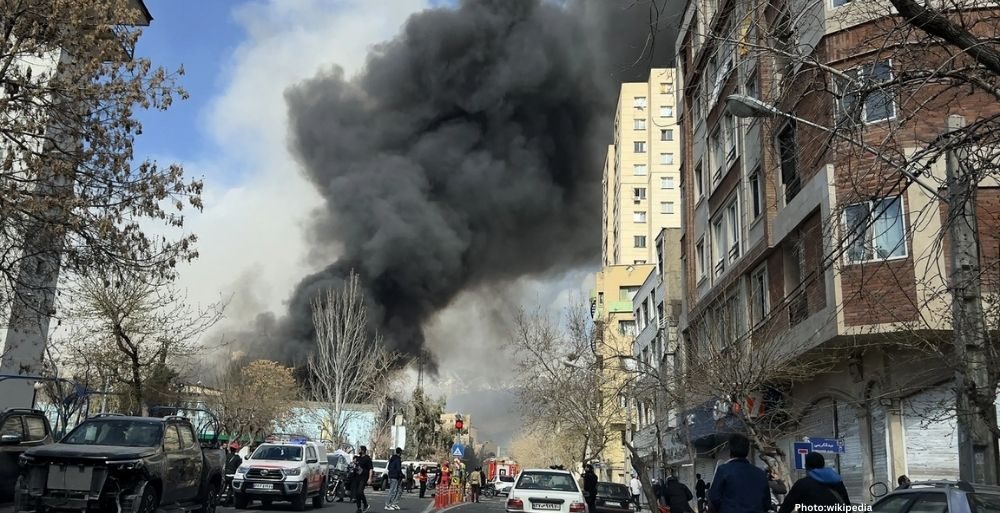
The fragile sanctuary of the Sultanate of Oman was shattered on Friday morning when two unmanned aerial vehicles (UAVs) targeted the al-Awahi industrial area in Sohar, approximately 200 kilometers from Muscat. According to reports from the Oman News Agency and Al Jazeera, one drone was intercepted by security forces but crashed into a worker housing unit, while a second fell in an uninhabited area.
The Ministry of External Affairs (MEA) confirmed the deaths of two Indian expatriate workers, marking a somber milestone in a conflict that has largely been fought at sea. Additional Secretary Aseem Mahajan stated that of the eleven people injured, ten are Indian nationals. While five remain hospitalized, officials indicated that none of the injuries are life-threatening. The incident has sent shockwaves through the nearly ten million Indian nationals living and working in the Gulf region, many of whom are now caught in the crossfire of a rapidly expanding theater of war.
Evacuations and Maritime Peril
The drone strike in Sohar is part of a broader pattern of “geographical and systemic expansion” that has characterized the fourteen days since the launch of Operation Epic Fury. Beyond the land-based casualties, the maritime front remains perilous. The MEA provided a harrowing update on the crew of the U.S.-owned oil tanker Safesea Vishnu, which was attacked near Basra, Iraq. While fifteen seafarers were safely evacuated to a hotel, one Indian crew member was killed in the strike.
The Indian Navy, operating under Operation Sankalp, remains on high alert as the de facto blockade of the Strait of Hormuz continues. Currently, 24 Indian-flagged vessels with 677 sailors are positioned west of the strait, effectively trapped by the closure. The government is actively coordinating with Iranian and Omani authorities to ensure the unhindered transit of energy and the safety of the 23,000 Indian seafarers currently manning merchant vessels across the Gulf.
Domestic Resilience: The Fuel Supply “Wall”
Despite the geopolitical tremors, the Union Ministry of Petroleum and Natural Gas has issued a strong rebuttal to rumors of a domestic energy shortage. Joint Secretary Sujata Sharma emphasized that India’s refining capacity of 258 million metric tonnes remains fully operational, providing a strategic buffer against the regional supply shock.
The government’s “India First” energy policy has been bolstered by several emergency measures:
- Russian Oil Waiver: A 30-day U.S. Treasury waiver has allowed Indian refiners to accept Russian crude already in transit, helping to offset the loss of Gulf imports.
- LPG Prioritization: Refineries have been ordered to maximize LPG recovery, with a total ban on diverting propane or butane to petrochemical production.
- Essential Commodities Act: The government has invoked the 1955 Act to regulate gas supplies and prevent hoarding, increasing the minimum waiting period for domestic LPG refills from 21 to 25 days.
While LPG bookings spiked to nearly 80 lakh per day due to panic buying, officials reiterated that the country delivers 50 lakh cylinders daily and maintains inventory levels sufficient for several weeks. The government is also encouraging a swift transition to Piped Natural Gas (PNG) for the six million households already connected to the network to reduce the strain on the bottled gas supply chain.
The Diplomatic Front
Prime Minister Narendra Modi and External Affairs Minister S. Jaishankar have maintained a relentless diplomatic cadence, engaging directly with Iranian President Masoud Pezeshkian and Foreign Minister Abbas Araghchi. The primary objective remains the safety of Indian citizens and the security of energy transit routes that are the lifeblood of the Indian economy.
As the conflict enters a new phase of uncertainty, with reported command-and-control friction in Tehran and a heightened U.S. military posture, the safety of the Indian diaspora in the Gulf remains a critical national priority. For the families of the victims in Sohar and Basra, the war is no longer a distant geopolitical event, but a personal tragedy.