








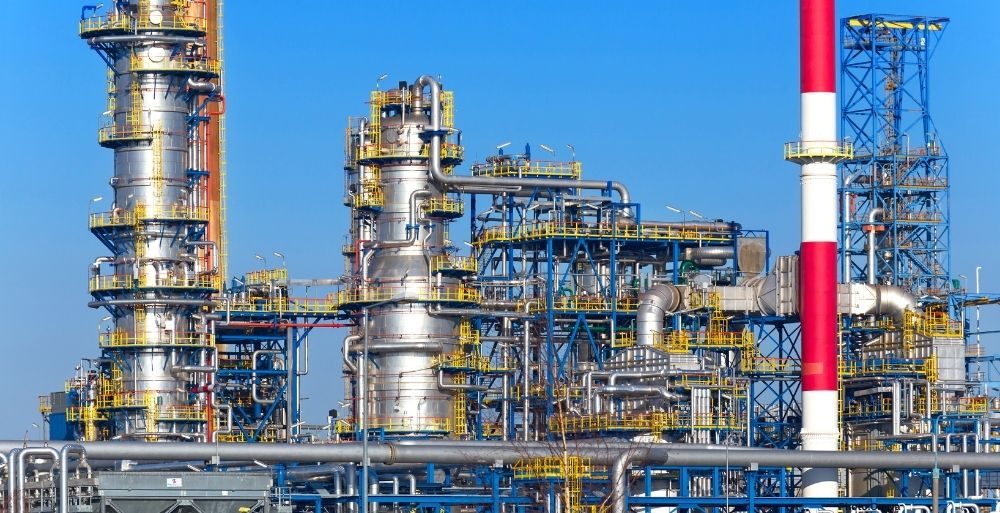
In a historic pivot for global energy trade, India’s Reliance Industries—led by Asia’s richest man, Mukesh Ambani—is backing a $300 billion oil refinery project at the Port of Brownsville, Texas. The deal, hailed as the largest in U.S. history, creates a 20-year “bridge” for American shale oil to be processed and distributed globally, insulating both nations from the volatility of Middle Eastern energy markets.
The landscape of global energy is undergoing a tectonic shift as President Donald Trump and Indian billionaire Mukesh Ambani formalize a massive partnership to construct the first major U.S. oil refinery in half a century. Announced earlier this week on the President’s Truth Social platform, the America First Refining project at the Port of Brownsville is being framed as a strategic masterstroke designed to solve a critical bottleneck in the American energy sector: a surplus of light shale oil paired with a chronic lack of specialized refining capacity.
“This is a historic $300 billion dollar deal—the biggest in U.S. history,” President Trump wrote, specifically thanking Reliance Industries for the “tremendous investment.” The partnership integrates the operational expertise of Reliance, which currently operates the world’s largest refining complex in Jamnagar, India, into the heart of the U.S. Gulf Coast. According to Chicago-based Zacks Investment Research, the move is deeply intertwined with the “geopolitical turbulence” of 2026, specifically the supply chain disruptions caused by escalating conflicts in the Middle East and the administration’s “Operation Epic Fury” against Iranian interests.
Unlocking the “Light Shale” Surplus
The strategic rationale for the Brownsville refinery lies in the chemistry of American energy production. Since the beginning of the shale revolution, the U.S. has produced an abundance of Light Sweet Crude. However, much of the existing U.S. refining infrastructure was designed decades ago to process “heavy” sour crudes from countries like Venezuela and Saudi Arabia.
Trey Griggs, president of America First Refining, emphasized that the new facility will finally bridge this gap. “The U.S. has a surplus of light shale oil but a shortage of refining capacity designed to process it,” Griggs stated. The facility is expected to have an annual capacity of 60 million barrels, ultimately producing 1.2 billion barrels of light shale oil worth $125 billion and 50 billion gallons of refined products valued at $175 billion. Its location at a deep-water port ensures that these refined products—such as gasoline, diesel, and jet fuel—can be exported easily to international markets.
The Ambani Factor: Jamnagar in Texas
For Mukesh Ambani, whose real-time net worth sits at $98.9 billion, the U.S. bet is a significant expansion of his global energy footprint. Reliance Industries is not merely a financial backer; it brings a 20-year offtake agreement to buy, process, and distribute American shale.
Zacks Investment Research notes that the venture will leverage Reliance’s “deep-seated operational knowledge” from its Jamnagar Refinery in Gujarat, which processes roughly 1.4 million barrels per day. By exporting this technical blueprint to Texas, Reliance effectively secures a stable, long-term supply of American shale for its global distribution network, reducing its dependence on the precarious Strait of Hormuz.
Economic and Geopolitical Implications
The deal is expected to break ground in the second quarter of 2026, promising thousands of high-paying jobs in South Texas. Beyond the local economic impact, the project serves several broader administrative goals:
- Energy Independence: By processing shale domestically, the U.S. reduces its reliance on foreign refined products.
- Economic Diplomacy: The deal strengthens the “Quad” alliance between the U.S. and India, positioning the two nations as a unified energy bloc against OPEC+ influence.
- Market Stabilization: A 20-year binding agreement provides long-term price signals to U.S. shale producers, encouraging further domestic exploration and production.
While Reliance has not yet officially commented on the specifics of the project, the move is widely seen as a “future-proofing” strategy. As global oil supply chains become increasingly fragmented by war and sanctions, the Texas-India energy bridge may become the new center of gravity for the world’s fuel markets.