





A preliminary military investigation has concluded that the United States is responsible for a catastrophic missile strike on an Iranian elementary school, citing the use of outdated intelligence. The findings directly contradict recent assertions by President Trump, who had previously suggested that Iranian forces were to blame for the tragedy.
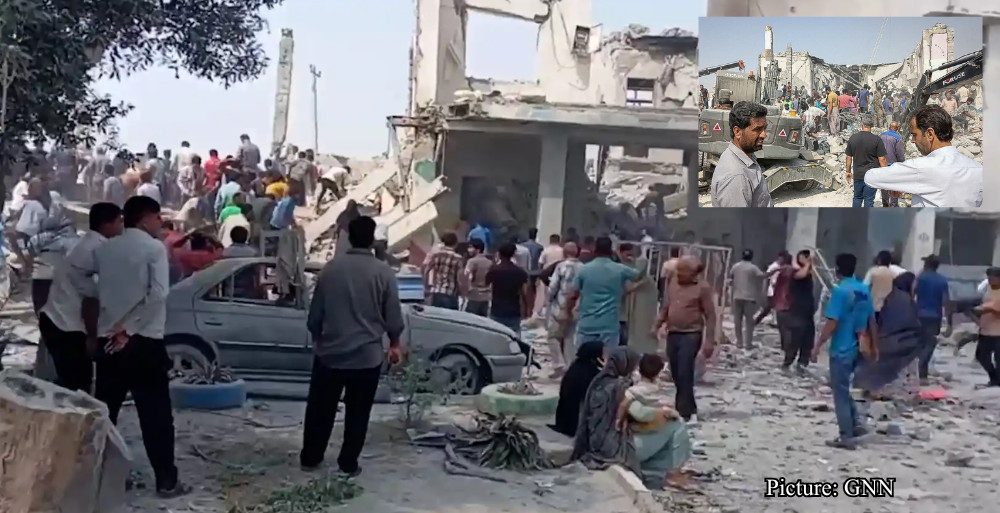
The tragedy at the Shajarah Tayyebeh elementary school has rapidly evolved from a horrific casualty of war into a significant political and intelligence crisis for the United States. According to U.S. officials and individuals familiar with the preliminary findings of an ongoing military inquiry, a Tomahawk cruise missile launched by American forces struck the school building in the town of Minab on February 28. The strike resulted in a staggering loss of life, with Iranian officials reporting at least 175 fatalities, the vast majority of whom were children.
The investigation has traced the error back to a fundamental failure in the military’s targeting process. Investigators found that officers at U.S. Central Command (CENTCOM) utilized target coordinates based on obsolete data provided by the Defense Intelligence Agency (DIA). The school building had historically been part of an adjacent naval base used by the Islamic Revolutionary Guards Navy, a primary objective in the current U.S. air campaign. However, despite the building’s conversion into an educational facility years ago, it remained coded as a military target within the intelligence databases used to program the precision-guided munitions.
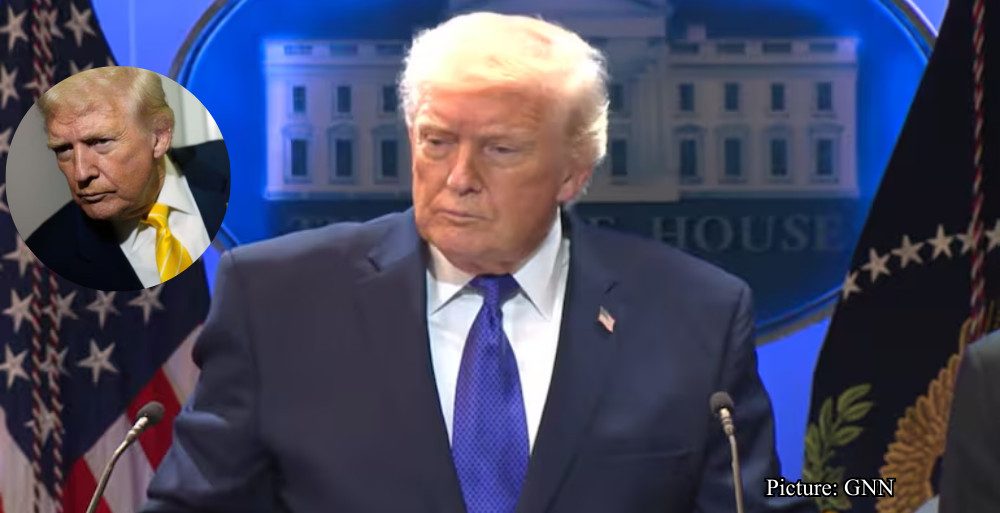
This revelation creates a precarious “truth gap” between the Pentagon’s internal findings and the public rhetoric emanating from the White House. For days, President Trump has sought to distance the United States from the incident, frequently suggesting that Iran may have accidentally struck its own citizens. During a recent briefing on Air Force One, Mr. Trump told reporters, “In my opinion, based on what I’ve seen, that was done by Iran.” He further claimed, without evidence, that Iranian munitions lack accuracy and even incorrectly asserted that Tehran might possess its own Tomahawk missiles. When confronted with the emerging evidence of U.S. culpability on Wednesday, the President offered a more distanced response, stating, “I don’t know about that.”
The internal unease within the intelligence community is palpable. Officials speaking on the condition of anonymity noted that the President’s attempts to sidestep blame have complicated the formal inquiry, as investigators must now navigate a politically charged environment while documenting a clear-cut military error. Karoline Leavitt, the White House press secretary, has attempted to maintain a middle ground, noting that the investigation is ongoing and that the President would ultimately accept its formal conclusions.
The technical failure at the heart of the Minab strike highlights the complexities and risks of modern network-centric warfare. The DIA is responsible for developing “target folders,” which are then passed to CENTCOM for operational execution. In this instance, the “target coding” provided to commanders labeled the school as a legitimate military structure. While military protocols require multiple layers of verification—often involving the National Geospatial-Intelligence Agency (NGA) to confirm targets via fresh satellite imagery—those safeguards appear to have failed in the high-tempo environment of the opening phase of the conflict.
A visual investigation into the site provides a damning indictment of the intelligence oversight. Satellite imagery from as early as 2013 shows clear signs of the building’s civilian transition: military watchtowers were removed, the perimeter was fenced off from the naval base, and the asphalt was painted with sports fields and play areas. The walls of the structure itself had been repainted in bright blue and pink, a stark visual indicator of its status as a school. Despite these highly visible changes, the DIA’s database remained frozen in time, reflecting the site’s former military utility.
The failure also raises questions about the military’s recent integration of artificial intelligence and automated data-crunching programs. Investigators have looked into whether systems like the NGA’s Maven Smart System, which uses software to identify points of interest, played a role in the misidentification. However, early indications suggest that this was not a “machine learning” error but a classic, devastating human failure to update and verify foundational data.
Historically, this incident draws haunting parallels to the 1999 bombing of the Chinese Embassy in Belgrade during the Kosovo War. In that instance, the CIA used an outdated map to identify a target believed to be a Yugoslav arms agency; the resulting strike killed three Chinese journalists and ignited a major diplomatic crisis. Then, as now, the failure was attributed to a workforce “spread thin” and a breakdown in the basic maintenance of intelligence databases.
The political ramifications are expected to be severe. While the Trump administration has made neutralizing the Iranian Navy a top priority to ensure the flow of global commerce, the death of nearly 200 civilians—mostly children—threatens to erode international support and provide Tehran with a powerful propaganda victory. Defense Secretary Pete Hegseth has remained largely silent on the specifics of the strike, deferring to the ongoing investigation even as the commander-in-chief offers contradictory narratives.
As the inquiry continues, the focus has shifted to the National Geospatial-Intelligence Agency and why their analysts, who are embedded with operational planners, did not catch the discrepancy between the aging DIA coordinates and the current satellite reality on the ground. For now, the U.S. military faces the grim task of reconciling its technological superiority with a tragic, preventable lapse in fundamental tradecraft.