







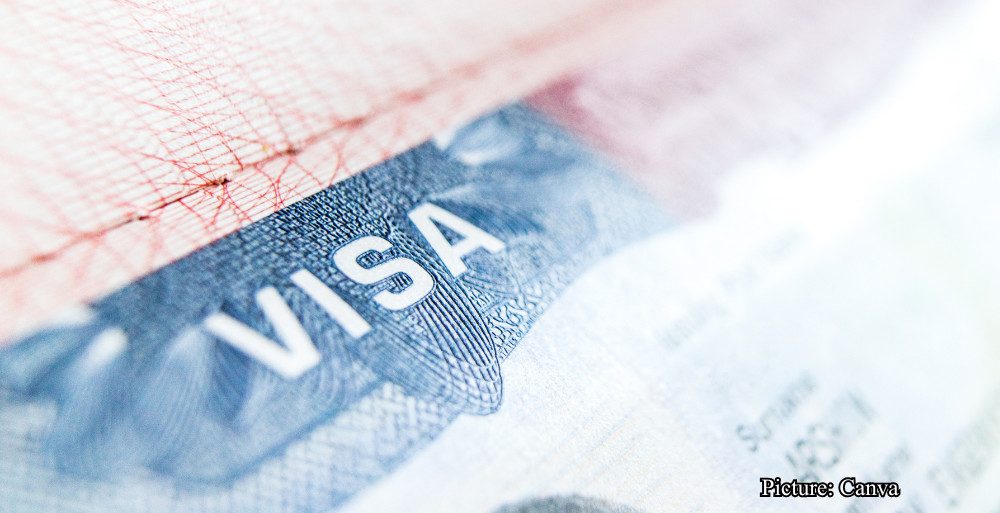
The State Department has finalized a new rule requiring all Diversity Immigrant Visa Program applicants to possess a valid, unexpired passport at the time of entry. This regulatory shift aims to bolster the integrity of the “green card lottery” by requiring digital scans of biographic pages to deter fraudulent and duplicate applications.
The Department of State has officially moved to tighten the gates of one of the United States’ most coveted immigration pathways, finalizing a rule that mandates all applicants for the Diversity Immigrant Visa (DV) Program possess a valid, unexpired passport from their home country at the very start of the process. This shift, which revives a previous enforcement effort that was sidelined by legal challenges, marks a significant tightening of the administrative requirements for millions of hopeful migrants worldwide who seek permanent residency in the United States.
Known colloquially as the green card lottery, the DV program has long served as a unique pillar of American immigration policy. Unlike most other visa categories, it does not require an employer sponsor or a direct family connection to a U.S. citizen. Instead, it offers a high-stakes, random chance at a new life for up to 55,000 individuals annually from countries with historically low rates of immigration to the U.S. Under the newly finalized rule, the barrier to entry has just become higher, requiring prospective applicants to secure formal travel documentation from their own governments before they even enter the digital drawing.
The decision to implement this “passport rule” is rooted in a desire to modernize the vetting process and eliminate systemic vulnerabilities. According to the State Department’s final rule, which is set to take effect 30 days after its publication in the Federal Register, applicants must not only provide their passport information but also upload a high-quality scan of the passport’s biographic and signature page. Historically, applicants were only required to produce a passport much later in the process—specifically during the interview stage at a U.S. consulate if they were among the lucky few selected. By moving this requirement to the front end, federal officials aim to ensure that the identity of every entrant is verifiable from day one.
John L. Armstrong, Principal Deputy Assistant Secretary in the Bureau of Consular Affairs at the Department of State, underscored the necessity of the change in the rule’s executive summary. This rule improves the integrity of, and combats fraud in, the DV program, Armstrong noted, emphasizing that the measure is designed to curb the prevalence of “bad actors” who often submit multiple entries under various aliases or misrepresent their nationality to increase their odds of selection.
The administrative history of this rule has been fraught with procedural hurdles. A nearly identical passport mandate was introduced during the previous decade but was eventually struck down by a federal court in 2022. That ruling, as noted by legal analysts at Bloomberg Law, did not necessarily find the passport requirement itself to be unconstitutional or unlawful in spirit, but rather concluded that the government had failed to follow the proper rulemaking procedures required by the Administrative Procedure Act. By finalizing this new rule through the formal public comment and review process, the State Department is betting that the mandate will now stand up to judicial scrutiny.
From a policy perspective, the move reflects a broader trend toward enhanced digital vetting and biometric-adjacent verification. Beyond the passport requirement, the rule also includes technical updates to the language used in the application process. For instance, the department is replacing the term “gender” with “sex” and “age” with “date of birth” to align more precisely with the data fields found on international travel documents and to streamline the data-matching process used by federal law enforcement agencies.
Critics of the rule have previously argued that it creates a financial and bureaucratic burden for applicants in developing nations, where obtaining a passport can be a costly and time-consuming endeavor. For a program designed to provide an “on-ramp” for people from diverse backgrounds, requiring an upfront investment in a passport may inadvertently favor wealthier applicants. However, the State Department has maintained that the risks of identity fraud and the administrative burden of processing illegitimate entries outweigh these concerns. There remain limited exemptions for those who cannot obtain a passport, such as individuals from Communist-controlled countries or those who are unable to obtain a passport from a government that does not issue them to its nationals.
The stakes for the DV program remain incredibly high. In a typical year, the number of entrants can exceed 10 million to 20 million, making the selection rate less than 1%. Selection in the lottery is merely the first step; winners must still meet strict educational or work experience requirements, undergo rigorous background checks, and complete an in-person interview. The issuance of a visa is never guaranteed, and the process is governed by strict statutory requirements that often leave many selected “winners” without a green card if they fail to complete their paperwork before the end of the fiscal year.
As Washington continues to grapple with broader questions regarding border security and the future of legal migration, the Diversity Visa program remains a frequent subject of debate. While some lawmakers have called for the program’s abolition in favor of a purely merit-based system, others view it as a vital tool for American soft power and cultural enrichment. For now, the State Department’s new rule serves as a clear signal: while the “lottery” remains open, the U.S. government is demanding a higher level of accountability and transparency from every individual who wishes to take a chance on the American Dream.