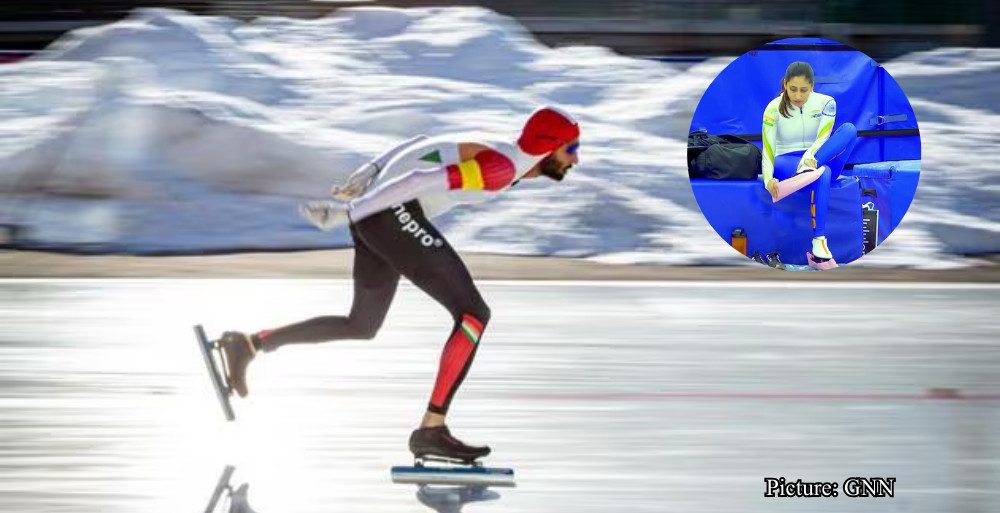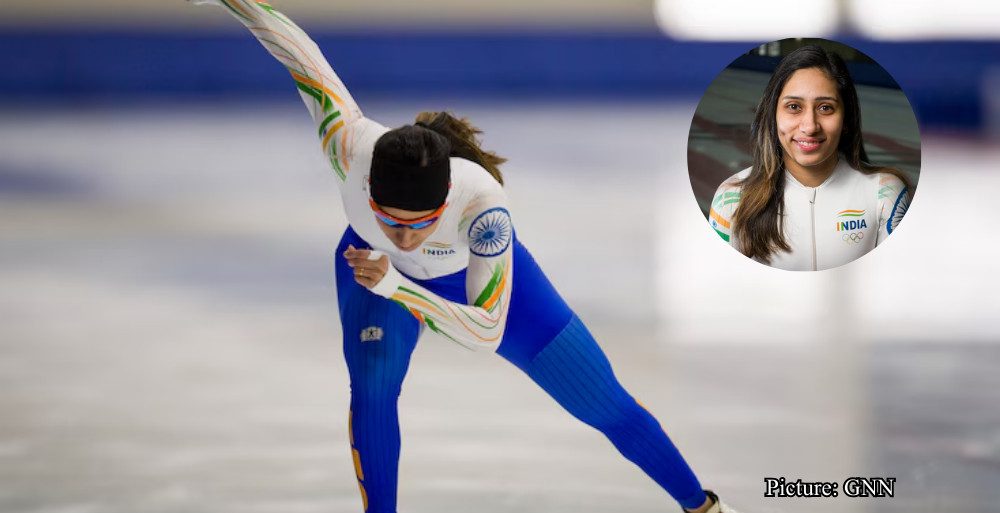





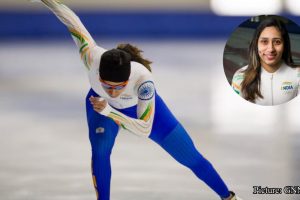
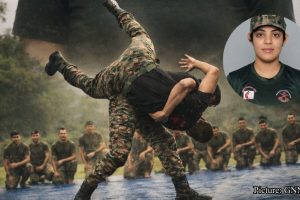
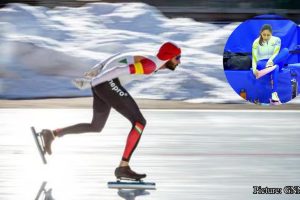
Shruti Kotwal, the holder of every major national speedskating record for India, faces a definitive crossroads in her athletic career as her visa nears expiration. Training at the Utah Olympic Oval, the “fastest woman on ice” is currently mounting a grassroots fundraising campaign to secure the legal status necessary to continue her residency in the United States, highlighting the immense barriers faced by “national teams of one” in the high-stakes world of international sports.
In the rarefied air of the Salt Lake Valley, where the ice is engineered for world records and the margins of victory are measured in thousandths of a second, Shruti Kotwal is fighting a battle that has nothing to do with her lap times. The 34-year-old speedskater, who holds the Indian national records in the 500-, 1,000-, and 1,500-meter races, is currently locked in a high-stakes sprint against a looming June deadline. Her visa is set to expire, and without a significant infusion of capital for legal fees, the woman who pioneered speedskating for a nation of 1.4 billion people may be forced to hang up her skates.
Kotwal’s journey from the tropical heat of Pune to the frozen sheets of Utah is a testament to the sheer force of will required when talent outpaces infrastructure. In India, Kotwal began as a roller skater—a common gateway for athletes in climates where natural ice is a geographic anomaly. While she eventually found natural ice in northern regions like Shimla, the conditions were far from competitive. “You can learn how to skate on that, but you can’t really compete,” Kotwal explained, noting the lack of safety padding and Zambonis. “It’s pretty dangerous. We don’t really have infrastructure for speedskating.”
The Extraordinary Burden of Proof
That vacuum of support led Kotwal on a global odyssey, taking her to Germany and Canada before she finally settled in Utah in 2022 to train with the F.A.S.T. (Foundation for Adventurous Student-athletes and Training) team. In late 2023, she was granted an O-1 Visa, a status reserved for individuals of “extraordinary ability” in fields such as the arts, sciences, or athletics. However, unlike professional athletes in the NHL or NFL who have robust corporate or team sponsorship, Kotwal is essentially a self-funded “national team of one.”
The administrative burden of maintaining this status is staggering. Without a formal national team contract to present to U.S. Citizenship and Immigration Services (USCIS), Kotwal must constantly provide an exhaustive paper trail of her records, race times, and international standing to prove she remains “extraordinary.” The stress of biennial O-1 renewals led her and her husband to invest their life savings into an EB-1 visa application—the so-called “Einstein Visa”—which provides a more permanent path to residency.
The gamble proved disastrous. Kotwal alleges that her previous legal counsel misrepresented the nuances of speedskating in the application, leading to a denial that drained her savings without a refund. Now, with her bank account depleted and her legal status precarious, she has turned to the community for help, launching a GoFundMe campaign to raise the $13,000 required for a new round of attorney fees and filings.
A Collaborative Push for Stability
The campaign has found a powerful ally in Caroline Gleich, a renowned Utah-based mountaineer and climate activist who ran for a U.S. Senate seat in 2024. Gleich, who co-sponsored the fundraiser, views Kotwal’s struggle as an emblem of the broader challenges facing independent athletes. “The more that we can support each other and help make dreams become realities… the better,” Gleich stated, emphasizing that supporting international talent enriches the local athletic community in Utah.
For Kotwal, the stakes extend beyond her own career. She views herself as a prototype for future Indian athletes who might follow in her tracks. “I’m skating for every young athlete who has the talent but not the infrastructure,” she wrote on her fundraiser page. By establishing a foothold in the U.S. training system, she hopes to create a blueprint for how international athletes can navigate the complex intersection of high-performance sports and immigration law.
The Cost of the Cold
The financial barrier Kotwal faces is a stark reminder of the “pay-to-play” nature of elite winter sports for athletes from non-traditional nations. While speedskating in Utah provides her with world-class coaching and “perfect, smooth ice,” the lack of a state-funded apparatus means that every hour of ice time and every legal filing must be crowdfunded or paid out of pocket.
As she continues to glide at nearly 30 miles per hour, Kotwal describes a sense of “empowerment” and “freedom” on the ice—a sharp contrast to the rigid, bureaucratic hurdles she faces off of it. If she succeeds in securing the $13,000 needed to renew her visa, she intends to stay in Utah to finalize her qualification bids for upcoming international championships. If she fails, India may lose its fastest woman on ice just as she was beginning to show the world that where a person is born does not dictate how far they can glide.
Chasing the Oval: India’s Speedskating Pioneer Faces Visa Crisis in Quest for Olympic Dreams