






Federal intelligence officials have alerted California law enforcement to an unverified but credible aspiration by Iran to launch a surprise drone attack from a vessel off the Pacific Coast. While state and federal authorities emphasize that there is currently no “actionable” intelligence of an imminent strike, the warning has prompted an elevation of the state’s security posture as the war with Tehran enters a volatile new phase.
The escalating conflict between the United States, Israel, and Iran has reached the American homeland’s psychological doorstep. In a confidential bulletin circulated by the Federal Bureau of Investigation (FBI) and the Joint Terrorism Task Force, California law enforcement agencies were warned that Tehran has “allegedly aspired” to conduct a surprise strike using unmanned aerial vehicles (UAVs) against unspecified targets in the Golden State.
The intelligence, which surfaced just as the U.S. and Israel initiated Operation Epic Fury—the military campaign that resulted in the death of Supreme Leader Ayatollah Ali Khamenei—suggests a maritime launch scenario. According to the memo, the plan involves drones deployed from an unidentified commercial or secondary vessel positioned off the U.S. coastline. While the FBI and the Department of Homeland Security (DHS) have labeled the information as “aspirational” and “unverified,” the sheer strategic possibility of such an attack has forced California’s security apparatus into a state of high vigilance.
A Cautionary Posture in the Golden State
Governor Gavin Newsom confirmed on Wednesday that his office is in “constant coordination” with federal and state intelligence officials to monitor these potential hybrid threats. Since the outbreak of hostilities on February 28, the California Governor’s Office of Emergency Services (Cal OES) has elevated its homeland security posture, treating the drone warning as a vital component of a broader, daily threat landscape.
“Drone issues have been top of mind, and we’ve assembled some work groups specifically around those concerns,” Newsom said, while simultaneously stressing that there is no indication of an impending attack. The Governor’s measured response reflects a delicate balancing act: maintaining public calm while preparing for a type of asymmetric warfare that has already revolutionized the battlefields of the Middle East and Ukraine.
Law enforcement sources experienced in counterterrorism note that such alerts are common during active military operations abroad. The FBI frequently disseminates “vetted but unverified” tips to ensure local police are not caught off guard by sudden shifts in enemy tactics. A federal official described the memo as “cautionary in nature,” explaining that while the intent may exist within the Iranian Revolutionary Guard Corps (IRGC), there is currently no evidence that the necessary infrastructure—a specific vessel or a coordinated cell—is in place to execute a strike on California soil.
The Evolution of the Drone Threat
The warning comes at a time when the Department of Defense has officially designated small, unmanned aircraft as the “weapon of choice on the modern battlefield.” The potential for a “containerized” drone launch—where a standard shipping container on a commercial vessel opens to reveal a pre-programmed UAV—is no longer a theoretical concern. Army Secretary Dan Driscoll recently noted that such technology is not “particularly difficult” and represents a significant dilemma for homeland defense, given the vastness of the 840-mile California coastline.
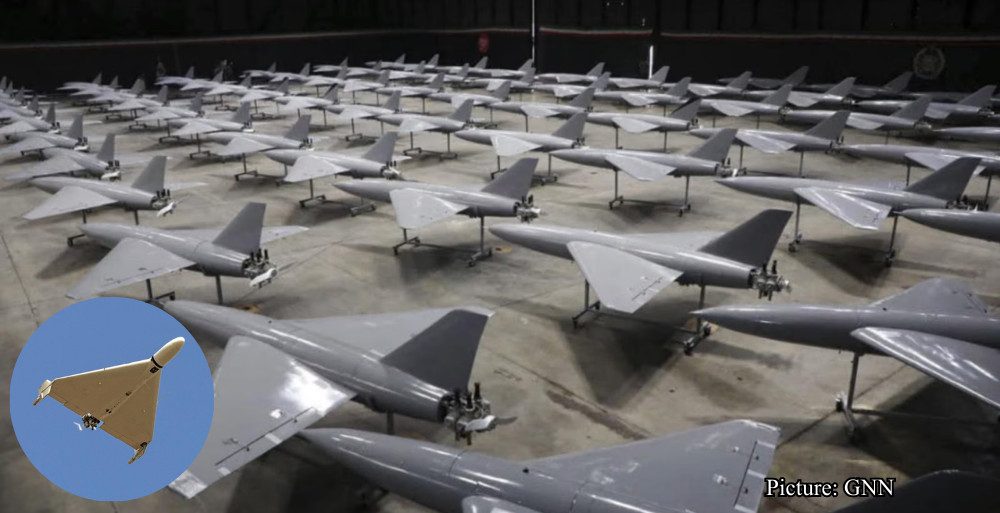
The U.S. has already experienced a surge in unauthorized drone incursions, though largely attributed to criminal cartels along the southern border. However, the use of Iranian Shahed-136 “kamikaze” drones by Russian forces in Europe has provided the Pentagon with a grim preview of the capabilities Tehran possesses. These drones are relatively low-cost, can be deployed in swarms, and are designed to overwhelm traditional air defense systems.
In response to the growing threat, the U.S. military has accelerated testing on counter-UAV technology, including explosive 30-millimeter rounds designed to neutralize drones mid-flight. Within California, major urban centers like Los Angeles and San Francisco have maintained an “elevated level of readiness,” with the Los Angeles Police Department (LAPD) monitoring global events for any signs that international tensions are translating into local risks.
Navigating the “New Normal” of Global Conflict
The geopolitical stakes of the war in Iran—marked by a spike in oil prices over $100 a barrel and the closure of the Strait of Hormuz—have created a heightened threat environment. The DHS recently issued a “critical incident note” warning that recent fatwas issued by Iranian religious leaders calling for “revenge” have increased the risk from violent extremists.
For Californians, the current alert serves as a stark reminder that the geography of modern war is increasingly fluid. While the FBI bulletin lacks specifics on timing or targets, it underscores a fundamental shift in the American security paradigm: the belief that the Pacific and Atlantic Oceans provide absolute immunity from foreign conflict is rapidly eroding.
As the war with Iran enters its second week, the state’s strategy remains focused on intelligence sharing and preemptive hardening of potential targets. “Californians cannot assume global conflicts won’t touch us,” said State Senator Melissa Hurtado. For now, the “surprise attack” remains a theoretical ambition of a wounded regime—one that California officials are determined to ensure never becomes a reality.