








As recurring government shutdowns threaten to paralyze American air travel, the Screening Partnership Program (SPP) is gaining new attention as a potential structural bulkhead. By utilizing private contractors under federal oversight, select airports like San Francisco International have managed to maintain seamless security operations while federalized checkpoints elsewhere descend into chaos.
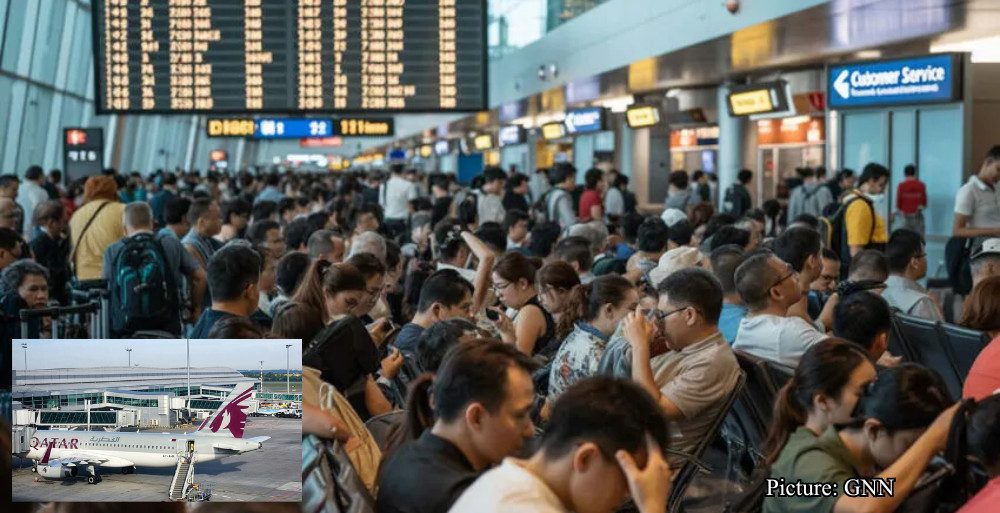
The visual of security lines snaking through baggage claims and spilling into parking garages has become an all-too-familiar harbinger of a Washington in gridlock. As the latest government shutdown extends its reach, the fragility of the nation’s aviation infrastructure is once again laid bare. While the vast majority of the approximately 400 commercial airports in the United States rely on federal Transportation Security Administration (TSA) officers, a small but significant group of airports is operating under a different paradigm—one that appears remarkably resilient to the whims of congressional funding battles.
San Francisco International Airport (SFO), the largest of nearly two dozen hubs participating in the TSA Screening Partnership Program (SPP), has emerged as the primary “litmus test” for an alternative security model. At SFO, screening checkpoints are staffed by private contractors rather than federal employees. The distinction is not merely administrative; it is financial. Because these contractors operate under pre-allocated federal contracts, their paychecks continue to flow even when the Department of Homeland Security’s funding lapses. While federal screeners at other hubs are forced to work without pay—a reality that inevitably leads to increased absenteeism and “sick-outs”—the private workforce at SFO remains stable, insulated from the immediate tremors of political instability.
A Resilience Model Born of Necessity
The SPP allows airports to outsource the physical act of screening to private security firms chosen by the federal government. However, this is not a total divestment of federal power. The TSA maintains strict authority over security procedures, background checks, and medical requirements, ensuring that a private screener in San Francisco meets the same rigorous standards as a federal officer in Chicago.
Aviation security expert Sheldon Jacobson, a key figure in the development of TSA PreCheck, argues that the success at SFO proves that privatization is a scalable solution. As the second-busiest airport in California and a critical international hub for United Airlines, SFO’s ability to navigate the record-breaking 43-day shutdown of 2019 without operational degradation offers a compelling case for proponents of the model. “If SFO is the litmus test for delivering this privatized product, then many other airports can do it, too,” Jacobson noted, suggesting that the “scale issue” should no longer be viewed as a limiting factor.
The Conflict of Accountability and Labor
Despite the operational advantages seen during shutdowns, the move toward privatization faces fierce opposition, primarily from the American Federation of Government Employees (AFGE). The union, which represents federal TSA officers, contends that shifting to a private model would erode hard-won job protections, benefits, and pay for a workforce that already operates under high-stress conditions and suffers from chronic turnover.
Critics of privatization also point to the historical context of the TSA’s creation. Following the attacks of September 11, 2001, Congress intentionally federalized airport security to eliminate the inconsistencies and “race-to-the-bottom” cost-cutting measures that plagued the pre-9/11 private screening industry. The union warns that introducing a patchwork of private vendors could lead to fragmented standards and weakened accountability. Henry Harteveldt, president of Atmosphere Research Group, emphasizes that the TSA’s primary achievement has been the establishment of a uniform national security standard that did not exist under the previous private regime.
Legislative Alternatives and the Path Forward
The debate is currently polarized between those who wish to expand the SFO model and those who see it as a threat to national security and labor rights. On Capitol Hill, some Republican lawmakers have gone as far as proposing the “Abolish TSA Act,” which would phase out the agency entirely in favor of private contractors overseen by a new federal office. While such a move remains a legislative long-shot, TSA leadership has signaled a rare openness to the conversation, suggesting that privatization schemes are “not an all-or-nothing game.”
Simultaneously, a coalition of industry groups—including the U.S. Travel Association and Airlines for America—is lobbying for a middle-ground solution. Rather than dismantling the federal workforce, they are urging Congress to pass legislation that would guarantee pay for essential aviation workers regardless of the government’s funding status. This approach seeks to solve the “shutdown problem” without the complexities and risks inherent in large-scale privatization.
As the current shutdown impacts the Department of Homeland Security, the strain on the travel system is particularly acute, coinciding with the peak of the spring break season. For travelers caught in miles-long queues, the nuances of federal versus private employment are secondary to the basic expectation of a functioning airport. The “San Francisco model” may have been adopted two decades ago for reasons unrelated to political gridlock, but in the current era of frequent fiscal impasses, it has inadvertently become a blueprint for a more stable, albeit controversial, future for American aviation security.