








The escalating military conflict in the Middle East has pushed Dubai’s logistical infrastructure to a breaking point, with industry experts warning that the city-state has only ten days of fresh food remaining. A combination of the effective closure of the Strait of Hormuz and a dramatic 22% drop in regional air cargo capacity has severed the vital lifelines that sustain the desert metropolis.
The gleaming supermarkets of Dubai, long a symbol of globalized abundance, are facing a silent but accelerating crisis. As the conflict in West Asia intensifies, the intricate machinery of global trade that feeds the United Arab Emirates is grinding to a halt. According to Stefan Paul, Chief Executive of the global logistics powerhouse Kühne+Nagel, the city-state is currently operating on a knife’s edge, with data suggesting that existing stocks of fresh produce will be exhausted in roughly ten days.
The warning, first brought to light by analyst Shanaka Anslem Perera following Paul’s interview with Swiss broadcaster SRF, highlights a structural vulnerability that has long been the subtext of the Gulf’s rapid development. The region is a paradox of extreme wealth and extreme dependency; between 80% and 90% of its food is sourced from international markets. In a landscape where arable land is a luxury and the climate is unforgiving, the “just-in-time” delivery model is not merely a business strategy—it is a survival mechanism.
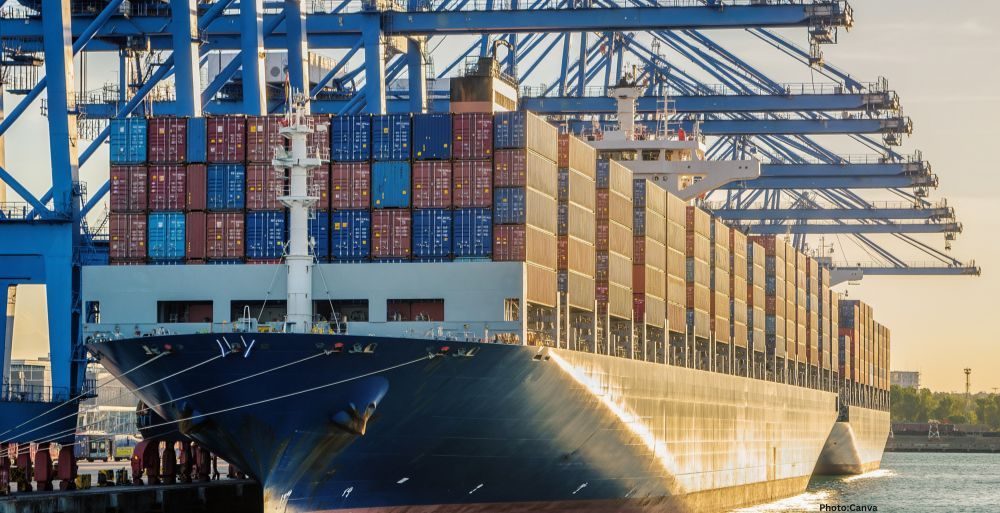
The immediate catalyst for this precarious situation is the Strait of Hormuz. This narrow maritime corridor, which serves as the entry point for approximately 70% of the Gulf Cooperation Council’s (GCC) food supplies, has been effectively closed to commercial traffic since February 28. The closure followed a series of military escalations that rendered the waterway “insecure” for merchant vessels. Major shipping lines, including MSC and Maersk, have already suspended bookings or implemented “Emergency War Surcharges” reaching up to $4,000 per container, effectively orphaning cargo destined for the Arabian Peninsula.
While dry goods and grains are often stored in strategic silos designed to last months, “fresh” goods—the berries from Europe, the leafy greens from Africa, and the dairy from Australasia—rely on a constant, daily pulse of arrivals. With the sea lanes blocked, the burden traditionally shifts to the skies. However, the aviation sector offers no reprieve. Data from the analytics firm Aevean indicates that air cargo capacity serving the Middle East plummeted by 22% in the first week of March alone. Stefan Paul noted that approximately 18% of global air cargo capacity has been sidelined due to the conflict, as airlines avoid volatile airspace and prioritize military or humanitarian logistics over commercial freight.
The paralysis extends to the ground. Jebel Ali Port, the ninth-largest container hub in the world and the beating heart of Dubai’s trade-based economy, has become a casualty of the geography of war. Struck by debris during an aerial interception on March 1, the port was forced into a precautionary shutdown. Although DP World reported that operations partially resumed by March 5, the backlog is staggering. Hundreds of container ships are currently anchored in the Persian Gulf or the Gulf of Oman, unable to offload their perishable contents.
Economists point out that the crisis at Jebel Ali does more than just empty shelves in Dubai; it breaks the “re-export” spine of the Middle East. Roughly 30% of the cargo entering Jebel Ali is destined for other nations, meaning the food security of the entire region is tethered to the stability of this single port. If the facility remains impaired, the ripple effects will be felt from the markets of Riyadh to the kitchens of Doha.
The political stakes are equally high. The UAE government has spent decades positioning the country as a “safe haven” and a global logistics hub. A sustained food shortage would not only challenge the social contract with its residents but also undermine the very brand of stability that attracts foreign investment. While Saudi Arabia has invested billions in domestic agriculture and grain storage, the broader GCC remains a “net importer” of calories.
“The situation is unprecedented,” says one regional trade analyst. “We are seeing the weaponization of geography. When the Strait of Hormuz closes and Jebel Ali is under threat, the logistics of a desert city-state become a math problem with no easy solution.”
Efforts to bypass the maritime blockade via land routes from Saudi Arabia are theoretically possible but logistically insufficient. Paul emphasized that the current land-freight capacity is a fraction of what is required to replace even a single massive container ship. As the ten-day clock ticks down, the “Pearl of the Gulf” finds itself in a race against time, hoping for a diplomatic breakthrough before the shelves of its world-class emporiums run dry.