
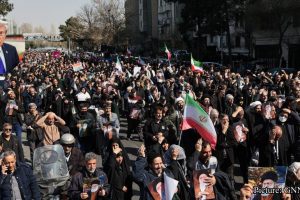
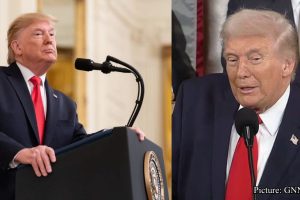


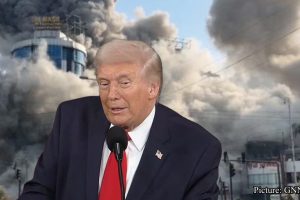

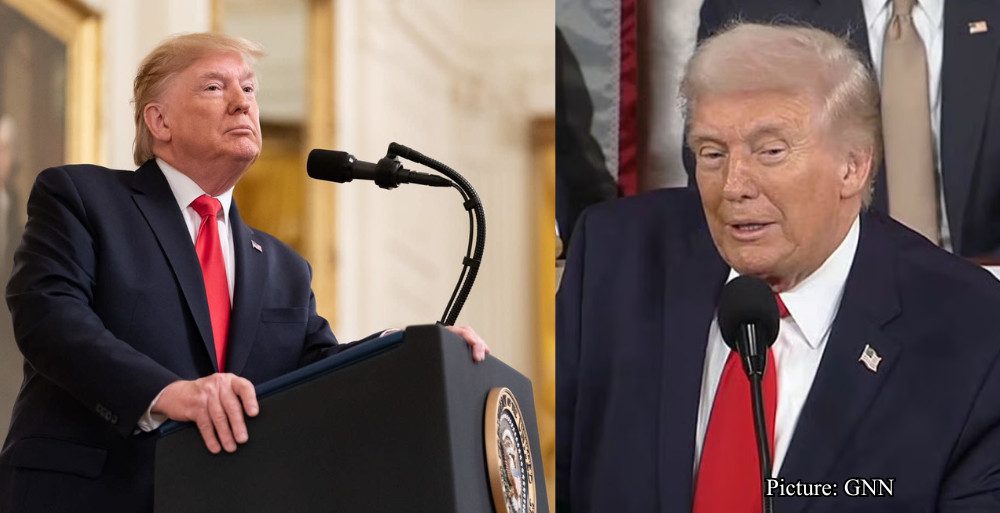
In a comprehensive assessment of current United States foreign policy objectives and domestic legislative priorities, President Donald Trump stated that the Iranian leadership has been neutered following recent military engagements and expressed a willingness to accept a non-democratic or religious successor in Tehran provided they align with American and Israeli interests. During a wide-ranging telephone interview Friday, the president further predicted the imminent collapse of the Cuban government while identifying the passage of national voter identification legislation as his administration’s primary domestic focus following the conclusion of hostilities in the Middle East.
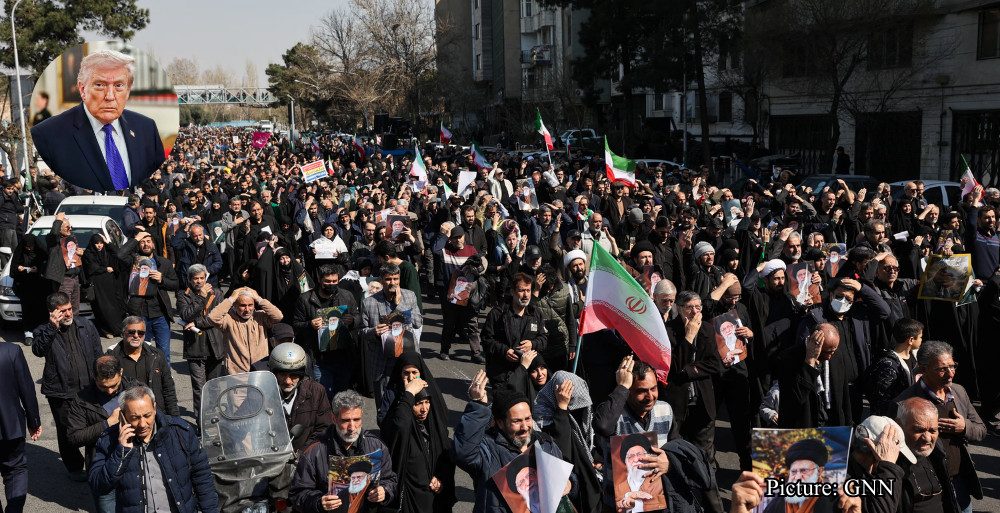
The president’s remarks signal a significant shift in long-standing American diplomatic doctrine, which has historically prioritized the promotion of democratic governance in the Middle East. President Trump dismissed concerns regarding the specific structure of a future Iranian state, emphasizing instead the necessity of a regional partner that would cooperate with the United States and its allies. According to the president, the recent degradation of Iranian military capabilities has fundamentally altered the geopolitical landscape of the region, asserting that Iran is not the same country it was a week ago.
Regarding the current state of Iranian influence, the president noted that a week ago they were powerful, and now they’ve been indeed neutered, according to the statement. This assessment follows a period of intensified military activity that the president categorized as a 12, maybe 15 on the scale of 10. Despite the intensity of the conflict and potential disruptions to global energy markets, the president dismissed the long-term impact of rising gas prices, stating that it’ll be short term time and that he has already figured out the strategic challenges posed by the Strait of Hormuz.
The administration’s strategy for a transition of power in Tehran appears to be modeled after recent political shifts in South America. President Trump explicitly compared the desired outcome in Iran to the situation in Venezuela, where the United States supported a change in leadership earlier this year. It’s gonna work very easily, the president said, noting that it is going to work like did in Venezuela. He praised the current acting leadership in Caracas, stating that she’s doing a fantastic job.
Addressing the potential for a theocratic successor in Iran, the president indicated that the religious nature of a government is secondary to its foreign policy orientation. I don’t mind religious leaders, he remarked, adding that he deals with a lot of religious leaders and they are fantastic. When pressed on whether he would insist on the establishment of a democratic state, the president clarified his position by saying no, I’m saying there has to be a leader that’s going be fair and just. According to the official, the priority remains a leader who will treat the United States and Israel well.
The president also used the opportunity to highlight his administration’s rapport with other Middle Eastern powers, specifically mentioning the United Arab Emirates, Saudi Arabia, and Qatar. He claimed that these nations are now fighting for us, contrasting his approach with that of previous administrations. President Trump alleged that former Presidents Joe Biden and Barack Obama had shut out these key partners, nearly driving them into a strategic alignment with China before his intervention.
Turning his attention to the Caribbean, the president issued a bold prediction regarding the longevity of the current administration in Havana. Cuba is gonna fall pretty soon, by the way, unrelated, but Cuba is gonna fall too, he stated. He suggested that the Cuban government is eager to negotiate, noting that they want to make a deal so badly. The president indicated that Senator Marco Rubio would play a central role in the administration’s Cuba policy, though he emphasized that Iran remains the immediate operational priority.
The president’s comments on Cuba reflect a long-term observation of the island’s political climate. I’ve been watching it for 50 years, and it’s fallen right into my lap because of me, he said. While acknowledging that the administration could theoretically handle multiple foreign policy transitions simultaneously, he cautioned against moving too quickly, stating that if you do them all too fast, bad things happen. He maintained that a transition in Cuba is merely a question of time before American Cubans can return to their home country.
On the domestic front, President Trump tied his endorsement in the high-stakes Texas Senate runoff to the candidates’ commitment to specific legislative goals. He identified the SAVE America Act, which focuses on voter identification and citizenship requirements for federal elections, as the most critical issue facing the country outside of the war effort. I want and then I feel very strongly that we have to have the full and complete SAVE America Act, the president stated, adding that it is more important than everything else we’re working on other than the war.
The president’s requirements for the legislation are expansive and include provisions that extend beyond traditional voter ID. We have to have voter ID, we have to have proof of citizenship, we have to have no mail-in ballots except the military, illness, disability and travel, he detailed. He also included social policy demands in his legislative framework, asserting that we have to have no men in women’s sports and we have to have no transgender operations for youth. These additional points have become central to his criteria for supporting either incumbent Senator John Cornyn or Texas Attorney General Ken Paxton.
The political tension in Texas has intensified as both candidates vie for the president’s approval. Attorney General Paxton has signaled a willingness to advocate for the elimination of the Senate filibuster to ensure the bill’s passage, calling it the most important bill the U.S. Senate could ever pass. Senator Cornyn, while a sponsor of the bill, has faced scrutiny from the president’s allies for his reluctance to commit to changing Senate rules. The president emphasized the need for a version of the bill that is not watered down, insisting on a five-point plan that he believes is necessary for election integrity.
Historically, the transition of power in adversarial nations has often been a protracted and volatile process for U.S. administrations. The president’s confidence in a swift resolution in Iran and Cuba draws upon his administration’s recent experiences in Venezuela. However, the mention of significant naval losses for Iran—with the president claiming we just hit about the 25 mark regarding sunken ships—suggests that the military component of this strategy is still very much active.
The administration’s focus on the SAVE America Act also marks a significant escalation in the national debate over federal election standards. By mandating documentary proof of citizenship, the bill seeks to fundamentally alter registration processes across the country. As the president continues to weigh his endorsement in Texas, the interplay between his foreign military successes and his domestic legislative agenda remains a defining characteristic of his current term.