
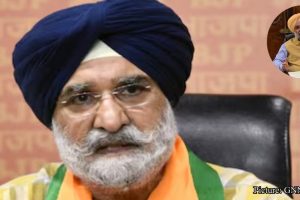







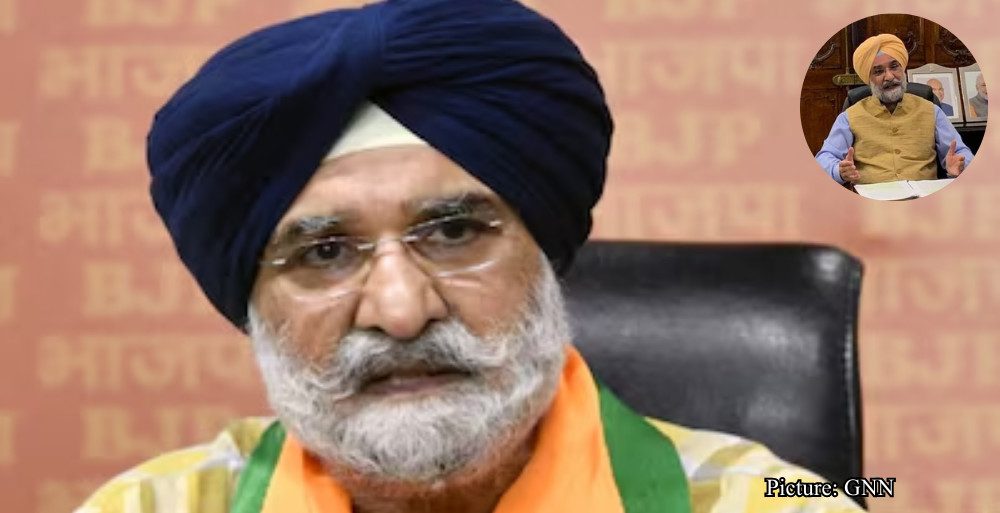
The Government of India has appointed former Indian Ambassador to the United States, Taranjit Singh Sandhu, as the new Lieutenant Governor of Delhi, marking a significant transition in the administration of the national capital. According to an official statement issued by Rashtrapati Bhavan, President Droupadi Murmu has transferred the incumbent Lieutenant Governor Vinai Kumar Saxena to Ladakh while simultaneously approving the appointment of Sandhu as his successor.
The strategic appointment brings a veteran diplomat into the center of India’s most complex domestic political landscape. Sandhu, who retired from the Indian Foreign Service following a distinguished career, is expected to bring a refined administrative approach to the Lieutenant Governor’s office. This role serves as the constitutional head of the National Capital Territory of Delhi, acting as the primary link between the elected local government and the central administration.
The transfer of Vinai Kumar Saxena to Ladakh comes after a tenure marked by frequent jurisdictional disputes with the local legislative assembly. The central government decision to replace a career administrator with a high-ranking former diplomat suggests a shift toward a more nuanced management of the capital. According to the official statement, the changes are effective immediately upon the assumption of office by the respective appointees.
Sandhu’s career in the Indian Foreign Service spanned over three decades, culminating in his role as the Indian Ambassador to the United States from 2020 to 2024. During his tenure in Washington, he was credited with strengthening bilateral ties across defense, technology, and healthcare sectors. His diplomatic portfolio also includes significant assignments as the High Commissioner of India to Sri Lanka and a previous posting at the Permanent Mission of India to the United Nations in New York.
Observers of Indian politics note that the appointment is being viewed as the beginning of a new chapter in the governance of the national capital. This transition occurs at a time when coordination between the Delhi government and the central government has frequently been a subject of debate. The constitutional framework of Delhi often places the Lieutenant Governor and the Chief Minister in a state of administrative friction regarding the control of land, police, and public order.
The role of the Lieutenant Governor in Delhi is uniquely challenging compared to other Indian states or Union Territories. Under the Government of National Capital Territory of Delhi (Amendment) Act, the Lieutenant Governor maintains primacy in various executive functions. The incoming administrator will be required to manage these powers while overseeing a city with a population exceeding 30 million people and a complex multi-tiered governance structure.
Historically, the position of Lieutenant Governor has been held by retired civil servants or police officials. By choosing a diplomat of Sandhu’s stature, the central government appears to be prioritizing international-standard urban management and conflict resolution. Given his historic legacy and diplomatic acumen, there are strong expectations that Sandhu will navigate Delhi’s complex political and administrative landscape with balance and prudence.
The economic and social importance of Delhi cannot be overstated, as it contributes significantly to the national GDP and serves as the primary diplomatic hub for the country. The Lieutenant Governor oversees several key bodies, including the Delhi Development Authority and the Delhi Police. Analysts suggest that Sandhu’s experience in navigating the halls of power in Washington and Colombo will be instrumental in managing these large-scale institutions.
Furthermore, the transfer of Vinai Kumar Saxena to Ladakh signifies the central government’s focus on the strategic importance of the northern frontier. Ladakh, which was reorganized as a Union Territory in 2019, requires a steady administrative hand amid ongoing infrastructure development and regional security concerns. Saxena’s experience in Delhi is expected to translate into the logistical and developmental needs of the high-altitude region.
In the context of the national capital, the relationship between the Lieutenant Governor and the Chief Minister remains the most watched dynamic in Indian domestic governance. Previous years have seen legal battles reaching the Supreme Court of India to define the boundaries of authority between the elected cabinet and the federally appointed administrator. Sandhu enters this environment with a reputation for steady negotiation and a focus on long-term institutional stability.
The appointment of Taranjit Singh Sandhu also reflects a broader trend in the current Indian administration of utilizing retired senior bureaucrats and diplomats in pivotal executive roles. This policy seeks to leverage decades of experience in policy formulation and international relations to address domestic administrative challenges. Sandhu’s deep understanding of global governance standards could potentially influence how the capital handles urban infrastructure, environmental concerns, and digital integration.
Public reaction to the announcement has focused on the potential for reduced administrative friction. The diplomatic community in Delhi has also noted that having a former ambassador in the Lieutenant Governor’s office may streamline the logistical and security arrangements for the numerous high-profile international summits and state visits hosted in the city annually.
As Sandhu prepares to take the oath of office, the immediate priorities will likely include the review of pending infrastructure projects and the stabilization of the municipal administration. The transition comes ahead of several critical local and national milestones, placing the new Lieutenant Governor at the forefront of the city’s developmental trajectory. The move signals a clear intent by the central government to ensure that the governance of the national capital is handled with the highest level of professional expertise.
The official communique from Rashtrapati Bhavan did not specify the duration of the new appointments, but such roles typically carry a significant term for the implementation of long-term policies. Sandhu’s arrival at Raj Niwas is expected to be met with rigorous scrutiny from both political allies and the opposition, as the balance of power in the capital remains a central pillar of the Indian democratic structure.