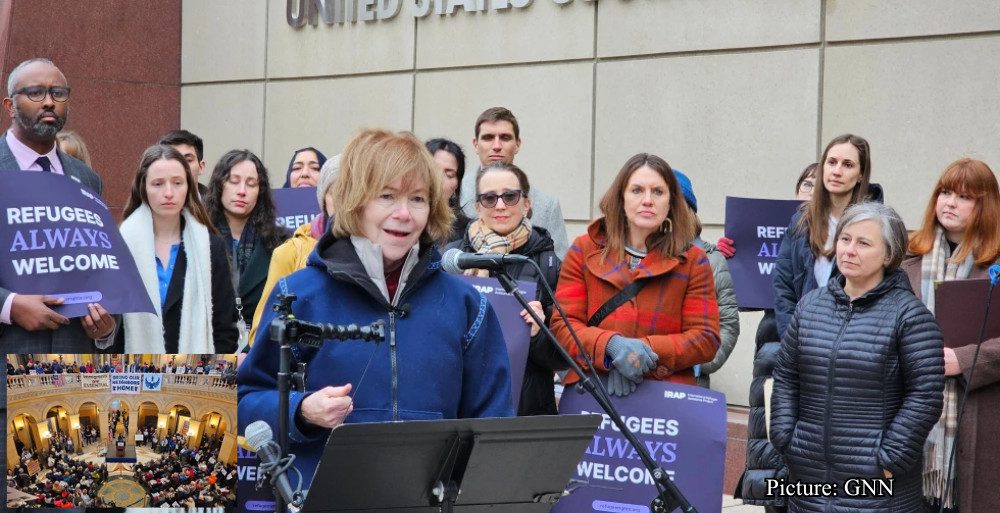




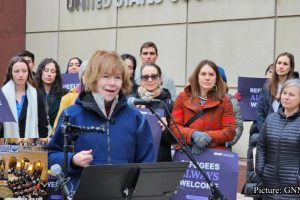

In a pivotal moment for immigration policy and refugee rights in the United States, a federal judge is poised to hear arguments that could significantly impact the lives of refugees residing in Minnesota. On Thursday, the courtroom will become a battleground for legal arguments concerning the extension of an order that currently shields Minnesota refugees, who are lawfully present in the country, from arrest and deportation.
This legal proceeding is more than just a local matter; it is a microcosm of the broader national debate on immigration and refugee policy. The judge’s decision will reverberate beyond Minnesota, potentially setting a precedent for how similar cases might be handled across the nation. At the heart of the issue is the balance between federal immigration enforcement and the rights of refugees who have sought safety and a new beginning in the United States.
The legal landscape surrounding refugee protections in the U.S. has been tumultuous, particularly in recent years. Policies have oscillated with changes in administration, affecting thousands of individuals who have fled their home countries due to war, persecution, or disaster. The current order under review was established to provide a layer of protection for refugees who have complied with all legal requirements to reside in the U.S. However, the potential expiration of this order has created uncertainty and fear among refugee communities, who now face the specter of deportation.
Minnesota has a rich history of welcoming refugees, with communities from Somalia, Myanmar, and other nations contributing to the state’s cultural tapestry. This diversity has not only enriched the local culture but has also been an economic boon, with refugees playing a vital role in various sectors, from healthcare to education. The state’s commitment to refugee resettlement is deeply rooted, yet it is now being tested by the broader national discourse on immigration.
The arguments presented in court will likely focus on the legality and necessity of extending the current protections. Proponents of the extension argue that refugees in Minnesota have established lives, contributing to the community and economy, and that removing these protections would not only disrupt their lives but also harm the social fabric of the state. Opponents, however, may argue that federal immigration laws must be uniformly enforced and that exceptions could undermine the legal framework.
The judge’s decision will hinge on complex legal interpretations, including the scope of executive power in immigration enforcement and the rights afforded to refugees under U.S. law. It is a delicate balancing act that requires weighing the humanitarian needs of individuals against the enforcement of national immigration policies.
Beyond the immediate legal implications, this case highlights the ongoing struggle to define America’s identity as a nation of immigrants. It raises questions about how the country can reconcile its historical role as a refuge with contemporary security and legal concerns. The outcome will not only affect those directly involved but will also signal the direction of U.S. immigration policy under the current administration.
As the nation watches, the decision of this federal judge will serve as a barometer for the country’s commitment to its foundational values of liberty and refuge. It is a reminder that the legal system is not just a mechanism for adjudicating laws but also a forum for grappling with the moral and ethical challenges of our time. In the end, the judge’s ruling will be more than a legal decision; it will be a statement about the kind of nation the United States aspires to be.