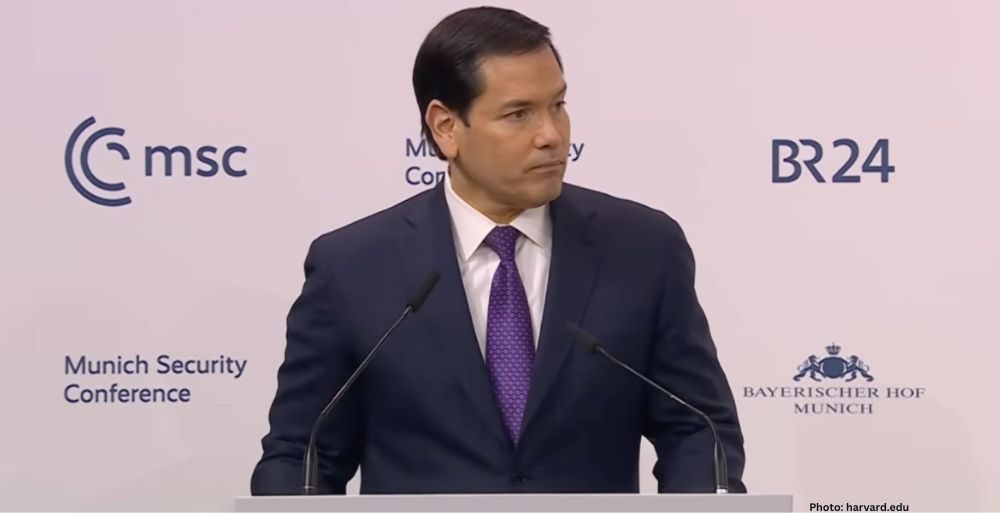








In a move that underscores a renewed commitment to human rights and geopolitical strategy, U.S. Secretary of State Marco Rubio has chosen to mark the Tibetan New Year with a significant announcement: the appointment of a new Special Coordinator for Tibetan Issues. This decision is emblematic of the United States’ longstanding engagement with the Tibetan cause, a relationship that has been both a moral stance and a strategic maneuver in the broader context of U.S.-China relations.
The appointment comes at a time when the global spotlight on human rights has intensified. With China’s growing influence on the world stage, the U.S. has often found itself at odds with Beijing over a variety of issues, including trade, cyber security, and territorial disputes. However, the issue of Tibet remains a particularly sensitive topic. Since the 1950s, Tibet has been a focal point of controversy, with China asserting sovereignty over the region and the Tibetan government-in-exile advocating for autonomy or independence. The U.S. has historically supported the Dalai Lama and the Tibetan people’s right to self-determination, a stance that has often led to diplomatic friction with China.
The role of the Special Coordinator for Tibetan Issues is multifaceted. It involves promoting substantive dialogue between the Chinese government and the Dalai Lama or his representatives, advocating for the preservation of Tibet’s unique religious, cultural, and linguistic heritage, and addressing the humanitarian needs of Tibetan refugees. The position is not merely symbolic; it is a tangible expression of U.S. foreign policy priorities and a signal to both China and the international community that Tibetan rights remain a significant concern.
Historically, the U.S. approach to Tibet has been shaped by a combination of ethical considerations and strategic interests. During the Cold War, Tibet was seen as a potential ally against Communist China, and the CIA is known to have provided covert support to Tibetan resistance movements. In more recent decades, the focus has shifted towards human rights advocacy, with successive U.S. administrations condemning China’s policies in Tibet and calling for meaningful autonomy for the region.
The timing of this appointment is also noteworthy. It aligns with a broader U.S. strategy to counter China’s influence, particularly in Asia. By reaffirming its commitment to Tibetan rights, the U.S. is not only standing up for human rights but also sending a message about its willingness to challenge China on issues where moral and strategic interests intersect.
The international response to the U.S. stance on Tibet is mixed. While many human rights organizations and Western governments applaud the U.S. for its advocacy, others caution that such actions could exacerbate tensions with China. Beijing has consistently warned against foreign interference in what it considers its internal affairs, and the U.S. must navigate these waters carefully to avoid unintended diplomatic fallout.
In the broader context of U.S.-China relations, the Tibet issue is one of many flashpoints. However, it is unique in its combination of ethical and strategic dimensions. For the U.S., supporting Tibetan rights is not just about standing up to China; it is also about aligning with international norms and values that prioritize human dignity and cultural preservation.
As the world becomes increasingly interconnected, the plight of the Tibetan people serves as a reminder of the complex interplay between national sovereignty and international human rights. The U.S. appointment of a Special Coordinator for Tibetan Issues is a reaffirmation of its commitment to this cause, a commitment that will continue to shape its foreign policy and its relationship with China in the years to come.