





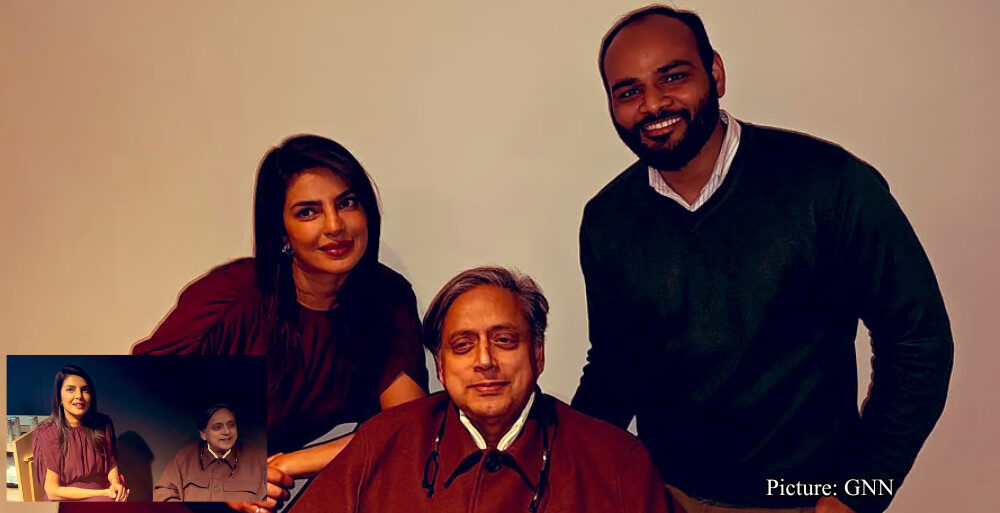
In an era where the spotlight often blurs the lines between substance and style, two Indian icons, Priyanka Chopra and Shashi Tharoor, have managed to carve out distinct niches that blend both elements seamlessly. The recent Harvard event, which saw Chopra and Tharoor sharing the stage, served as a testament to their unique ability to command attention and respect in equal measure.
Priyanka Chopra, a global sensation and former Miss World, has long been a subject of fascination not just for her cinematic achievements but also for her sartorial choices. Known for her impeccable fashion sense, Chopra has mastered the art of power dressing, especially with her penchant for tailored suits. This choice of attire is more than a mere fashion statement; it is a symbol of empowerment and a nod to her status as a formidable force in both Hollywood and Bollywood.
The concept of power dressing itself has evolved over the decades. Originating in the 1970s and 1980s as women sought to establish themselves in male-dominated corporate environments, it often involved structured silhouettes and bold colors. For Chopra, however, power dressing transcends its historical roots. It is not just about asserting presence in a room but also about conveying confidence and authority, qualities that resonate with her journey from the Indian film industry to the global stage.
On the other hand, Shashi Tharoor, an accomplished author, former diplomat, and current Member of Parliament in India, brings a different kind of gravitas to any forum he graces. Known for his eloquence and erudition, Tharoor’s presence at Harvard was not just a matter of prestige but also an opportunity for intellectual engagement. His speeches, often peppered with historical references and delivered with a characteristic wit, have earned him a reputation as one of India’s most articulate public figures.
The juxtaposition of Chopra’s glamour and Tharoor’s gravitas at Harvard highlights a broader cultural narrative. It underscores the dynamic interplay between modern celebrity culture and traditional intellectualism. While Chopra’s presence draws in audiences with her star power, Tharoor’s contributions ensure that the discourse remains substantive. This combination is particularly potent in academic settings like Harvard, where the exchange of ideas is paramount.
Their joint appearance also reflects broader trends in the entertainment and political spheres. The lines between these domains are increasingly blurred, with celebrities taking on roles as cultural ambassadors and politicians engaging with popular culture to reach wider audiences. This symbiosis is evident in how figures like Chopra and Tharoor use their platforms to address social issues, from gender equality to global diplomacy.
Moreover, their collaboration speaks volumes about the evolving nature of Indian representation on the world stage. Both Chopra and Tharoor embody a narrative of global Indian identity—one that is confident, articulate, and unapologetically proud of its roots. As India continues to assert itself as a significant player on the international front, figures like them serve as cultural emissaries, bridging gaps and fostering understanding across diverse audiences.
In conclusion, the Harvard event featuring Priyanka Chopra and Shashi Tharoor was more than just a meeting of minds; it was a celebration of Indian excellence in its multifaceted forms. Chopra’s sartorial elegance and Tharoor’s intellectual prowess together create a powerful narrative of empowerment and influence. Their presence at such forums not only elevates the discourse but also reinforces the idea that style and substance are not mutually exclusive but rather complementary forces in shaping public perception and discourse.