








In the high-stakes theater of international cricket, few stages are as grand—or as volatile—as an India-Pakistan clash. As the 2026 T20 World Cup moves to the R. Premadasa Stadium in Colombo this Sunday, the atmosphere is thick with more than just the tropical humidity of the Laccadive Sea. It is a collision of tactical innovation, biomechanical controversy, and geopolitical tension, all condensed into a 40-over window that has the entire cricketing world holding its breath.
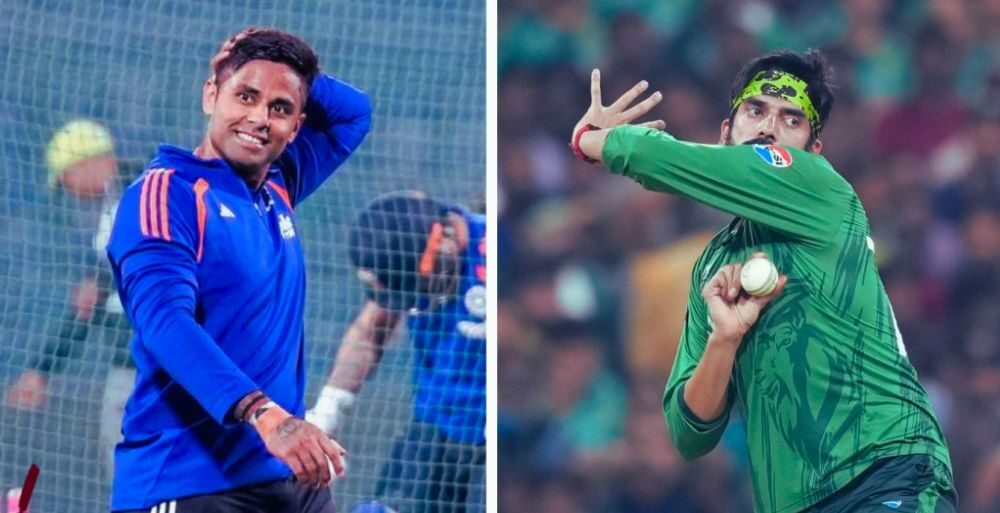
While the marquee match usually centers on household names like Babar Azam or Virat Kohli, the 2026 narrative has been hijacked by a 28-year-old mystery spinner. Usman Tariq, Pakistan’s latest tactical \”trump card,\” has emerged as a puzzle that the world’s best batters are struggling to solve. Tariq’s action is a digital glitch come to life: he runs to the crease, only to come to a dead, \”statue-like\” halt for nearly two seconds before releasing a side-arm delivery.
The disruption is not just physical; it is psychological. Former Indian cricketer Sadagoppan Ramesh noted that the bowler essentially becomes a statue, creating doubt in the batter\’s mind as to whether the ball will even reach them. This hesitation kills the batter\’s momentum, turning the rhythmic flow of a T20 innings into a series of jarring, unpredictable starts.
However, the intrigue carries a sharp edge of controversy. Tariq’s bowling arm features a visible bend that has triggered inevitable \”chucking\” allegations, most notably from Australia’s Cameron Green. Tariq, who has been reported and cleared twice by the ICC’s National Cricket Academy, defends his technique as a biological necessity. He has explained that he possesses two \”corners\” or pointers in his elbows that prevent his arm from ever appearing fully straight. While the labs in Lahore confirm he stays within the legal 15-degree elbow flex, the visual of his delivery remains the most debated clip of the tournament.
For the Indian camp, Tariq is less of a mystery and more of a technical challenge to be dissected. Indian captain Suryakumar Yadav, known for his own unorthodox \”360-degree\” batting, has approached the threat with the calm of a veteran scholar. Yadav famously told reporters in Colombo that sometimes an \”out-of-syllabus\” question appears in an exam, and rather than leaving it blank, one must find a unique way to tackle it.
To prepare, the Indian nets have become a laboratory of imitation. Videos have surfaced of Yadav himself mimicking Tariq’s stutter-step action to help his teammates find their timing. Specialized drills involving \”pause-and-release\” simulations have been the core of India’s training sessions, ensuring that when Tariq eventually freezes at the crease on Sunday, the Indian openers won\’t freeze with him. Adding to the tactical fire, senior statesman Ravichandran Ashwin has suggested a more aggressive counter: psychological parity. Ashwin has publicly encouraged Indian batters to simply step out of the crease or pull away if Tariq’s pause feels too long, forcing the umpire to call a \”dead ball\” and disrupting the bowler\’s own carefully crafted rhythm.
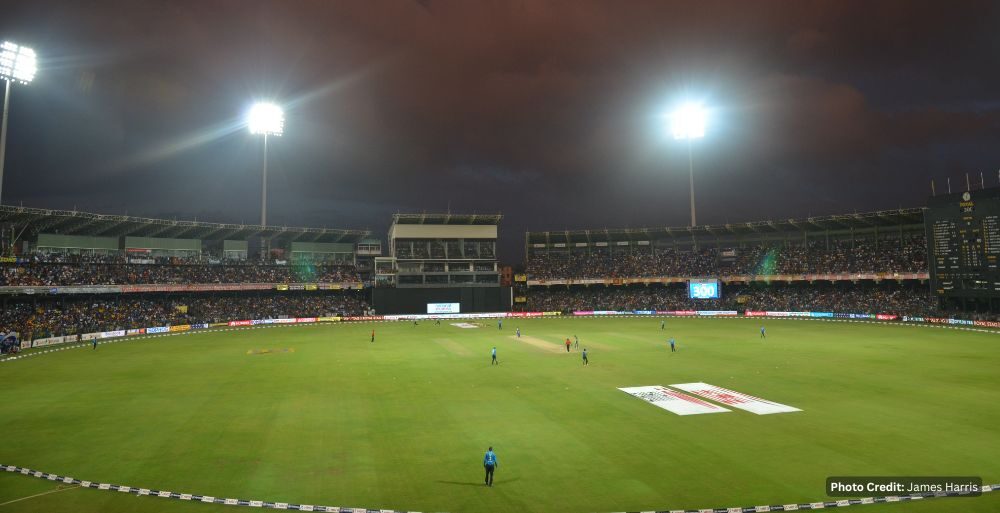
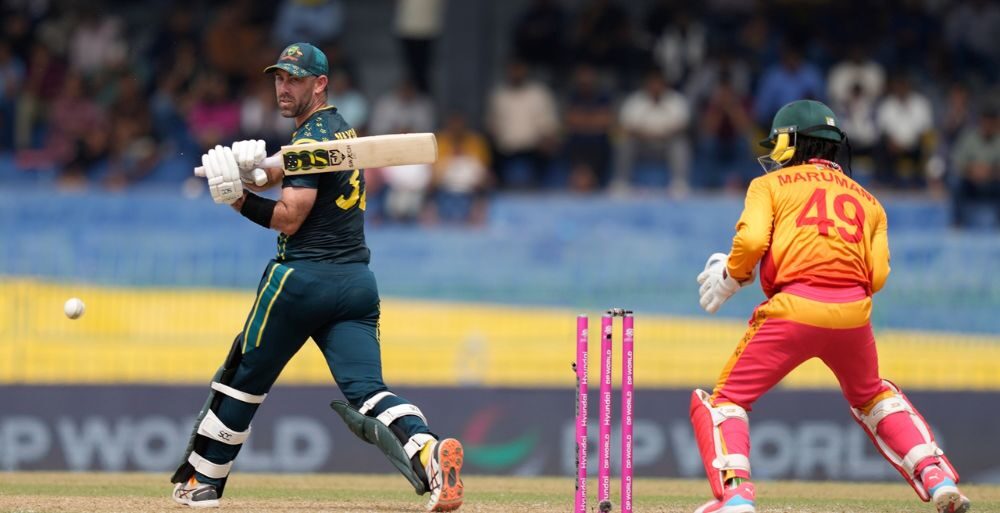
The R. Premadasa Stadium is a venue that whispers of spin and slow-burn drama. Unlike the pace-heavy tracks of New Delhi, the Colombo surface is expected to be \”grippy\” and two-paced. This gives Pakistan a distinct advantage, as they have already played multiple fixtures at the venue during this World Cup cycle, while India is still adjusting to the local soil. The pitch being used for this match is the same one where Zimbabwe recently upset Australia, proving that slow bowlers and clever change-of-pace can be lethal here.
However, the ultimate arbiter of Sunday’s result may not be a player at all. Meteorologists are tracking a low-pressure system over the Bay of Bengal, and the forecast for match day is grim: a 94 to 96 percent chance of rain. With no reserve day for this group-stage encounter, the prospect of a washout looms large. In a tournament where every point is a vital currency for Super Eight qualification, a split result would be a devastating anti-climax for the millions tuning in.
Beyond the boundary ropes, the match is shadowed by a frost that has yet to thaw. Since the 2025 Asia Cup, following the Pahalgam terror attacks and India’s subsequent \”Operation Sindoor,\” the Indian team has refrained from the customary pre- and post-match handshakes with Pakistan. The tension was palpable during Saturday’s press conferences. When asked if the tradition would be restored, Suryakumar Yadav offered a cryptic grin, telling reporters to wait 24 hours and focus on getting a good night\’s sleep before the big day.
As the ground staff at the Premadasa battle intermittent showers to keep the covers ready, the stage is set for a contest defined by the unorthodox. India has spent the week studying the \”out-of-syllabus\” question, integrating fresh faces like Abhishek Sharma back into the lineup after his recovery from illness. Pakistan, bolstered by their spin battery and the controversial Tariq, remains confident in their \”home\” conditions. Whether the match is won in the nets or decided by the elements, the Usman Tariq factor has ensured that even if no ball is bowled, the conversation will continue long after the floodlights dim.
T20 World Cup 2026: Mystery, Malice, and the ‘Out-of-Syllabus’ Question as India and Pakistan Clash in Colombo